How Humpback Whales Use Their Pectoral Fins
Humpback whales are famous for their enormous size, acrobatic movements, and long migrations across the world's oceans. One feature that makes them especially recognizable is their unusually long pectoral fins. These powerful front limbs help humpback whales maneuver through the water and perform movements that are important for feeding and other activities.
In Samaná Bay, Dominican Republic, visitors come to observe humpback whales during their seasonal presence in the region. Although the whales' tails often attract attention, their pectoral fins are equally fascinating from an anatomical perspective.
Learning how humpback whale pectoral fins work reveals how these marine mammals control their movements, interact with their surroundings, and differ from many other whale species.
What Are Pectoral Fins?
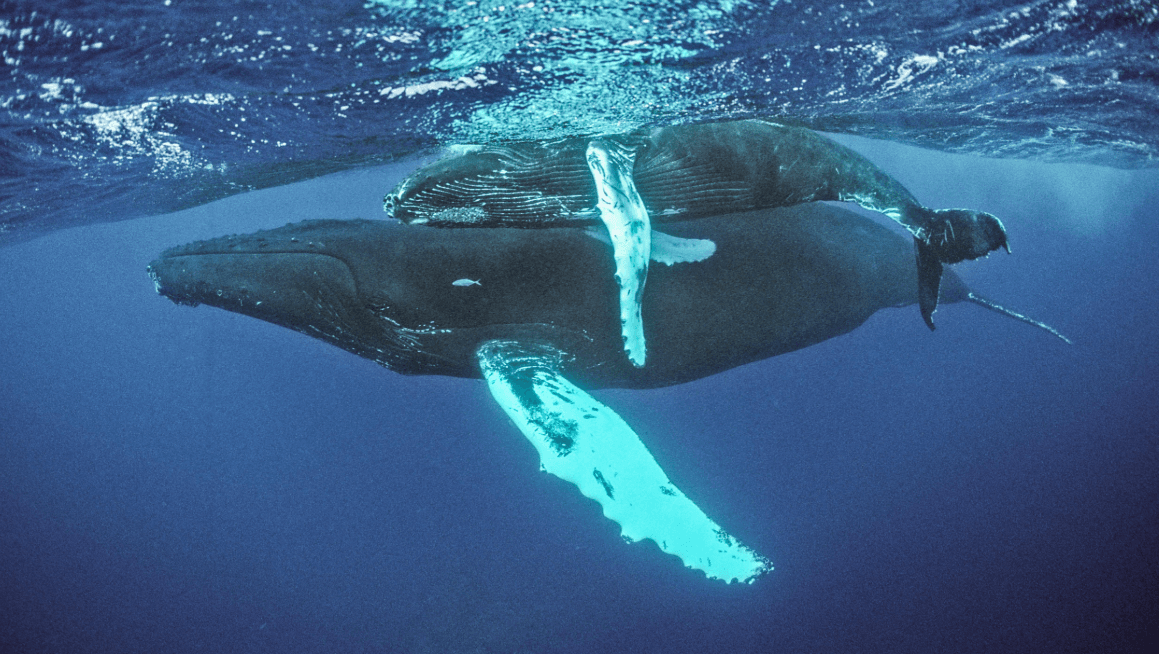
Pectoral fins are the paired front limbs located on either side of a whale's body, behind the head. They are sometimes called flippers.
Unlike the tail flukes, which provide much of the thrust for swimming, pectoral fins primarily contribute to maneuvering, stability, and changes in direction.
Humpback whale pectoral fins are particularly distinctive because they are proportionally longer than those of most other whale species. They can extend to roughly one-third of the whale's body length, although proportions vary among individuals.
Their broad surfaces and flexible movements allow humpback whales to perform a range of underwater maneuvers.
Why Are Humpback Whale Pectoral Fins So Long?
The unusually long pectoral fins are one of the humpback whale's most recognizable physical characteristics.
Scientists study these fins to understand their contribution to swimming performance and feeding behavior. Their size and shape influence how water moves around the whale as it turns or changes its body position.
Several characteristics make them special:
- Length: Their extended shape provides a large surface area for interacting with the surrounding water.
- Flexibility: Humpback whales can change the position and angle of their fins during movement.
- Distinctive edges: The fins have irregular, scalloped edges that distinguish them from the smoother flippers of many other whale species.
- Surface variation: Their coloration can vary, with some individuals displaying extensive white areas and others showing darker pigmentation.
Together, these characteristics help create the distinctive appearance of a humpback whale.
How Do Pectoral Fins Help Humpback Whales Turn?
A whale's large body creates considerable resistance when it changes direction. Pectoral fins help the animal manage this movement.
Adjusting direction
By changing the angle and position of its fins, a humpback whale can influence how water flows around its body. This helps it turn and maneuver in different directions.
Controlling body position
The fins also contribute to maintaining balance and controlling body orientation. A whale can reposition its fins as it moves through the water, helping coordinate its movements with its tail and body.
Making precise movements
Humpback whales sometimes perform complex maneuvers while feeding or interacting with other whales. Their pectoral fins contribute to these movements, working alongside other parts of the body.
The fins do not operate independently. Swimming is a coordinated activity involving the tail, body muscles, and pectoral fins.
How Pectoral Fins Help During Feeding
Humpback whales are filter feeders. They commonly consume small fish and krill, using specialized structures called baleen plates to filter food from seawater.
Their pectoral fins can play a role in feeding maneuvers.
During some feeding behaviors, humpback whales roll, turn, or reposition their bodies while approaching concentrated groups of prey. The fins help them control these movements.
Certain humpback whales also use a behavior known as pectoral-fin herding or related fin-assisted feeding tactics. In some situations, the movement or position of a fin may influence the movement of prey.
The exact behavior depends on the feeding technique and circumstances. Not every humpback whale uses the same strategy, and the fins should not be understood as the primary structures responsible for filtering food. That role belongs to the baleen system.
Can Humpback Whales Use Their Fins to Communicate?
Humpback whales communicate through a variety of behaviors and sounds. Their pectoral fins may be involved in visible interactions, although a fin movement does not always have a single clear meaning.
For example, a whale may lift or slap a fin against the water. This behavior can produce a noticeable splash and may occur during social interactions or other activities.
Researchers interpret these movements in context, considering the behavior of nearby whales, the surrounding conditions, and what happens before and after the movement.
It is important not to assume that every fin slap communicates the same message. A particular action may have different functions depending on the situation.
Why Do Humpback Whales Sometimes Raise a Pectoral Fin?
During whale-watching excursions, visitors may see a humpback whale lift one or both pectoral fins above the surface.
Several visible behaviors can involve the fins, including:
Pectoral-fin slapping
A whale may raise a fin and bring it down onto the water, creating a splash. This is often called pectoral-fin slapping.
The behavior can be dramatic, but observers cannot always determine its purpose from a brief surface encounter.
Rolling near the surface
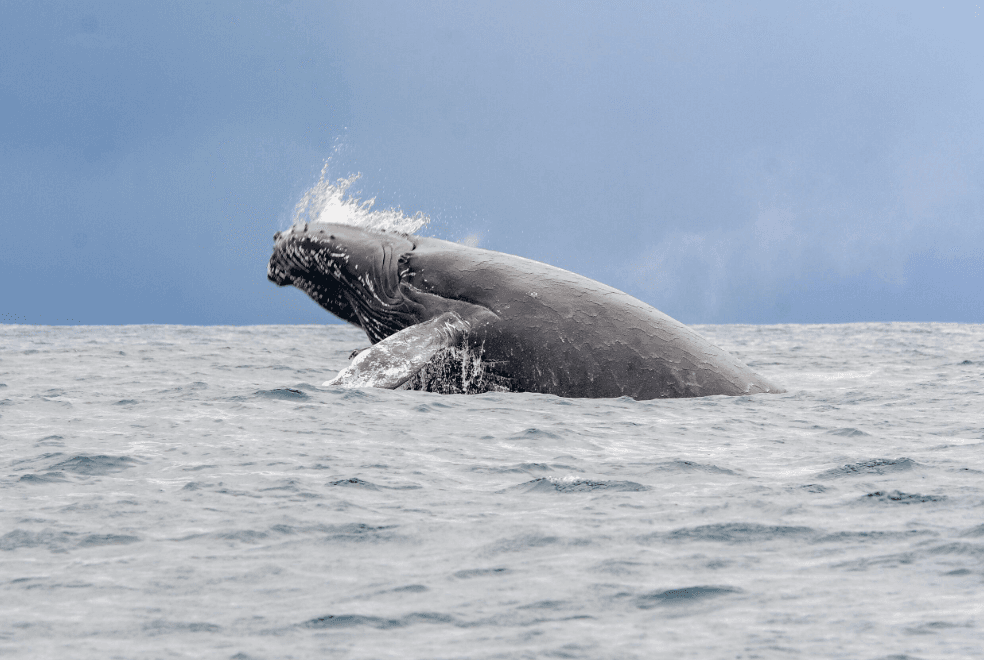
Humpback whales sometimes roll onto their sides or change their body orientation near the surface. A long pectoral fin may become visible during these movements.
Extended fin movements
A whale may hold a fin out of the water or extend it while floating near the surface. The reasons for this behavior are not always clear, so it is best to observe without assigning a definite explanation.
These movements are among the many natural behaviors that make humpback whale watching interesting.
How Are Pectoral Fins Different From Tail Flukes?
Although both structures contribute to swimming, they have different shapes and primary functions.
Pectoral fins are located on the sides of the body near the head. They help the whale maneuver, adjust its position, and perform controlled movements.
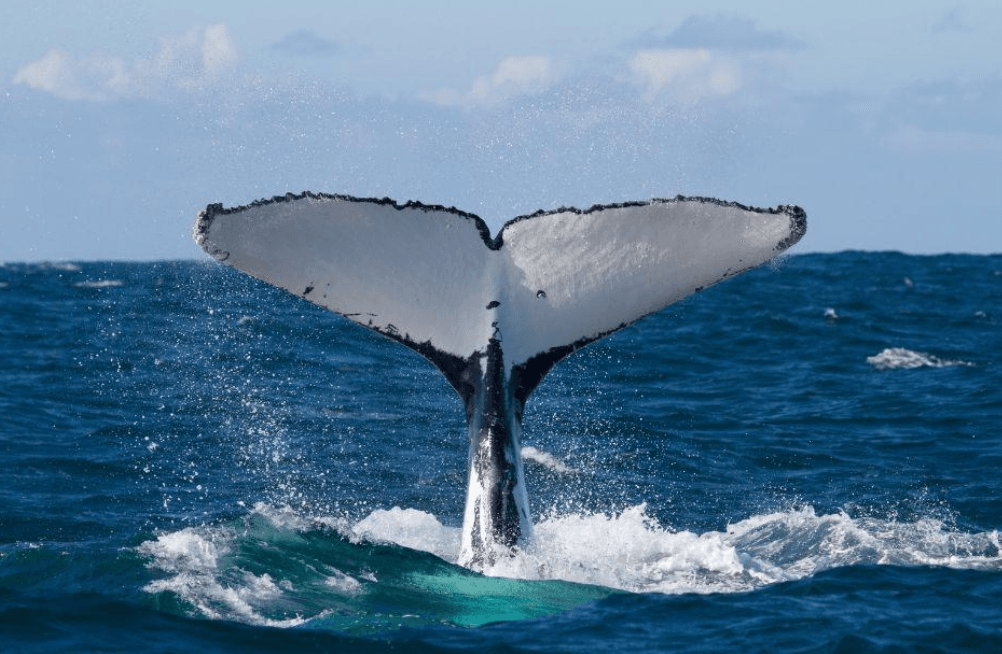
Tail flukes are located at the rear of the body. Their powerful up-and-down strokes generate much of the forward thrust needed for swimming.
The two structures work together. A humpback whale uses its tail to propel itself while its pectoral fins help control how it moves through the water.
Do Humpback Whales Have Bones Inside Their Pectoral Fins?
Yes. Humpback whale pectoral fins contain bones inherited from the evolutionary history of their land-mammal ancestors.
The internal structure includes bones corresponding to those found in the forelimbs of other mammals, including bones comparable to the humerus, radius, and ulna. Additional bones support the digits.
These structures are adapted to life in water. Instead of functioning as walking limbs, the forelimbs form broad flippers that help the whale maneuver underwater.
The presence of these bones provides an example of how mammalian limbs can evolve into structures suited to very different environments.
Can Pectoral Fins Help Identify Individual Humpback Whales?
Pectoral fins can display differences in coloration, shape, and visible markings. In some circumstances, these characteristics may help observers distinguish individuals.
For example, one whale may have extensively white pectoral fins, while another has predominantly dark fins. Researchers can document such characteristics when studying whales.
However, fin coloration alone is not always sufficient for reliable identification. Scientists may combine multiple observations and photographic records, including tail-fluke images and other visible features.
If you encounter humpback whales in Samaná Bay, noticing their pectoral fins is a useful way to appreciate differences between animals without assuming that you can confirm their individual identities.
What Can Visitors Observe During Whale Watching in Samaná?
Humpback whales visit the waters around Samaná during their seasonal breeding period. Their behavior varies, and visitors may see different aspects of their movement during an excursion.
Depending on conditions and whale activity, passengers might observe:
- A whale swimming with its pectoral fins close to its body.
- A fin appearing as the whale rolls near the surface.
- A pectoral-fin slap that creates a large splash.
- A whale turning or changing direction.
- A fin briefly emerging above the water.
Not every excursion includes these behaviors. Whales are wild animals, and their actions cannot be predicted or guaranteed.
The best approach is to remain observant, listen to the guide, and appreciate the behavior that occurs naturally.
Why Learning About Pectoral Fins Matters
Understanding whale anatomy can make wildlife encounters more meaningful. A pectoral fin is not merely a large appendage; it is a specialized structure that contributes to the whale's movement, feeding maneuvers, and interactions with its environment.
Learning about these adaptations also helps visitors understand why humpback whales are so distinctive among large marine mammals.
Responsible whale watching offers an opportunity to appreciate these animals without disturbing them. Following crew instructions, respecting appropriate viewing distances, and avoiding attempts to provoke a particular behavior help protect the experience for both wildlife and visitors.
Final Thoughts
Humpback whale pectoral fins are remarkable examples of mammalian adaptation to life in the ocean. Their unusual length, flexible movement, and distinctive shape contribute to the whales' ability to maneuver, adjust their body position, and perform complex feeding movements.
For anyone visiting Samaná Bay, paying attention to these fins can reveal details that might otherwise go unnoticed. A raised fin, a sudden turn, or a splash at the surface can offer a closer look at the animal's movement and anatomy.
The next time you observe a humpback whale, look beyond its enormous body and powerful tail. Its pectoral fins are another important part of what makes this species so fascinating.
Frequently Asked Questions
What is the purpose of a humpback whale's pectoral fins?
They help the whale maneuver, control body position, and perform movements involved in feeding and other activities.
Why are humpback whale pectoral fins so long?
Their unusually long flippers provide a large surface area for interacting with the water and contribute to the whales' distinctive swimming and maneuvering abilities.
Do humpback whales use their pectoral fins to swim forward?
The fins contribute to swimming, but the tail flukes generate much of the forward thrust through powerful up-and-down strokes.
Why do humpback whales slap their pectoral fins?
Fin slapping is a visible behavior that may occur during different activities and interactions. Its precise purpose cannot always be determined from an observation alone.
Do pectoral fins contain bones?
Yes. They contain modified forelimb bones adapted for life in water rather than walking on land.
Can you see humpback whale pectoral fins in Samaná Bay?
You may see them during the whale-watching season, depending on the whales' behavior and viewing conditions. A particular fin movement is never guaranteed.

Local explorer & expert guide in Saona Island Beach.