How Humpback Whales Navigate the Ocean Without GPS
Every year, humpback whales travel across vast stretches of ocean between their feeding grounds and breeding areas. Some make journeys spanning thousands of kilometers, crossing waters that may look almost identical to a human observer.
One remarkable destination is Samaná Bay in the Dominican Republic, where humpback whales gather during their seasonal breeding migration. Their arrival raises an intriguing question: how do these enormous marine mammals find their way across the open ocean without digital maps, compasses, or GPS devices?
Scientists are still investigating the complete answer. Research suggests that whale navigation may involve several sources of information, including environmental cues, memory, sensory abilities, and possibly the Earth's magnetic field. Understanding these possibilities reveals how complex animal navigation can be.
Why Is Whale Navigation So Impressive?
The open ocean offers few obvious landmarks. Unlike animals traveling over land, whales cannot always use mountains, roads, or recognizable terrain to guide their movements.
They must navigate through a changing environment influenced by currents, weather, water temperature, and underwater geography. They also need to locate suitable feeding areas and breeding habitats at particular stages of their annual cycle.
Humpback whales demonstrate that long-distance movement is possible without human navigation technology. However, reaching a destination does not necessarily mean that an animal follows an identical route every year.
Their journeys may vary according to individual behavior, environmental conditions, and the needs of different populations.
Could Humpback Whales Use the Earth's Magnetic Field?
One scientific possibility is that whales use information associated with the Earth's magnetic field.
Earth has a magnetic field that varies geographically. Some animals can detect or use magnetic information during movement, and researchers have investigated whether similar mechanisms help marine mammals navigate.
A magnetic sense could potentially provide directional information or help an animal recognize broad geographic patterns. For a whale crossing a large ocean, this could be useful when visible landmarks are scarce.
However, the exact role of magnetoreception in humpback whale navigation remains uncertain. Scientists have not established a complete mechanism explaining how humpbacks might sense magnetic information and use it to guide their migrations.
It is therefore more accurate to describe magnetic navigation as a scientific hypothesis than to claim that humpback whales definitely use an internal magnetic compass.
Can Whales Use the Sun to Find Their Direction?
The Sun provides directional information that some animals use when navigating. Its apparent position changes throughout the day, creating a potential source of orientation information.
Researchers have explored different navigation mechanisms across animal species, including the use of celestial cues. In principle, such cues could complement other sources of information during long-distance travel.
For humpback whales, however, the extent to which the Sun directly guides navigation is not fully established.
Whales spend much of their lives underwater, where sunlight can become limited with depth. Cloud cover, time of day, and other conditions can also affect the usefulness of visual cues.
Rather than assuming one cue explains an entire migration, scientists consider the possibility that animals combine different kinds of information.
Do Humpback Whales Remember Their Routes?
Memory may be important for animals that repeatedly visit the same seasonal habitats.
Humpback whales return to established feeding and breeding regions, and individuals may show recurring patterns in their movements. Such behavior is consistent with the use of learned information and experience.
Memory could help a whale recognize familiar areas, respond to seasonal changes, or follow routes associated with suitable habitat.
Young whales may also benefit from experience gained while traveling with their mothers and other members of their population. The extent to which particular routes are learned socially, inherited through behavior, or shaped by individual experience remains an active area of scientific interest.
Importantly, returning to the same region does not prove that a whale memorizes every turn along a fixed route. Navigation can involve both familiarity and adjustments to changing conditions.
Can Ocean Currents Help Whales Navigate?
Ocean currents move water across large distances and shape the marine environment. They influence temperature, nutrient distribution, prey availability, and the physical conditions whales encounter during travel.
Currents may affect the energy required for a journey. Depending on their direction and strength, they can help or hinder movement through particular areas.
Whales may respond to environmental conditions when selecting or adjusting their movements, although scientists do not yet have a complete picture of how humpbacks use currents specifically as navigation cues.
Currents can also create recognizable environmental patterns. Changes in water temperature, prey distribution, and other ocean conditions may provide useful information about the surrounding habitat.
For humpback whales, these factors are best understood as parts of a complex marine environment rather than as a proven, standalone navigation system.
Could Sound Help Humpback Whales Find Their Way?
Sound travels efficiently underwater and plays an important role in the lives of many cetaceans. Humpback whales produce complex vocalizations, and sound is important for communication in their marine environment.
Underwater sound can carry information about nearby animals and environmental features. In some circumstances, sound may help an animal maintain awareness of its surroundings.
However, it is important to distinguish communication from navigation. The existence of humpback whale songs does not establish that whales use those songs to map an entire ocean journey.
Scientists continue to investigate how whales perceive and respond to underwater sound, including how natural and human-generated noise may affect their behavior.
Sound may contribute to a whale's awareness of its environment, but its precise role in long-distance humpback navigation remains uncertain.
Do Young Humpback Whales Learn Where to Go?
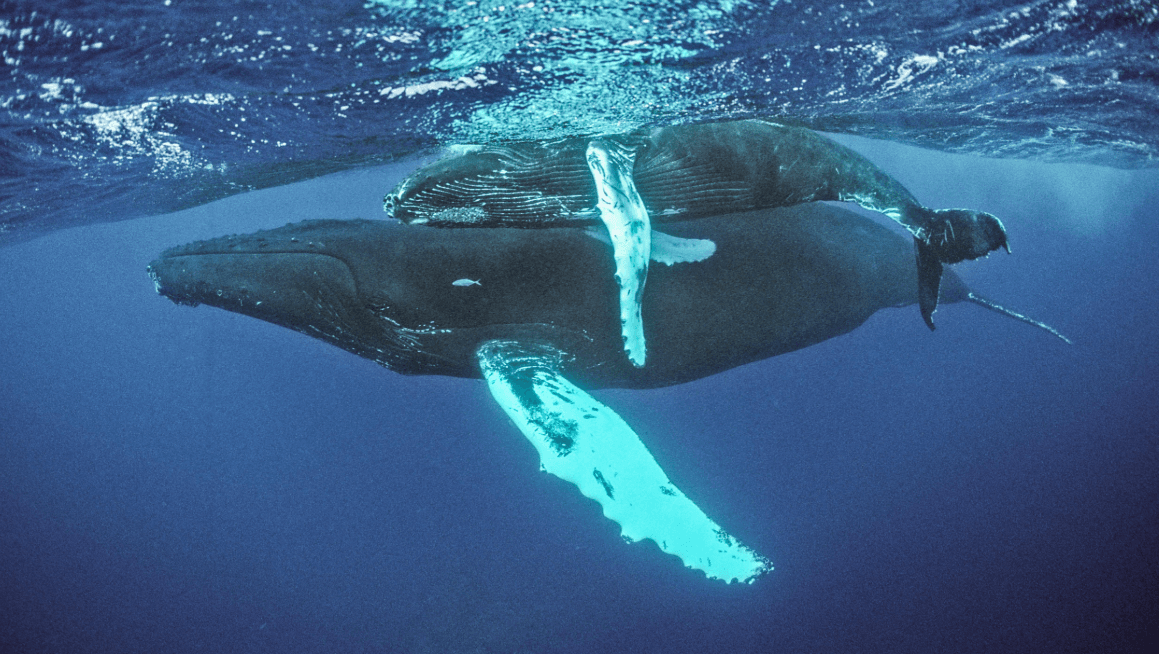
A humpback whale's early life provides opportunities to experience the ocean alongside its mother.
During the early stages of life, a calf stays close to its mother while traveling, nursing, and developing the abilities needed to survive independently.
This close association may expose young whales to aspects of their population's movement patterns and habitat use. Social learning is a possible contributor to the development of migration behavior.
At the same time, scientists should not assume that every navigational decision is taught directly by a parent. Inherited behavioral tendencies, individual experience, environmental cues, and social interactions may all contribute in different ways.
Studying the movements of mothers, calves, and returning adults helps researchers investigate how migration patterns develop and persist across generations.
How Do Humpback Whales Find Samaná Bay?
Samaná Bay is an important seasonal destination for North Atlantic humpback whales during their breeding migration.
Whales traveling to the wider Dominican Republic region are part of a much larger seasonal movement between high-latitude feeding grounds and warmer breeding areas.
The precise navigation process that leads an individual whale to Samaná Bay is not fully understood. Researchers can document movements and recurring patterns, but observing where an animal travels does not automatically reveal which cues it used to choose its route.
The destination is important because breeding areas offer conditions associated with mating, calving, and early calf development. Humpback whales generally spend the winter breeding season in warmer waters before returning toward feeding areas.
For visitors, the arrival of these whales is a reminder that the animals seen during a boat excursion are part of a much broader journey across the Atlantic.
How Do Scientists Study Whale Navigation?
Researchers cannot simply ask a whale which direction it intends to travel. Instead, they collect evidence from multiple sources.
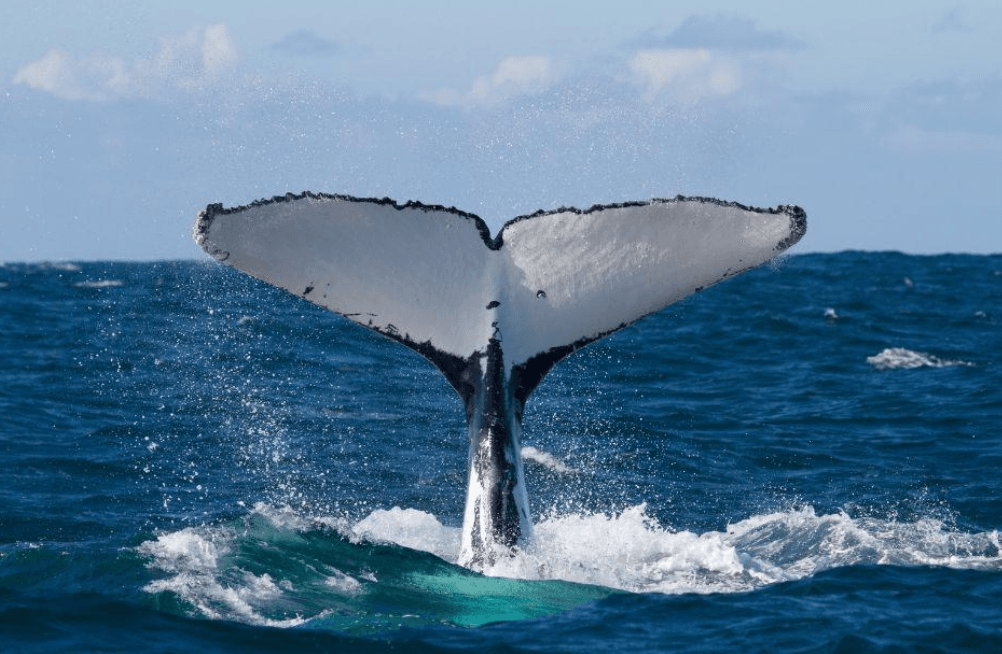
Photo-identification: Photographs of distinctive tail-fluke patterns and other markings can help researchers recognize individual whales across different sightings and years.
Satellite tagging: Where appropriate permits, ethical safeguards, and suitable technology are available, tracking devices can provide information about movement and routes.
Acoustic research: Listening to whale vocalizations and other underwater sounds helps scientists study communication and the conditions in which whales live.
Environmental data: Researchers can compare whale movements with information about ocean temperature, currents, and other environmental variables.
Long-term observations: Repeated sightings and records help reveal whether individual whales or populations return to particular areas over time.
No single method necessarily explains every aspect of navigation. Combining different evidence can help researchers test hypotheses and distinguish established findings from possible explanations.
Can Human Activity Affect Whale Navigation?
Human activities can change the marine environment in ways that matter to whales.
Underwater noise from vessels and other sources can interfere with the acoustic environment. Vessel traffic can also create risks of collisions, while pollution and changes in marine ecosystems may affect whale habitats.
The specific effects on navigation depend on the type of disturbance, its intensity, and the circumstances in which a whale encounters it. It would be inaccurate to claim that every source of noise causes a whale to lose its way.
Nevertheless, reducing unnecessary disturbance is an important part of responsible marine wildlife management.
During whale watching in Samaná, operators should follow applicable regulations, maintain appropriate distances, avoid chasing animals, and allow whales to choose their own movements.
What Whale Navigation Teaches Us About the Ocean
Humpback whale navigation highlights how much remains to be discovered about the relationship between animals and their environment.
A long-distance journey may involve several kinds of information rather than a single perfect navigation tool. Memory, environmental conditions, sensory information, and possibly magnetic cues are all relevant areas of investigation.
The strongest scientific approach is to recognize what observations demonstrate while remaining careful about mechanisms that have not yet been confirmed.
When a humpback whale surfaces in Samaná Bay, it represents the visible end of a much larger journey. Each sighting connects visitors to the wider Atlantic ecosystem and the seasonal movements that sustain whale populations.
Frequently Asked Questions
How do humpback whales navigate without GPS?
Scientists believe that whales may use a combination of environmental information, memory, sensory cues, and potentially magnetic information. The precise combination used by humpback whales is not yet fully understood.
Do humpback whales have an internal compass?
A magnetic sense is one possible explanation researchers have investigated. However, a complete magnetic navigation mechanism has not been established for humpback whales.
Do humpback whales return to the same places every year?
Humpback whales show recurring seasonal use of feeding and breeding regions. Individual routes and movements can vary, and returning to a region does not prove that every part of the journey follows a fixed path.
Can whales navigate using sound?
Sound is important to cetacean communication and environmental awareness. Its exact role in long-distance humpback whale navigation remains uncertain.
Do baby humpback whales learn migration routes from their mothers?
Traveling with their mothers may expose calves to migration routes and habitats. The relative contributions of social learning, inherited behavior, memory, and environmental cues are not completely understood.
When can visitors see humpback whales in Samaná?
Humpback whales generally visit the Samaná region during the winter breeding season, commonly from January through March. Sightings vary, so travelers should confirm current local conditions when planning a trip.
Final Thoughts
Humpback whales travel through a vast and changing ocean without the navigation technology humans rely on. Their seasonal journeys show how animals can move between important habitats even when the route is far beyond human sight.
Scientists are investigating how environmental cues, memory, sensory abilities, and possible magnetic information contribute to these journeys. Although many details remain uncertain, continued research is revealing more about the relationship between whales and the ocean.
For visitors to Samaná Bay, understanding whale navigation makes each encounter more meaningful. The whale surfacing beside a tour boat may have traveled a remarkable distance, guided by biological abilities that scientists are still working to understand.

Local explorer & expert guide in Saona Island Beach.