How Do Scientists Record Humpback Whale Social Interactions in Samaná Bay?
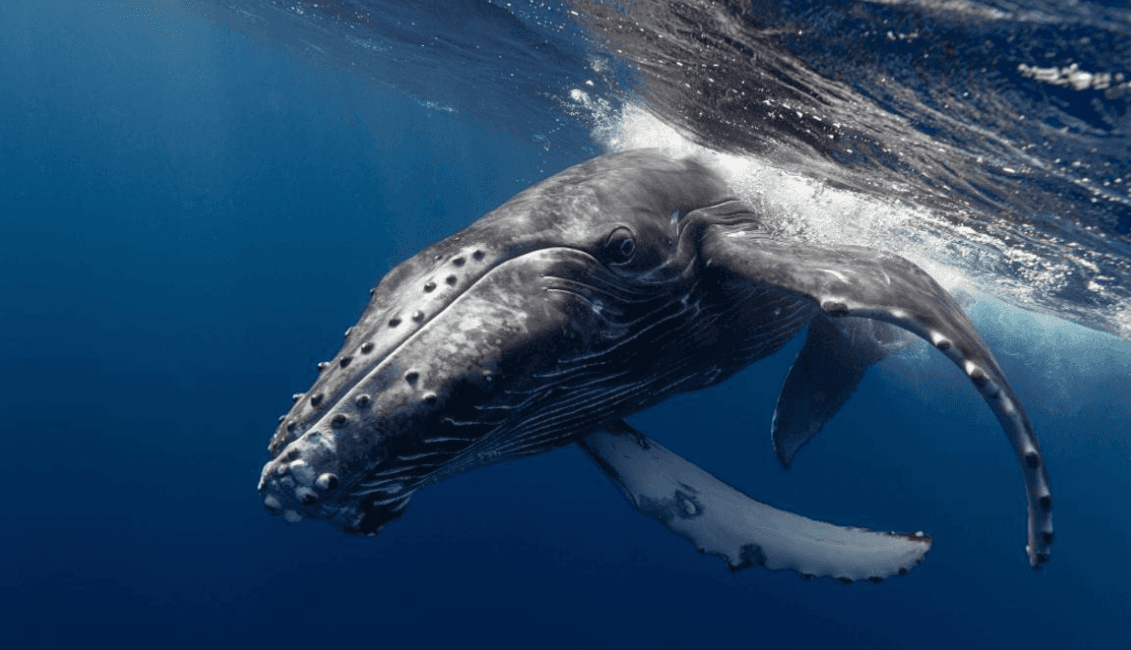
Samaná Bay in the Dominican Republic is well known as a seasonal destination for humpback whale watching. During the winter breeding season, whales may be observed surfacing near one another, traveling in groups, approaching other individuals, or changing their positions within a group. These encounters offer researchers opportunities to investigate how humpback whales interact.
But observing whales together does not automatically reveal what they are doing or why. Scientists must record visible behavior systematically, consider the surrounding conditions, and distinguish direct observations from interpretations.
Understanding how researchers document these encounters helps visitors appreciate the scientific value of responsible whale watching in Samaná Bay.
Why Study Humpback Whale Social Interactions?
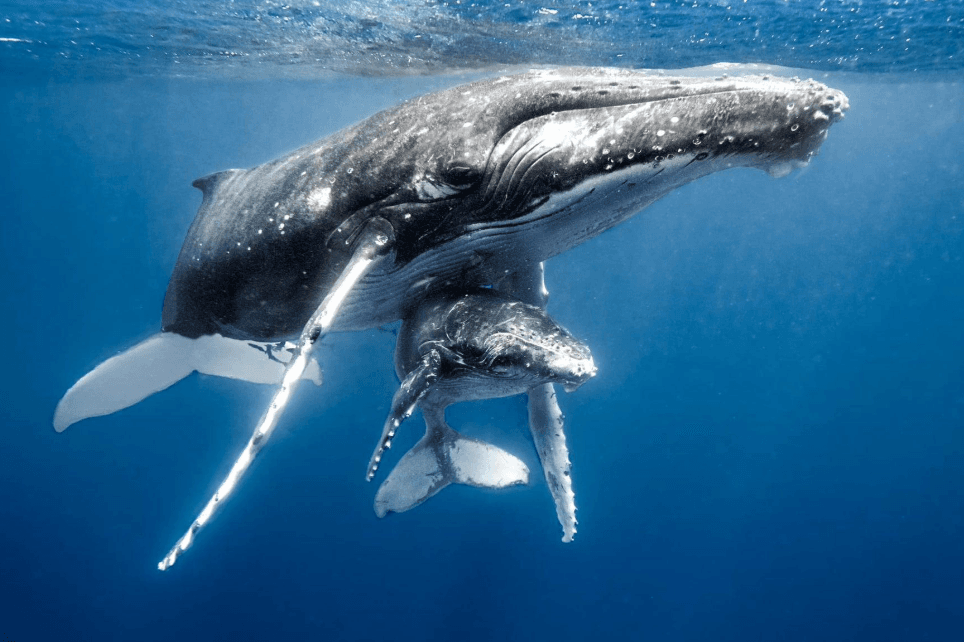
Humpback whales are known for a range of behaviors that can bring individuals into close proximity. These include traveling together, mother-and-calf associations, competitive group activity, and encounters involving several whales.
Researchers study social interactions to investigate questions such as:
- How often do individual whales approach or leave other whales?
- How does group size change during an encounter?
- Do whales maintain consistent positions relative to one another?
- How long do observed associations last?
- Do interaction patterns differ between observations or seasons?
These questions can help researchers investigate whale behavior, population structure, and the possible roles of breeding and social activity.
However, a study conducted in Samaná Bay would need systematic local observations before drawing conclusions about the frequency or significance of particular interactions.
What Counts as a Social Interaction?
Scientists first need an operational definition of a social interaction. Two whales appearing in the same photograph may simply be passing through the same area.
A stronger observation might involve a change in movement or position that appears related to the presence of another whale. Researchers may record approaches, departures, repeated changes in spacing, coordinated swimming, or sustained associations.
The precise categories depend on the study's research questions and observation protocol.
1. Approaching another whale
Researchers can record when one whale moves closer to another. They may note the approximate distance, the direction of movement, the duration of the approach, and whether the second whale changes its behavior.
An approach alone does not prove that the whales are communicating or seeking contact. Their movements may also reflect shared travel routes or environmental conditions.
2. Traveling together
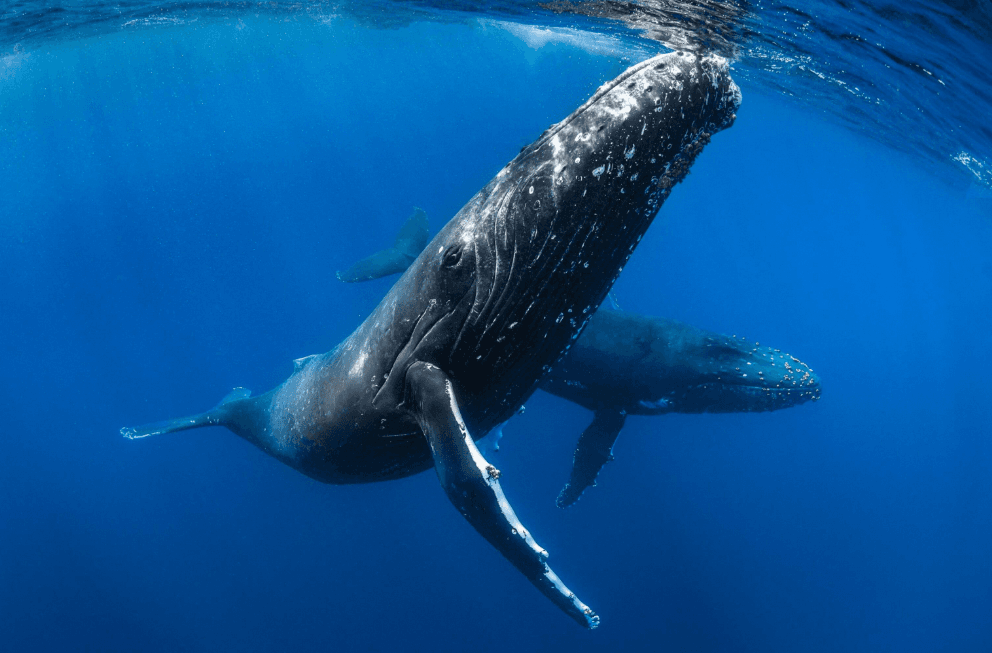
When whales maintain similar directions and remain near each other, researchers may record a traveling association.
Useful observations include the number of individuals, their relative positions, the duration of the association, and any changes in direction or spacing.
Repeated observations may help establish whether an association continues over time, although short sightings can make this difficult to determine.
3. Changes in group composition
A group may appear to gain or lose individuals as whales surface, dive, or move beyond the observer's view.
Researchers therefore record when an additional whale becomes visible or an observed individual disappears. They must also consider the possibility that a whale was present but temporarily undetected.
4. Competitive or highly active encounters
During breeding-season observations, researchers may encounter groups in which whales rapidly change position, closely follow one another, or display forceful surface movements.
Such behavior may be consistent with competition or other social activity, but its meaning cannot always be determined from appearance alone. Scientists describe the observed actions first and use cautious interpretations when the evidence is incomplete.
How Do Researchers Collect the Data?
Reliable behavioral research depends on consistent recording methods rather than memory or isolated photographs.
Structured observation sheets
Researchers can use standardized forms to record the date, time, location, weather, sea state, group size, and visible behavior. Each observation may receive a start time, an end time, and a confidence rating.
A shared set of definitions helps different observers classify the same behavior more consistently.
Photographs and video
Photographs and video can help researchers review movement sequences, count visible animals, and examine changes in relative position.
Images may also support individual identification when distinctive markings or tail-fluke patterns are visible. However, an image showing two whales together does not establish that they are the same pair seen during an earlier encounter.
Position and distance estimates
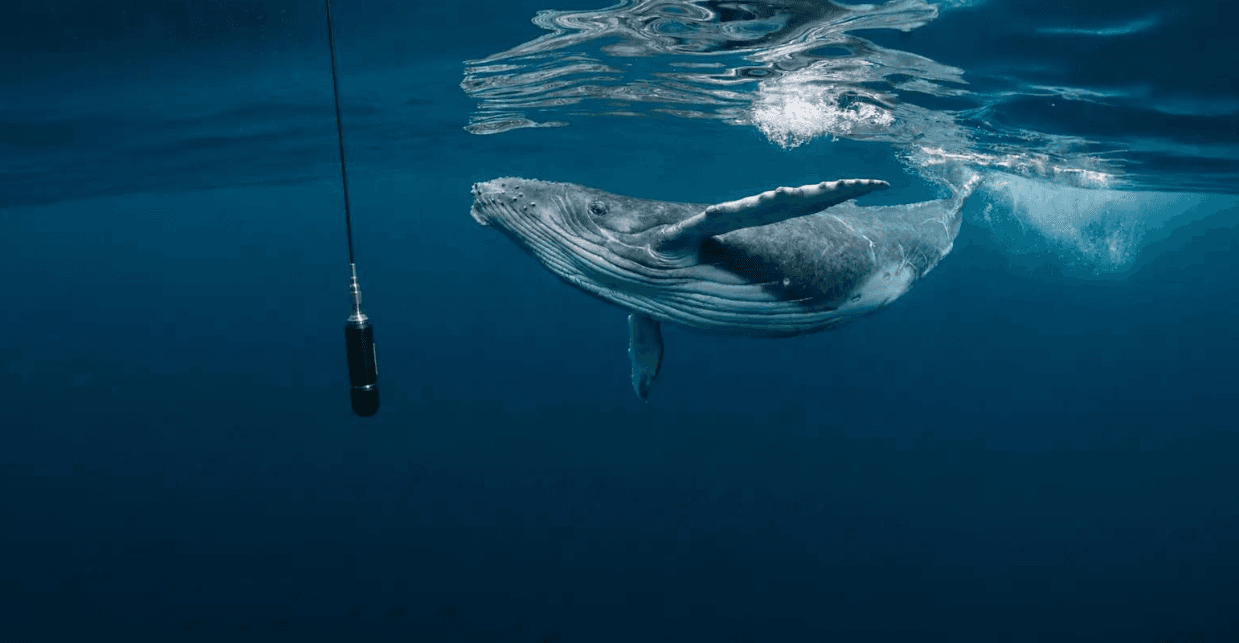
Researchers may record approximate locations and distances between animals using suitable observation methods. Depending on the study design, they may use GPS records, mapped positions, calibrated visual estimates, or specialized equipment.
Distance estimates from a moving boat can be uncertain. Researchers should document the method and avoid treating rough visual estimates as exact measurements.
Repeated observations
Following an encounter through repeated, appropriately conducted observations can help scientists understand how group composition and behavior change over time.
Nevertheless, an observation may end because the whales dive, move away, or become difficult to see. Researchers must distinguish the end of the observation from proof that the interaction itself ended.
How Do Scientists Determine Whether an Association Is Meaningful?
One of the biggest challenges is separating a genuine association from a temporary coincidence.
Scientists may consider several factors:
- Duration: How long were the whales observed near one another?
- Distance: Did they remain relatively close, or were they simply visible in the same area?
- Coordination: Did their movements appear related?
- Repeated sightings: Were the same individuals observed together on different occasions?
- Alternative explanations: Could currents, shared travel direction, or observation limitations explain the pattern?
No single factor necessarily proves a social relationship. Stronger conclusions require consistent evidence collected over multiple observations.
Researchers should also avoid assuming that whales traveling together are relatives, mates, or long-term companions unless additional evidence supports that conclusion.
Can Scientists Identify Individual Whales During Interactions?
Sometimes. Humpback whales often have distinctive patterns on the underside of their tail flukes, which can be photographed and compared with identification catalogs.
If image quality is sufficient, researchers may match an observed whale to a previously documented individual. This makes it possible to investigate whether particular whales appear together repeatedly.
Identification is not always successful. A whale may not raise its fluke, lighting may be poor, or the photograph may not show enough detail. Researchers should record uncertain identifications as uncertain rather than forcing a match.
Even when two individuals are identified correctly, repeated sightings together do not automatically reveal the nature of their relationship.
What Can Affect the Accuracy of Social-Behavior Records?
Several factors can influence the quality of observations in Samaná Bay.
Sea conditions: Waves, glare, and poor visibility may obscure parts of a whale's body or hide other individuals.
Dive patterns: Whales do not remain at the surface continuously. Individuals can disappear underwater and reappear elsewhere, complicating group counts.
Boat position: A vessel's location may affect which whales can be seen and how accurately their distances can be estimated.
Observation duration: Brief encounters provide less information about the beginning, development, and end of an interaction.
Observer differences: Two researchers may classify the same action differently unless the study uses clear behavioral definitions and training.
Sampling bias: Researchers may observe some encounters more often than others. Their records therefore may not represent every interaction occurring in the bay.
Recognizing these limitations helps prevent overconfident conclusions.
What Can Whale Watchers Learn From These Observations?
Visitors can notice how whales move in relation to one another without assuming that every close encounter has the same meaning.
For example, a pair traveling in parallel may be moving together, but the observation alone cannot establish why. Several whales surfacing close together may be engaged in social activity, yet additional context is needed to interpret their behavior.
Responsible whale watching also requires giving animals space, following applicable local rules, and choosing operators that prioritize wildlife protection. Boats should not chase, surround, or deliberately interfere with whales to obtain photographs.
The best observations are often those collected without disrupting the animals' natural behavior.
Frequently Asked Questions
Do humpback whales in Samaná Bay interact socially?
Humpback whales are capable of social interactions, and the breeding season provides opportunities to observe individuals near one another. The frequency and specific forms of interactions in Samaná Bay should be established using reliable local research rather than assumed from general whale behavior.
Can scientists tell whether two whales are friends?
Not in the human sense from a brief sighting. Researchers can document repeated associations, coordinated movement, and other observable patterns, but these do not necessarily establish an emotional relationship.
How do researchers know when an interaction ends?
They may record when whales separate, change direction, or are no longer observed together. If one whale disappears underwater or out of sight, the interaction's actual endpoint may remain unknown.
Can photographs prove that two whales have met before?
A photograph may document an encounter, and identifiable tail-fluke markings can sometimes help match individuals to earlier records. Establishing that the same two whales were together previously requires adequate identification evidence and comparable records.
Why are repeated observations important?
Repeated observations help researchers distinguish short-lived proximity from recurring associations. They also provide more information about changes in group composition and the consistency of observed behavior.
Conclusion
Recording humpback whale social interactions in Samaná Bay involves much more than counting the whales visible from a boat. Researchers document approaches, movement patterns, group changes, encounter duration, and other observable details using standardized methods, photographs, video, and identification records.
The most important principle is to separate what scientists actually observe from what they infer. Careful records, repeated sightings, and transparent acknowledgment of uncertainty help researchers investigate whale behavior without assigning unsupported meanings to individual encounters.
For whale watchers, learning how these observations are made adds another dimension to a trip to Samaná Bay: every encounter can be an opportunity to appreciate the animals while respecting their space and natural behavior.

Local explorer & expert guide in Saona Island Beach.