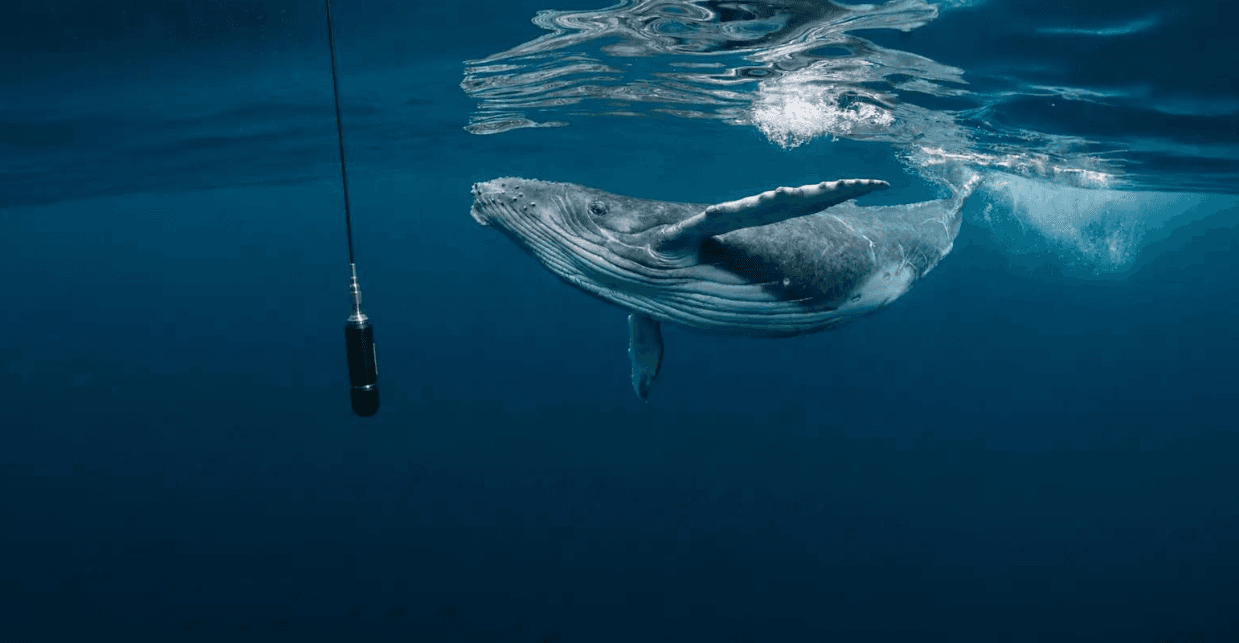
How Do Scientists Compare Humpback Whale Singing Between Different Days?
Humpback whales produce complex underwater songs that researchers can record and analyze to learn more about their vocal behavior. However, the amount and type of singing detected on one day may differ from what researchers record on another day.
These differences raise an important question: do they reflect genuine changes in whale behavior, or are they caused by changing environmental conditions, whale movements, background noise, or recording methods?
Scientists investigate this question by comparing acoustic recordings collected on separate days using consistent sampling procedures. By examining repeated observations rather than relying on isolated recordings, researchers can identify patterns, evaluate uncertainty, and develop a clearer understanding of whale vocal activity.
For destinations such as Samaná Bay in the Dominican Republic, these methods offer a useful framework for investigating humpback whale acoustics. Specific conclusions about daily changes in Samaná require local recordings and validated analysis.
Why Compare Humpback Whale Singing Across Different Days?
A single recording captures only a limited period of acoustic activity. Comparing recordings from multiple days helps researchers determine whether an observation is temporary or part of a more persistent pattern.
For example, scientists might investigate whether the amount of detectable singing remains similar across several days, increases during a particular period, or varies considerably between recording sessions.
Day-to-day comparisons can help researchers explore:
- Whether detected singing activity remains consistent over time.
- Whether certain song structures become more or less common across a study period.
- Whether environmental conditions influence the sounds captured by hydrophones.
- Whether changes in detected singing coincide with changes in whale presence or group composition.
- Whether acoustic patterns vary during different stages of a breeding season.
These questions are related but distinct. A change in the quantity of detected song does not necessarily mean that the structure of the song has changed. Scientists should measure each outcome separately.
1. Collecting Comparable Recordings
The foundation of a reliable comparison is a consistent recording method.
Researchers may use stationary hydrophones, autonomous underwater recorders, or other suitable acoustic equipment to collect whale sounds. The choice depends on the research question, deployment conditions, budget, and expected recording duration.
To compare different days fairly, scientists should document:
- The date and time of each recording.
- The duration of usable audio.
- The hydrophone location and deployment depth.
- The equipment and recording settings.
- Any interruptions or technical problems.
- Environmental conditions that could affect sound quality.
Whenever possible, researchers should record at the same location using the same equipment and settings.
Consider a hypothetical study that collects one hour of usable audio on each of five days. The researchers could compare the recordings using the same detection criteria and measurement procedures.
If one day's recording contains only 20 usable minutes because of equipment failure, its raw sound count should not be compared directly with the counts from full-hour recordings. Researchers would need an appropriate adjustment or a clearly defined exclusion rule.
Consistency helps ensure that differences in the results are more likely to reflect meaningful variation rather than differences in data collection.
2. Measuring Singing Activity on Each Day
Once the recordings have been collected, researchers need standardized measurements.
One option is to calculate the proportion of sampled recording intervals containing detectable whale song. For example, scientists could divide usable audio into equal-length intervals and determine which intervals contain identifiable song.
Other possible measurements include:
Total song duration: The amount of recording time occupied by identifiable whale song.
Song-positive interval rate: The proportion of sampled intervals in which song is detected.
Song event rate: The number of defined song events per unit of usable recording time, when individual events can be distinguished reliably.
Song structure: The presence and arrangement of recognizable acoustic patterns within songs.
Acoustic diversity: The variety of detected sound types, provided the classification method is sufficiently reliable.
These measurements answer different questions. A day with more song-positive intervals may have greater detectable singing activity, while a day with a different distribution of song structures may show variation in the sounds recorded.
Scientists should specify their main measurement before analyzing the data. This reduces the risk of choosing whichever result appears most striking after the recordings have been examined.
3. Using Spectrograms to Compare Recordings
A spectrogram displays sound energy across time and frequency, allowing researchers to inspect acoustic patterns visually.
Scientists can use spectrograms to identify likely whale song, compare repeated patterns, and examine differences between recordings from separate days.
For example, researchers might compare whether a recognizable song pattern appears in recordings from Monday and Tuesday. They may also investigate whether the same general pattern remains detectable later in the week.
However, identifying similar patterns does not automatically establish that the same individual whale produced them. Multiple whales may sing similar or related songs, and overlapping vocalizations can complicate interpretation.
Automated acoustic analysis can help process large collections of recordings, but detection systems must be checked for accuracy. Noise, equipment differences, and overlapping sounds may cause software to miss songs or classify unrelated sounds incorrectly.
A careful study applies consistent criteria and reviews uncertain detections before drawing conclusions.
4. Accounting for Recording Duration and Missing Data
Not every recording provides the same amount of usable information.
One day may contain several hours of clear audio, while another may include equipment interruptions, strong background noise, or periods when recordings are unavailable.
Scientists must account for these differences before comparing results.
A simple method is to calculate rates or proportions rather than comparing raw totals. For instance, song events may be expressed per hour of usable recording when event counts are reliable.
Researchers should also distinguish between missing recordings and recordings in which no song was detected. Missing data provide no direct evidence about whether whales were singing during that period.
If equipment fails overnight, scientists cannot conclude that singing stopped overnight. They simply lack usable observations for that interval.
Transparent reporting of missing data helps prevent gaps in the recording schedule from being mistaken for changes in whale behavior.
5. Separating Biological Changes From Environmental Differences
Environmental conditions can affect both whale behavior and the ability to detect whale sounds.
Several factors deserve attention when comparing separate days.
Underwater noise
Boat engines and other underwater noise sources can mask whale vocalizations. If one day is noisier than another, researchers may detect fewer songs even if the whales' actual singing activity remains similar.
Weather and sea conditions
Wind, waves, and other conditions may influence background noise, equipment performance, or the quality of the recordings.
Whale movements
Singing whales may move closer to or farther from the hydrophone. A change in detected sound intensity could therefore reflect changing distance rather than a change in singing effort.
Number of nearby singers
A recording may capture vocalizations from multiple whales. Changes in the number of whales near the equipment can affect the acoustic signal, but the number of detected sounds does not directly establish the number of individual singers.
Equipment differences
Different hydrophone sensitivities, deployment depths, recording settings, or equipment conditions can produce differences in the collected data.
Researchers should document these factors and incorporate relevant measurements into their analysis. Where possible, they can compare recordings made under similar conditions or use statistical methods to account for measured differences.
Even with these precautions, not every cause of acoustic variation can be identified with certainty. Good research explains the remaining limitations rather than treating every difference as a behavioral discovery.
6. Using Statistical Analysis to Identify Meaningful Changes
After standardizing the recordings, researchers can compare measurements across dates.
They might calculate the average proportion of song-positive intervals for each day, examine variation around those estimates, and evaluate whether differences are larger than would reasonably be expected from sampling variability.
The appropriate statistical method depends on the study design and the type of data collected.
For example, a model analyzing song-positive intervals might account for background noise, recording duration, and repeated observations from the same hydrophone. Count-based models may be suitable for event data when their assumptions are satisfied.
Researchers must also consider that consecutive recordings can be related. Several intervals recorded close together may reflect the same singing bout rather than independent events.
A statistically detectable difference is not automatically biologically important. Scientists should consider the size of the difference, its consistency across observations, and the limitations of the measurements.
The goal is not simply to identify a higher or lower number. It is to determine how strongly the evidence supports a meaningful change.
7. Determining Whether Song Structure Changes Between Days
Scientists may also compare the acoustic organization of songs rather than measuring only how often singing occurs.
Humpback whale songs contain repeated patterns and sequences of sound units. Researchers can examine the order, duration, frequency characteristics, and occurrence of identifiable components.
When recordings from different days contain sufficiently clear examples, researchers may investigate whether particular patterns persist, become less common, or appear different.
However, differences in recording quality can affect these comparisons. A sound that is difficult to hear on one day may simply be masked by noise or recorded from a greater distance.
Researchers should also avoid assuming that a difference between two recordings represents a change made by one individual. Unless singers are reliably identified, the recordings may represent different whales or different combinations of singers.
Separating song-pattern variation from individual identity is an important part of accurate acoustic interpretation.
8. Following Singing Activity Across a Longer Period
Comparisons between individual days can become more informative when they form part of a longer monitoring program.
A research team may collect recordings across multiple weeks or months and examine whether day-to-day differences follow a broader pattern.
For example, scientists could investigate whether detected singing activity changes across a study period, whether certain acoustic patterns remain common, or whether variations coincide with environmental changes.
Longer monitoring helps distinguish short-term fluctuations from more persistent trends. Nevertheless, researchers must account for seasonal changes, changing recording conditions, equipment maintenance, and variations in whale presence.
A pattern observed over several days should not automatically be generalized to an entire breeding season or to other whale populations.
The strength of the conclusion depends on the duration and quality of the monitoring data.
9. What Could These Comparisons Reveal About Samaná Bay?
Samaná Bay is an important destination for seasonal humpback whale watching. Understanding the region's whale acoustics could provide additional information about underwater vocal activity and how it varies over time.
A local acoustic study could compare recordings from successive days, investigate differences in detected song activity, and examine whether environmental noise or whale movements help explain those differences.
To produce reliable findings, researchers would need an appropriate sampling design, consistent recording equipment, sufficient repeated observations, and a transparent analytical method.
Observations from other humpback whale breeding areas may help researchers develop hypotheses, but they cannot establish the exact day-to-day singing patterns of whales in Samaná Bay.
Visitors should also remember that acoustic activity and surface sightings measure different aspects of whale behavior. A reduction in visible sightings does not prove that whales have stopped singing, and an increase in detected song does not guarantee that more whales will be visible from a boat.
Local recommendations should be based on appropriate evidence rather than assumptions about when whales are most active.
10. Common Mistakes in Day-to-Day Whale Song Comparisons
Several errors can make acoustic findings misleading.
Comparing raw counts from unequal recording periods: Longer recordings usually provide more opportunities to detect sounds. Use standardized durations or appropriate rate calculations.
Ignoring background noise: A noisy recording may contain fewer detectable songs even if the underlying singing activity has not changed.
Assuming all detected sounds come from different whales: One whale may produce many sound units, while multiple whales may vocalize at the same time.
Treating missing recordings as silence: An equipment failure or recording gap does not establish that whale song was absent.
Drawing conclusions from too few observations: A single unusual day may reflect temporary conditions rather than a consistent pattern.
Confusing song quantity with song structure: The amount of detectable singing and the organization of song patterns are different outcomes.
Generalizing findings beyond the study area: Results from one hydrophone or breeding population may not apply to other locations.
Avoiding these mistakes helps scientists produce more reliable conclusions and communicate the limits of their evidence.
11. How Technology Is Improving Whale Acoustic Monitoring
Modern recording systems can collect large volumes of underwater audio, allowing researchers to study whale vocal activity across extended periods.
Acoustic analysis software can help identify likely whale songs, classify sound patterns, and organize recordings by date. Automated tools may also help researchers select periods for closer manual inspection.
When combined with environmental monitoring, these systems can make it easier to investigate how recorded activity varies under different conditions.
However, automated detection is not infallible. Its performance depends on recording quality, background noise, and how well the system recognizes sounds in the study environment. Researchers need to validate their methods and report relevant uncertainty.
Technology improves the scale of analysis, but careful study design and interpretation remain essential.
Conclusion
Scientists compare humpback whale singing between different days by collecting standardized underwater recordings, measuring song activity, examining acoustic patterns, and analyzing repeated observations.
Reliable comparisons require attention to recording duration, background noise, whale movements, equipment performance, and statistical uncertainty. Researchers must also distinguish changes in detected singing activity from changes in song structure or the number of individual whales present.
For Samaná Bay, these methods provide a framework for future local acoustic research, but specific conclusions require supporting data from the region.
By comparing recordings carefully over time, scientists can build a more reliable picture of humpback whale vocal activity while avoiding assumptions that go beyond the evidence.
Frequently Asked Questions
Why do scientists compare whale songs from different days?
They compare recordings to investigate whether singing activity or song patterns remain consistent, fluctuate temporarily, or change over a longer study period.
How do scientists measure whale singing activity?
They may calculate song duration, the proportion of recording intervals containing song, or the rate of identifiable song events. The chosen measurement depends on the research question and recording quality.
Does a quieter recording mean fewer whales are singing?
Not necessarily. Quieter recordings may reflect greater distance, background noise, equipment differences, or fewer nearby singers. Additional evidence is needed to determine the cause.
Can scientists identify the same whale on different days by its song?
Sometimes acoustic patterns can support comparisons, but identifying an individual whale from song alone is challenging. Reliable individual identification requires suitable evidence and validated methods.
How long must researchers record whale songs to identify a pattern?
There is no universal minimum. The required duration depends on how variable singing activity is, the frequency of observations, the research question, and the quality of the data.
Can day-to-day whale song research help visitors plan whale watching in Samaná?
It may contribute to broader knowledge about whale behavior, but underwater singing measurements do not directly predict surface sightings. Visitor advice should rely on suitable local evidence and established whale-watching guidance.

Local explorer & expert guide in Saona Island Beach.