A Beginner's Guide to Humpback Whale Anatomy: Understanding the Features You See in Samaná Bay
Humpback whales are among the most fascinating animals visitors may encounter during a whale-watching excursion in Samaná Bay, Dominican Republic. Their enormous bodies, long pectoral fins, distinctive tail flukes, and unusual head features make them remarkable marine mammals.
Understanding humpback whale anatomy can make your trip more educational. When a whale surfaces, you may see only a small portion of its body, but knowing what each visible feature does can help you appreciate the animal's remarkable adaptations.
This beginner-friendly guide explains the main parts of a humpback whale's body, how they function, and which features you might observe while whale watching in Samaná.
Why Is Humpback Whale Anatomy So Interesting?
Humpback whales belong to the baleen whale group. Instead of teeth, they have baleen plates that help them filter small prey from seawater.
Their bodies are adapted for life in the ocean. They need to move efficiently through water, travel long distances during migration, locate food, communicate, and care for their young.
Each body feature contributes to one or more of these functions. Some features, such as the tail flukes, provide powerful movement. Others, including the baleen plates, are essential for feeding.
Learning about these adaptations helps visitors understand that a humpback whale is much more than a large animal appearing at the surface.
1. The Head: More Than Just a Face
The head of a humpback whale contains several distinctive structures.
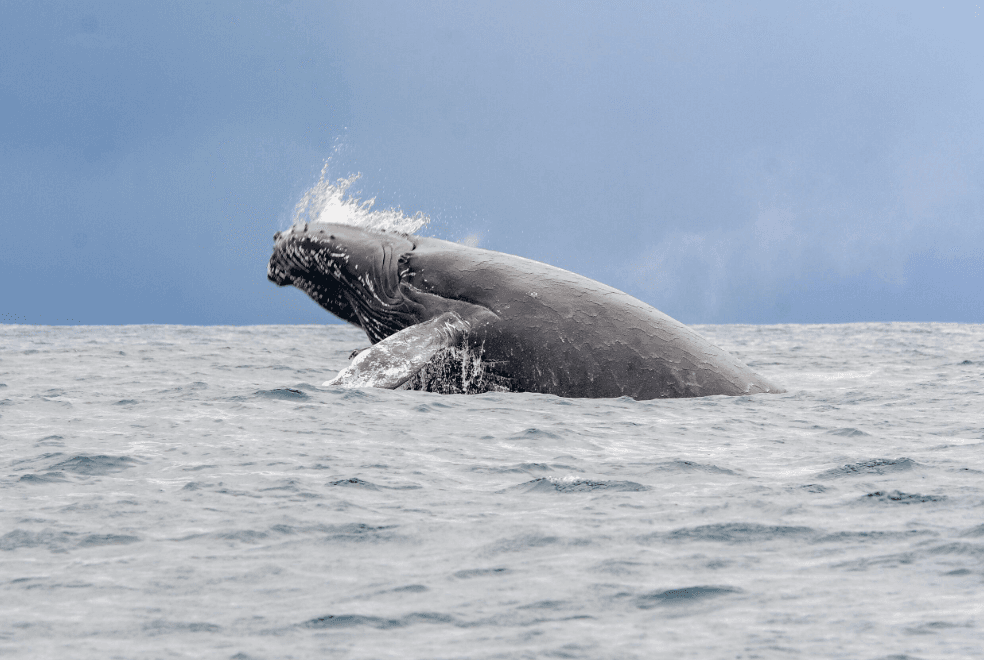
Unlike many toothed whales, humpbacks have broad heads with rounded bumps called tubercles. These bumps occur along parts of the head and lower jaw.
Each tubercle contains a hair follicle, although the hairs themselves are not always easy to see. Scientists continue to investigate the sensory roles of different whale structures, so it is best not to assume that every tubercle has a fully understood function.
The head also contains structures associated with feeding, breathing, and sound production.
What Is the Rostrum?
The rostrum is the forward portion of the whale's head. In humpback whales, the rostrum has a broad, rounded appearance rather than the narrow shape seen in some other cetaceans.
If a whale surfaces with its head partially visible, you may notice the general shape of this area. However, viewing conditions and the distance from the boat can make individual features difficult to distinguish.
Why Does the Head Have Bumps?
The tubercles are one of the humpback whale's distinctive physical characteristics. They contribute to the whale's recognizable head profile.
Although the bumps are easy to describe, their complete biological significance should not be reduced to a single simple explanation. Their structure and possible sensory functions are subjects of scientific interest.
2. The Blowholes: How Humpback Whales Breathe
Humpback whales are mammals, not fish. They breathe air using lungs and must return to the surface to inhale.
Like other baleen whales, a humpback has two blowholes positioned on top of its head. Their location allows the whale to breathe while exposing relatively little of its body above the water.
When a whale exhales at the surface, warm, moist air and water droplets can create a visible plume commonly called a blow.
This visible plume is not simply seawater being expelled from the lungs. It mainly results from exhaled air, condensed moisture, and droplets around the blowholes.
Can You See the Blowholes During a Tour?
Visitors are more likely to notice the plume than the blowholes themselves. The openings may remain difficult to see unless the whale's head is visible from a suitable angle.
You may observe several breaths before the whale dives again. The pattern varies depending on what the animal is doing, and it is not possible to predict every surfacing sequence.
Understanding the blowholes helps explain why humpback whales regularly return to the surface even though they spend much of their time underwater.
3. The Pectoral Fins: Long and Powerful
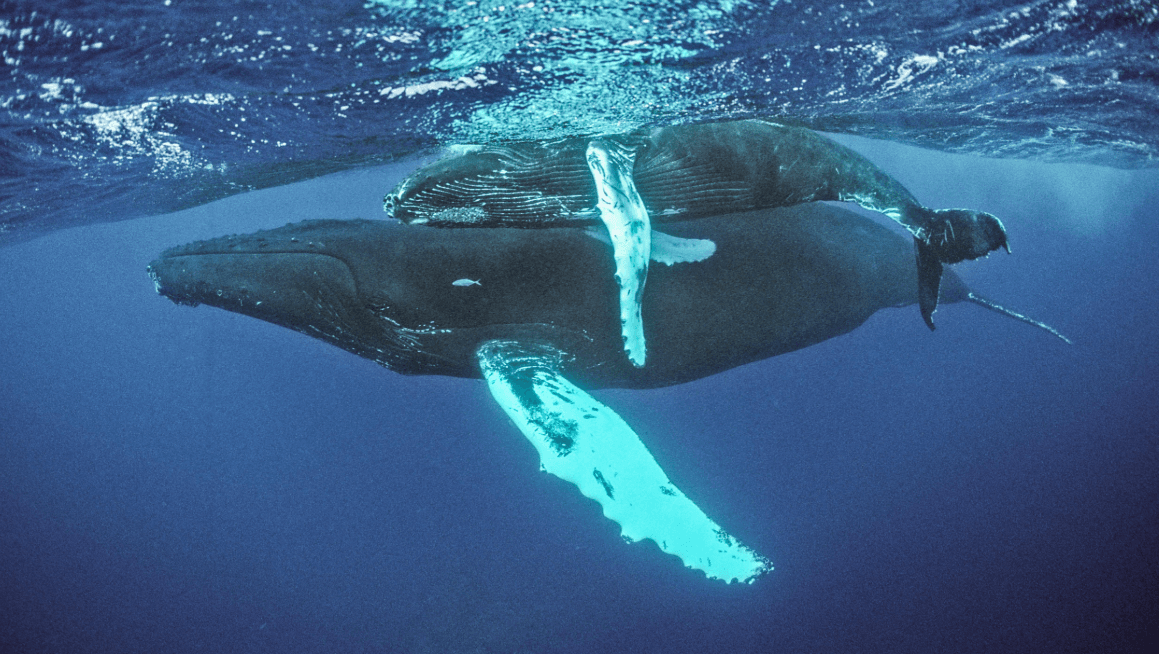
One of the most striking features of a humpback whale is its exceptionally long pectoral fins.
These paired fins extend from the sides of the body and help the whale maneuver in the water. Compared with the body size of many other whale species, humpback pectoral fins are especially long.
Their edges also have distinctive bumps, contributing to their recognizable shape.
What Do Pectoral Fins Do?
Pectoral fins help with steering, maneuvering, and controlling body movement. Their size and flexibility support the whale's ability to make changes in direction.
They are different from a fish's tail fin, which commonly provides the main forward propulsion. In humpback whales, the primary propulsive force comes from up-and-down movement of the tail flukes.
Why Are They Sometimes Visible Above the Water?
During some encounters, a humpback may lift a pectoral fin above the surface or roll its body in a way that exposes the fin.
You may also see a fin when a whale turns near the surface. These appearances can be brief, so it is worth paying attention without expecting any particular display.
4. The Dorsal Fin: A Small Feature on a Huge Body
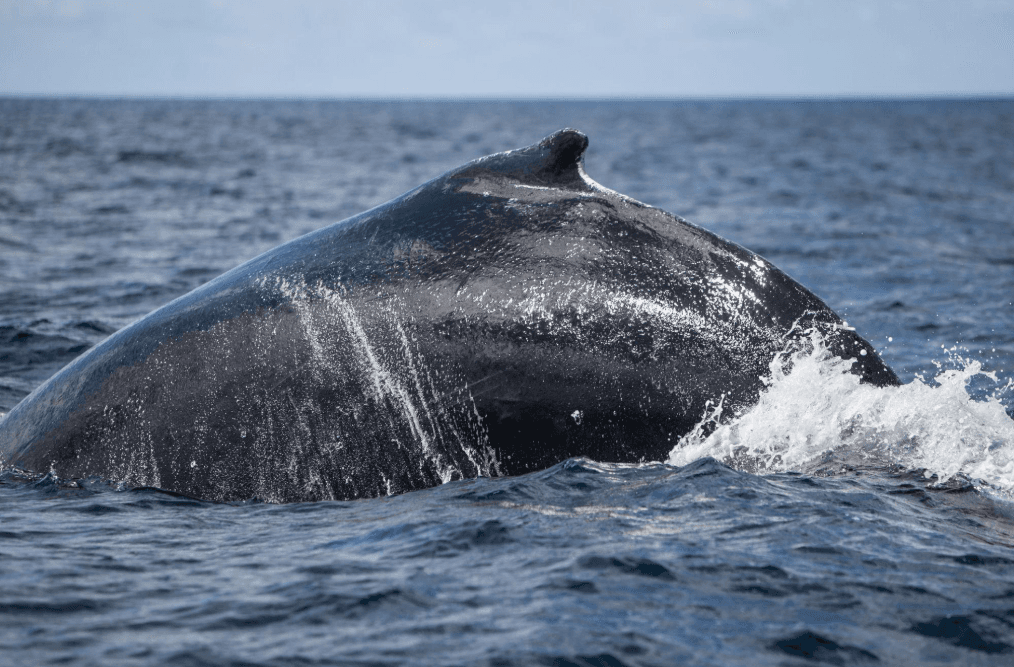
The dorsal fin is located along the whale's back. In humpback whales, it is relatively small compared with the overall size of the animal and sits on a raised area of the back known as a dorsal hump.
The shape of the dorsal fin can vary among individuals.
When Might You See the Dorsal Fin?
As a humpback surfaces, a portion of its back may appear first. The dorsal fin may become visible before the animal dives again.
Sometimes, the fin and surrounding back are the only features a visitor sees during an encounter.
A dorsal fin is useful to recognize as part of the whale's anatomy, but a brief view is not necessarily enough to identify an individual animal.
5. The Tail Flukes: The Main Source of Propulsion
The tail flukes are among the most recognizable parts of a humpback whale.
Unlike a fish's tail, which usually moves from side to side, a humpback whale's tail moves up and down. This movement pushes water backward and propels the whale forward.
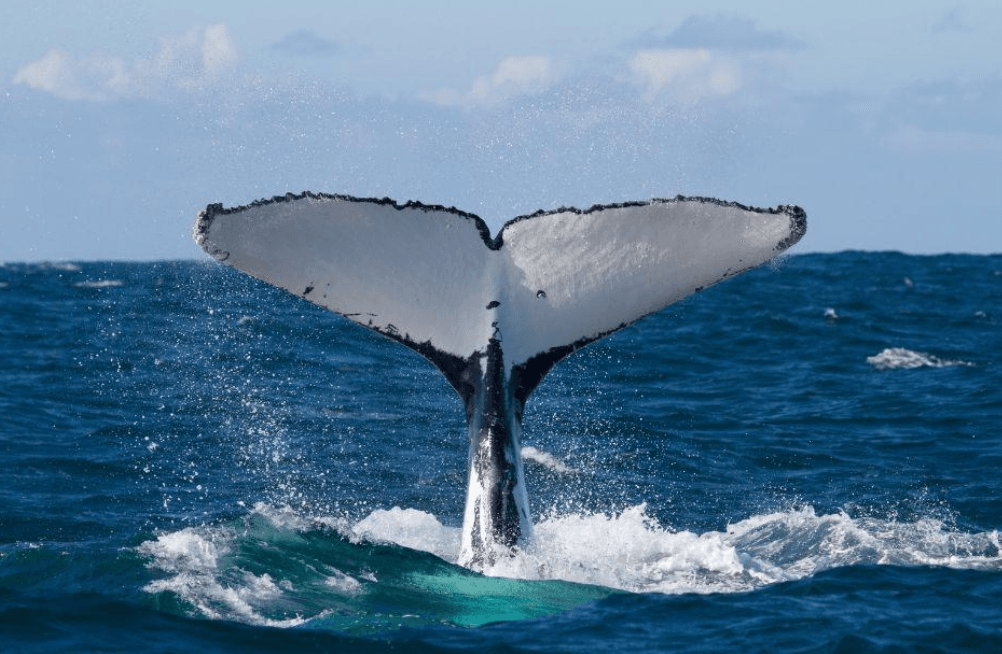
The flukes form two broad lobes separated by a central notch. Their large surface area helps generate the force needed to move such a massive animal.
What Happens When a Whale Raises Its Tail?
Before a deeper dive, a humpback may lift its tail flukes above the surface. This movement is often called a fluke-up dive.
However, a tail display is not guaranteed before every dive. The whale's movement depends on its activity and the circumstances of the encounter.
If you see the underside of the tail, you may notice contrasting patterns of dark and light pigmentation. The shape and markings of the flukes can be useful to researchers who photograph and compare individual whales.
For visitors, the tail is also an excellent example of how a whale's anatomy supports life in the ocean.
6. The Baleen Plates: A Specialized Feeding System
Humpback whales do not have teeth as adults. Instead, they have rows of baleen plates hanging from the upper jaw.
Baleen is made primarily of keratin, the same structural protein found in human hair and fingernails. The plates have fringed edges that help retain prey while water passes out of the mouth.
How Does Baleen Work?
During feeding, a humpback takes in water containing prey. The whale then expels the water while the baleen helps retain food such as krill and small fish.
Some humpbacks use coordinated feeding techniques that allow them to gather prey efficiently.
Because baleen is inside the mouth, visitors generally cannot inspect it during a typical whale-watching excursion. Nevertheless, it is one of the most important anatomical features to understand when learning about humpback whales.
Humpback whales visiting Samaná Bay are widely associated with breeding and calving rather than feeding as their primary activity there. Their feeding patterns are connected to the different regions they use throughout their annual migration.
7. The Body Shape: Built for Ocean Travel
A humpback whale has a streamlined body that tapers toward the tail. This shape helps the animal move through water, although its body is more robust than that of some faster-swimming cetaceans.
Its body includes a thick layer of blubber beneath the skin. Blubber provides insulation, stores energy, and supports buoyancy.
These functions are particularly important for a mammal that travels through different marine environments during migration.
Why Does Body Shape Matter?
A whale's body must support several demands at once. It needs to move efficiently, maintain body temperature, store energy, and perform the movements required for feeding and reproduction.
Its shape and internal structures reflect these biological requirements.
The size of an adult humpback can be impressive, but individuals differ in length, weight, age, and condition. A whale seen from a boat may be difficult to measure accurately, so precise estimates should be left to trained observers using appropriate methods.
8. The Throat Grooves: Adaptations for Feeding
Humpback whales have expandable grooves along the underside of the throat and belly. These grooves are called ventral pleats.
When the whale takes a large volume of water and prey into its mouth, the pleats allow the throat region to expand.
This flexibility is important for feeding strategies that involve engulfing prey-laden water.
After taking in water, the whale pushes the water back out through its baleen plates, retaining food inside the mouth.
The pleats are not usually visible during a standard whale-watching encounter. Still, they are a useful example of how the whale's anatomy supports its feeding method.
9. The Flukes, Fins, and Back Work Together
Individual body parts have specific functions, but they operate as a coordinated system.
The tail flukes generate forward propulsion. The pectoral fins help with steering and maneuvering. The body's shape helps the whale travel through the water, while the dorsal region and tail contribute to its overall movement and stability.
These structures allow humpback whales to perform a range of movements while swimming, feeding, migrating, and interacting with other whales.
Observing even one of these features can help you appreciate the physical adaptations behind a brief surface encounter.
Which Anatomical Features Can You See in Samaná Bay?
During a whale-watching trip, visibility depends on the animal's position, the sea conditions, the distance from the boat, and the length of the encounter.
Here is a simple guide to the features you may observe.
Body featureWhat you might seeBlowholesUsually difficult to distinguish; the exhalation plume is more noticeableHead and rostrumA partial view when the whale surfacesPectoral finsA fin at the surface or during a rollDorsal finA small fin along the backTail flukesThe tail lifted above the water before some divesBaleen platesGenerally not visible during ordinary whale watchingThroat pleatsUsually not visible from a typical viewing position
Remember that every excursion is different. A whale may surface briefly or remain visible for longer, and some anatomical features may never appear during your trip.
How to Observe Whale Anatomy Responsibly
Learning about humpback anatomy should deepen your appreciation of these animals without interfering with their behavior.
Follow the tour operator's instructions and applicable wildlife-viewing rules. Do not encourage a boat to approach a whale more closely for a better view of a particular body part.
Bring binoculars if you find them useful, but do not feel that you need special equipment to enjoy the experience. A guide can often explain the visible features and help you understand what you are seeing.
It is also important to avoid assuming that a particular movement has a definite meaning. For example, raising a fin does not automatically prove that a whale is trying to communicate with people.
By observing carefully and avoiding unsupported interpretations, you can learn more while respecting the wildlife.
Frequently Asked Questions About Humpback Whale Anatomy
Do humpback whales have teeth?
Adult humpback whales have baleen plates instead of teeth. These plates help them filter prey from water during feeding.
What is the difference between a humpback whale's tail and its pectoral fins?
The tail flukes provide the main propulsion through up-and-down movement. The paired pectoral fins help the whale steer and maneuver.
Why does a humpback whale have two blowholes?
Humpback whales are baleen whales and have two blowholes on top of the head. These openings allow them to breathe air efficiently at the surface.
What are the bumps on a humpback whale's head?
They are called tubercles. Each contains a hair follicle, and their full biological significance should not be simplified to one confirmed function.
Can you see baleen during a Samaná whale-watching tour?
Usually not. Baleen is located inside the whale's mouth, and ordinary surface encounters rarely provide a clear view of it.
Are humpback whale tail patterns unique?
Tail-fluke markings and shapes can help researchers identify individual humpback whales when suitable photographs and comparison records are available. A casual sighting alone may not be enough for a reliable identification.
Final Thoughts
Understanding humpback whale anatomy adds another layer of meaning to a whale-watching trip in Samaná Bay. From the long pectoral fins and powerful tail flukes to the baleen plates and expandable throat grooves, each feature reflects an adaptation to life in the ocean.
You may not see every body part during your excursion, but knowing what to look for can make even a brief sighting more informative.
Take time to listen to your guide, observe what is actually visible, and appreciate these remarkable marine mammals from a respectful distance. The more you learn about their anatomy, the more you can understand the incredible biology behind every appearance at the surface.

Local explorer & expert guide in Saona Island Beach.