How Humpback Whales Feed: A Guide for Samaná Visitors
Humpback whales are among the ocean's most fascinating animals. Their enormous bodies, long pectoral fins, and powerful movements make them unforgettable to observe. Yet one of their most impressive abilities happens when they search for food and capture prey beneath the surface.
For visitors exploring Samaná Bay in the Dominican Republic, understanding how humpback whales feed provides a deeper appreciation of these marine mammals. It also explains why whales seen in the Caribbean may behave differently from those observed in northern feeding grounds.
Humpback whales use specialized structures inside their mouths, coordinated movements, and different feeding strategies to capture small prey despite their enormous size. Their feeding habits are closely connected to the ocean environments they inhabit throughout the year.
1. What Do Humpback Whales Eat?
Humpback whales are baleen whales that feed mainly on small marine animals rather than large prey.
Their diet commonly includes krill and small schooling fish. The precise food they consume depends on the location, season, and prey available in their environment.
Krill are small, shrimp-like crustaceans that can occur in large concentrations. Schooling fish gather in groups, sometimes forming dense clusters that make them easier for predators to capture.
Although humpback whales are enormous, they can feed on these relatively small animals because they are adapted to collect large quantities of prey from the water.
Their feeding grounds often provide productive conditions where food is abundant enough to support the energy demands of these large mammals.
2. How Do Humpback Whales Use Baleen Plates?
One of the most important features of a humpback whale is its baleen.
Unlike toothed whales, humpbacks do not have rows of teeth for biting and chewing their prey. Instead, they have flexible plates of baleen hanging from their upper jaws.
These plates consist of keratin, the same structural protein found in human hair and fingernails.
The baleen works like a filtering system. When a whale takes in water containing prey, it can push the water out through the baleen while retaining food inside its mouth.
The whale then swallows the captured prey.
This feeding adaptation allows humpbacks to consume large quantities of small animals without needing to catch each one individually.
Baleen is not a rigid metal-like filter. It consists of specialized plates with fringed edges that help retain food particles as water passes through.
For visitors, this is an important reminder that a whale's enormous size is supported by a feeding system adapted to collect relatively small prey efficiently.
3. How Does a Humpback Whale Catch Its Food?
Humpback whales use different techniques depending on the prey they are hunting and the conditions in the water.
One common strategy is called lunge feeding. The whale accelerates toward a concentration of prey and opens its mouth to take in a large volume of water along with the animals it is targeting.
The whale then filters out much of the water through its baleen and swallows the captured food.
This process requires coordination and energy. The whale must locate prey, approach it effectively, and use its body and mouth to capture enough food to make feeding worthwhile.
Humpbacks may also change their movements according to where prey is located in the water column.
Their feeding behavior demonstrates how an animal weighing many tons can use precise movements to exploit small prey that might otherwise seem difficult to capture.
4. What Is Bubble-Net Feeding?
Bubble-net feeding is one of the best-known humpback whale feeding strategies.
In certain populations and circumstances, whales release bubbles while swimming in patterns that help concentrate schooling fish. One or more whales may participate in the behavior, depending on the group and location.
As the fish become concentrated, the whales may move upward through the prey in a coordinated feeding maneuver.
The technique can be highly specialized. Its use varies between groups of humpbacks, and not all humpback whales practice bubble-net feeding.
It is also important to understand that bubble-net feeding is associated with suitable prey and feeding environments. It is not a typical behavior to expect during a whale-watching trip in Samaná Bay.
Visitors should not assume that a whale seen in the Caribbean will demonstrate this feeding technique. The whales' behavior depends on their activity, environment, and natural needs.
5. Why Do Humpback Whales Feed Less in Samaná Bay?
Samaná Bay is known primarily as part of the wider Caribbean breeding region for North Atlantic humpback whales.
Many of these whales spend the warmer months feeding in productive northern waters before traveling south for the breeding season.
In Caribbean breeding areas, humpbacks generally feed little or not at all compared with their behavior on northern feeding grounds. Instead, they rely heavily on energy reserves accumulated during the feeding season.
These reserves help support migration, reproduction, and other energy demands.
This explains why a whale-watching excursion in Samaná is generally focused on observing whale behavior at the surface rather than watching whales hunt for food.
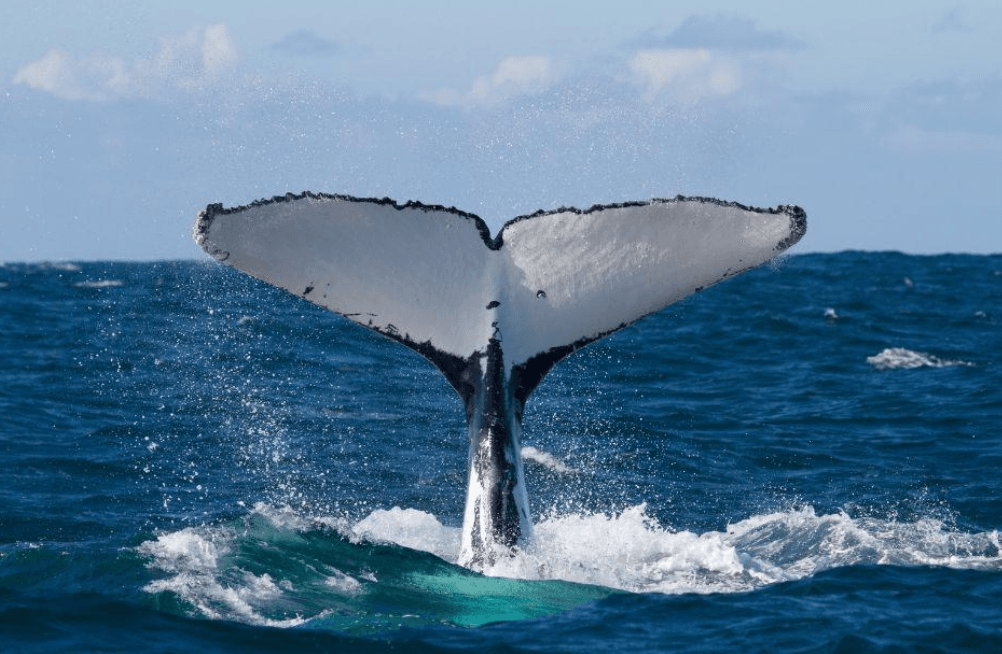
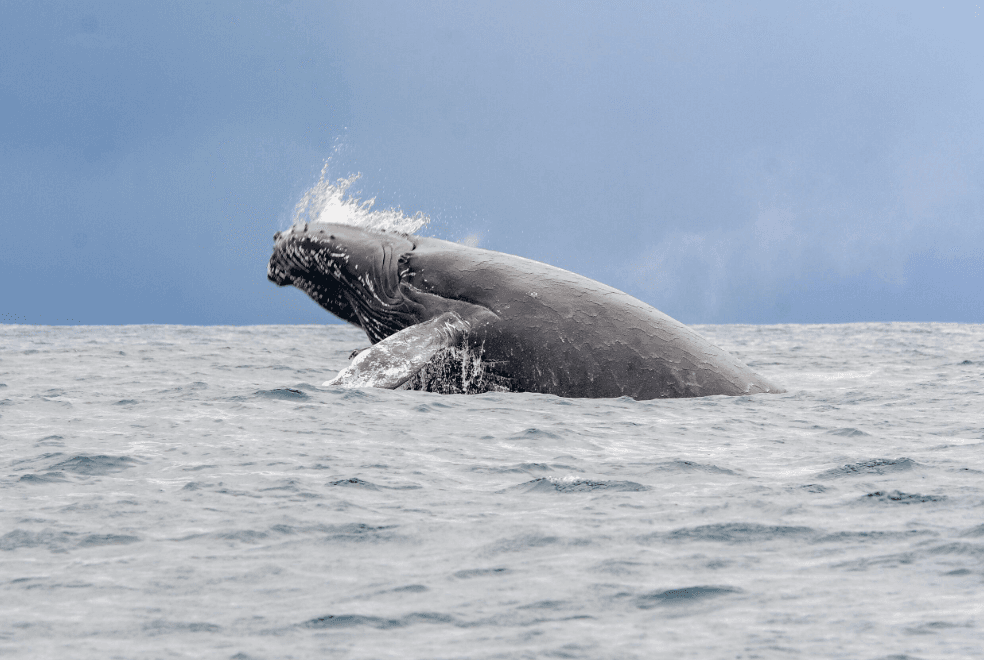
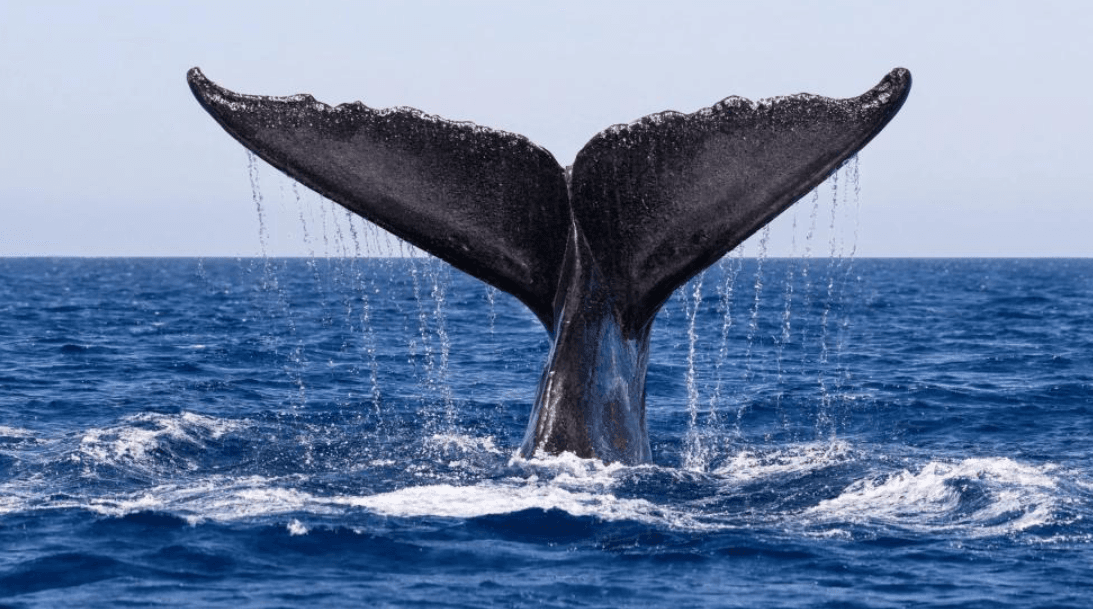
Visitors may see whales surfacing, breaching, raising their tails, or interacting with other whales. These behaviors are different from feeding and should not automatically be interpreted as signs that the animals are hunting.
Individual behavior can vary, and feeding opportunities are not necessarily identical throughout the broader region.
6. How Do Humpback Whales Store Energy?
Humpback whales need substantial energy to support their large bodies, long migrations, and reproductive activities.
During periods of active feeding, they consume prey and accumulate energy reserves in their bodies. These reserves help them manage times when they are not feeding regularly.
Migration can cover thousands of miles, depending on the whale's route. Reproduction and raising a calf also require energy.
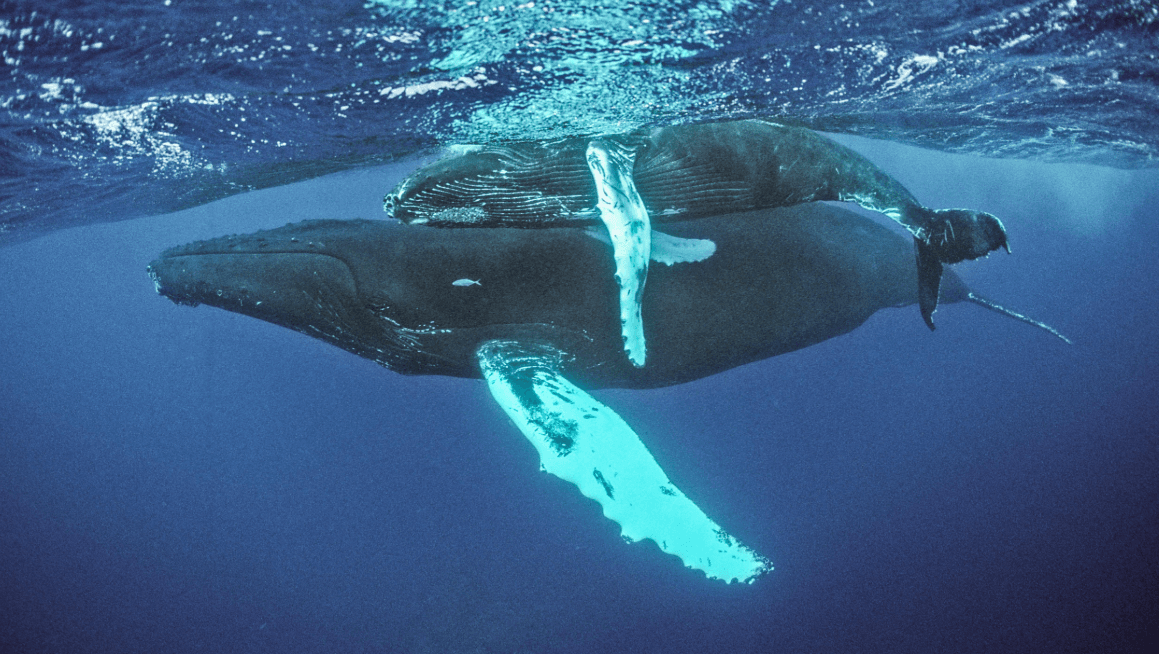
A mother whale must support her own needs while producing milk for her calf. The calf grows rapidly during its early life and depends on its mother for nourishment and protection.
This seasonal pattern connects feeding behavior in northern waters with reproduction in tropical areas.
The whales' ability to move between different environments is an important part of their life cycle.
7. Do Humpback Whales Chew Their Food?
Humpback whales do not chew prey in the same way humans do.
Their baleen plates help them filter food from water rather than cutting prey with teeth. After capturing suitable prey, the whale swallows it.
This system is effective for an animal that consumes large quantities of small marine organisms.
It also distinguishes baleen whales from toothed whales, which generally use teeth to capture or handle prey.
A humpback whale's feeding anatomy is therefore closely linked to its diet. Its mouth is adapted to take in prey and water, while its baleen helps separate the food from the surrounding water.
8. Can You See Humpback Whales Feeding During a Samaná Tour?
Feeding is not usually the main behavior visitors should expect to observe in Samaná Bay during the breeding season.
The whales are generally using the wider region for reproductive activities, and many are not actively feeding in the same way they do on northern feeding grounds.
Instead, visitors may encounter a variety of natural behaviors, including:
- Surfacing: Whales rise to breathe before diving again.
- Breaching: A whale launches part or much of its body above the surface.
- Tail slapping: A whale strikes the water with its tail flukes.
- Social interaction: Whales may travel together or engage in behavior associated with courtship and competition.
- Mother-and-calf activity: Calves may swim close to their mothers as they develop.
Not every trip produces the same sightings. Whale watching takes place in a natural environment, so the animals' movements and behaviors cannot be guaranteed.
A responsible excursion allows visitors to observe without trying to influence what the whales do.
9. Why Is Understanding Whale Feeding Important for Conservation?
Learning about feeding behavior helps explain why humpback whales need healthy ocean ecosystems across their entire range.
Their northern feeding grounds must support sufficient prey for the whales to build energy reserves. Their migration routes and tropical breeding areas must also remain suitable for their different life stages.
Threats such as entanglement in fishing gear, vessel strikes, underwater noise, and changes in marine ecosystems can affect whales in different ways and locations.
Protecting only the places where whales are easiest to see is not enough. Conservation efforts must consider the wider environments on which the animals depend.
Visitors can support responsible whale watching by choosing operators who follow applicable wildlife regulations, respect required distances, and avoid disturbing the animals.
They should never pressure a captain to approach a whale more closely just to obtain a photograph or observe a particular behavior.
Respectful viewing helps keep the focus on understanding the animals rather than controlling their movements.
Frequently Asked Questions
What do humpback whales eat?
Humpback whales mainly eat small marine prey, including krill and small schooling fish. Their diet depends on the food available in their feeding areas.
How do humpback whales eat without teeth?
They use baleen plates in their upper jaws to filter prey from water. The water passes out while the food is retained and swallowed.
Do humpback whales feed in Samaná Bay?
Samaná is primarily associated with the breeding season for North Atlantic humpbacks. Many whales feed little or not at all during their time in tropical breeding waters, although behavior can vary.
What is bubble-net feeding?
It is a specialized feeding strategy in which whales use bubbles and coordinated movements to help concentrate schooling fish before capturing them.
Why do humpback whales need so much food?
Their large bodies, migration journeys, and reproductive activities require substantial energy. Feeding in productive northern waters helps them build energy reserves.
Can tourists watch humpback whales hunt in Samaná?
Feeding behavior is not the main activity visitors should expect during the local breeding season. Sightings depend on the whales' natural behavior and conditions on the day.
Final Thoughts
Humpback whales use specialized baleen plates and coordinated feeding strategies to capture small marine animals in productive ocean waters. Their feeding habits help explain how these enormous mammals obtain energy for migration and reproduction.
In Samaná Bay, their seasonal presence is closely connected to the breeding cycle rather than the active feeding behavior commonly observed in northern waters.
Understanding this difference helps visitors appreciate what makes the Samaná experience special. Whale watching is not simply about seeing a large animal at the surface; it is an opportunity to learn how the animal's anatomy, behavior, and environment fit together.
By respecting the whales and supporting responsible wildlife tourism, visitors can help promote a better understanding of these remarkable marine mammals and the ocean habitats they depend on.

Local explorer & expert guide in Saona Island Beach.