Why Do Humpback Whales Slap the Water With Their Fins?
Watching a humpback whale rise through the ocean is already an unforgettable experience. Sometimes, however, the whale performs a more dramatic movement: it lifts one of its long pectoral fins and brings it down against the water with a loud splash.
This behavior is known as pectoral fin slapping. It can create a sudden burst of spray and may happen once or repeatedly. For visitors observing whales in Samaná Bay in the Dominican Republic, seeing this movement can raise an interesting question: why would a whale strike the water with its fin?
Scientists recognize several possible functions of whale surface behaviors, including communication and social interaction. However, the purpose of an individual fin slap cannot always be identified from a brief observation. The surrounding activity and the whale's behavior before and after the movement can provide useful clues.
What Is Pectoral Fin Slapping?
Pectoral fin slapping occurs when a humpback whale raises one of its large side fins and strikes the surface of the water.
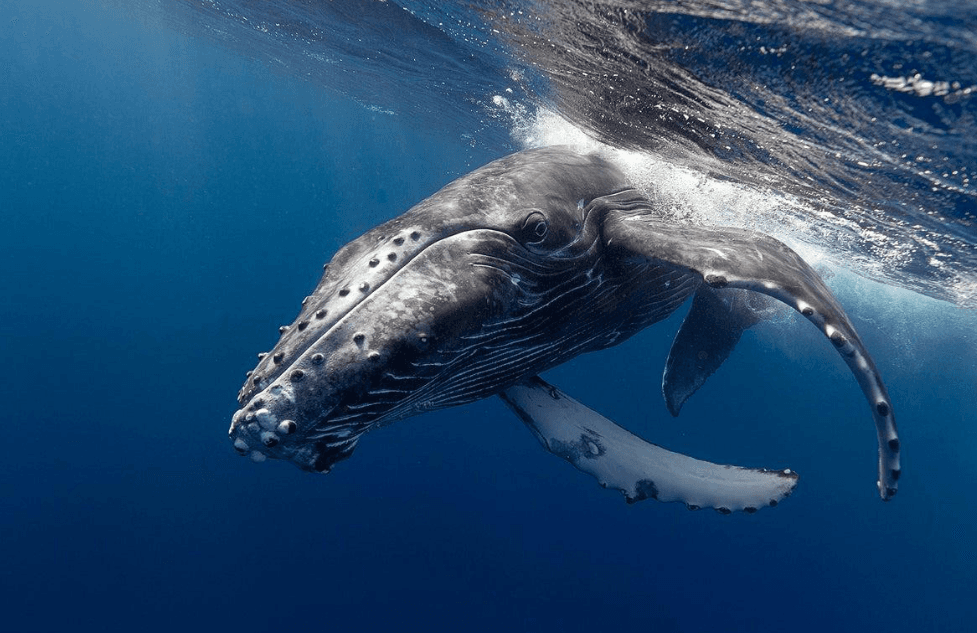
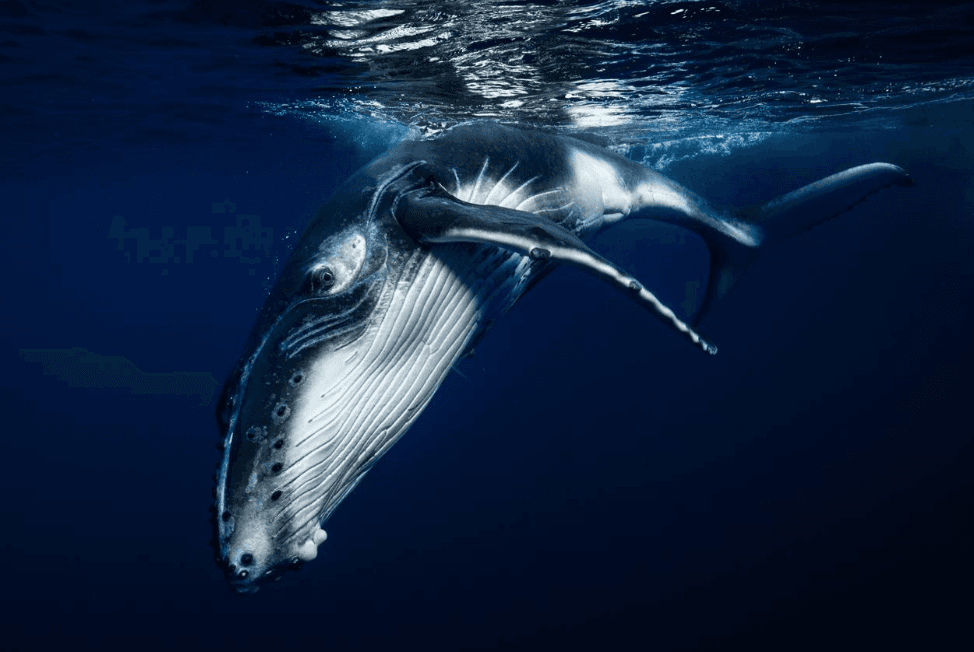
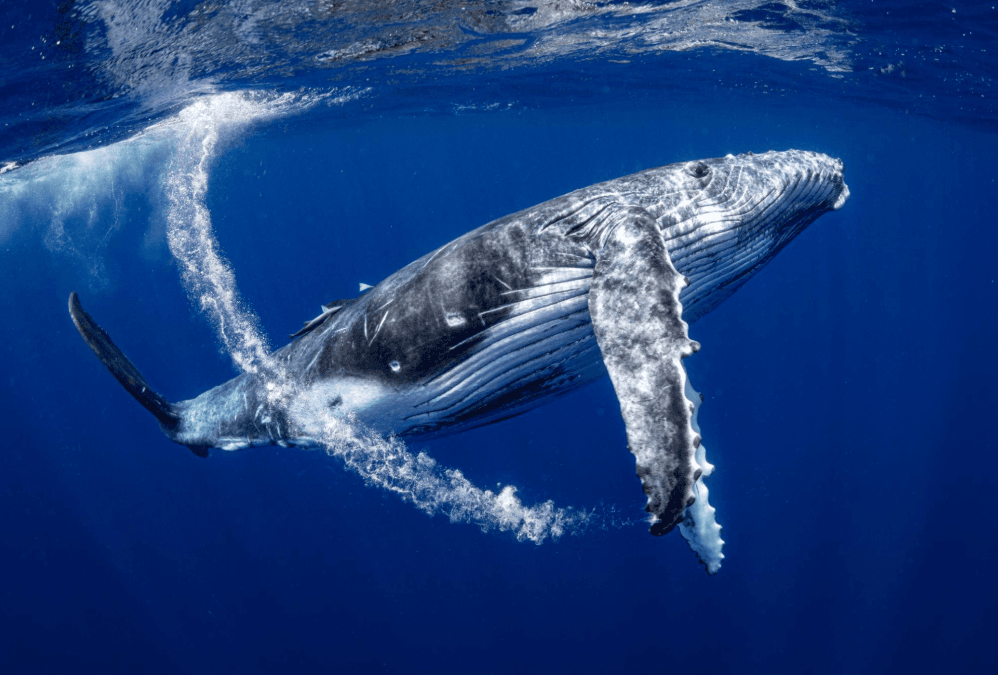
Humpback whales have exceptionally long pectoral fins compared with many other whale species. These fins help them maneuver, turn, and control their movements in the water. Their size also makes them conspicuous when a whale lifts one above the surface.
During a fin slap, the whale may roll partly onto its side, raise the fin, and bring it down against the water. The movement can create a splash that is visible from a considerable distance under suitable conditions.
A whale may slap one fin several times or perform the movement as part of a longer sequence of surface activity. Not every whale raises its fin in the same way, and the height, force, and frequency of the movement can vary.
Although the behavior may look dramatic, it is a natural part of the range of movements humpback whales can display.
Why Do Humpback Whales Slap Their Pectoral Fins?
There is no single explanation that applies to every fin slap. Researchers consider the surrounding social and environmental context when interpreting whale behavior.
1. Communication with Other Whales
A pectoral fin striking the water can produce a noticeable splash and sound. These signals may be relevant when other whales are nearby.
Humpback whales use multiple forms of communication, including sounds and visible movements. A fin slap may contribute to a social interaction, but observers cannot assume that every slap is a deliberate message to a particular whale.
To interpret the behavior, researchers consider whether other animals are present, how they respond, and whether the movement is repeated.
2. Social Interaction
Humpback whales may engage in active surface behavior when interacting with other whales. Fin slapping can occur during such activity, although the precise function may remain uncertain.
The behavior may be observed alongside changes in spacing, orientation, or movement between animals. These surrounding details can be more informative than the splash itself.
In Samaná Bay, where seasonal humpback whale activity attracts visitors, a guide may be able to describe visible interactions. Nevertheless, the emotional state or intention of a whale should not be inferred from one movement alone.
3. Agitation or Conflict
Fin slapping may sometimes occur in situations involving tension or competition between whales. However, a fin slap by itself is not enough to establish that an animal is angry, threatened, or preparing to fight.
Researchers look for a wider pattern of behavior before interpreting an interaction as aggressive or competitive. The presence of multiple whales does not automatically mean that a conflict is taking place.
For visitors, the important lesson is to observe what actually happens rather than assign human emotions to every dramatic movement.
4. Repeated Surface Activity
Some humpback whales perform repeated movements at the surface. Fin slapping may form part of a sequence that includes rolling or other visible actions.
The reason for such activity can be difficult to establish without additional evidence. A whale might repeat the movement, stop suddenly, or move away from the area.
Instead of assuming that every repeated slap has the same purpose, observers should pay attention to the complete sequence and recognize that some details may remain unknown.
How Is Fin Slapping Different From Tail Slapping?
Pectoral fin slapping and tail slapping can both produce dramatic splashes, but they involve different parts of the whale's body.
Pectoral fin slapping involves one of the long fins located on the sides of the whale. The whale raises the fin and strikes the surface.
Tail slapping involves the tail flukes at the rear of the body. Depending on the movement, the whale may raise part or all of its tail and bring it down against the water.
The two behaviors should not automatically be assigned the same meaning. Each can occur in different circumstances, and the purpose of a particular event depends on its context.
From a whale-watching boat, distinguishing the two movements is also a useful observation skill. Look at which body part rises above the surface rather than identifying the behavior from the splash alone.
Why Are Humpback Whales' Pectoral Fins So Long?
Humpback whales are well known for their unusually long pectoral fins. These appendages play an important role in maneuverability.
While the tail provides much of the forward propulsion, the pectoral fins help the whale steer, turn, and control its position in the water. Their size and shape contribute to the whale's distinctive swimming abilities.
When a whale lifts a fin above the surface, visitors can see just how large these appendages are compared with the animal's body.
The fins are also useful for identifying the type of movement taking place. A raised pectoral fin can indicate that the whale is about to perform a fin slap, although the movement is not guaranteed to end with the fin striking the water.
Understanding the anatomy behind the behavior helps explain why fin slapping looks different from movements involving the tail.
Can You See Pectoral Fin Slapping During Whale Watching in Samaná?
Samaná is a well-known destination for seasonal humpback whale watching in the Dominican Republic. During the winter and early spring breeding season, visitors may observe whales surfacing, traveling, interacting, or displaying other natural behaviors.
Pectoral fin slapping is one possible sighting, but it is not guaranteed on any particular excursion. Whales decide when and how they behave, and their activity varies from day to day.
Sea conditions, viewing distance, and the animals present also affect what visitors can see. A whale may perform a fin slap in the distance, remain below the surface for a while, or never display this behavior during the trip.
The best approach is to enjoy the broader wildlife experience rather than book a tour expecting a specific movement.
When choosing an excursion, review the operator's current departure information, duration, meeting point, safety arrangements, and approach to responsible whale watching.
How Can You Recognize a Fin Slap From a Boat?
If you are watching humpback whales from a boat, look for a large side fin rising above the water. A fin slap typically involves that fin coming down onto the surface and producing a splash.
The key is to distinguish the fin from the tail. The pectoral fins are positioned on the sides of the whale, whereas the tail flukes are at the rear.
It may also help to watch what happens before and after the movement. Does the whale repeat the action Are other whales nearby Does the animal continue traveling or change its position?
These observations can help you describe the behavior without claiming to know its purpose.
If your guide offers an explanation, consider whether it is based on the visible sequence or presented as a possible interpretation. Wildlife behavior can be fascinating even when the reason for a particular action is not fully known.
How Should Whale Watchers Respond to This Behavior?
A fin slap can attract attention because it creates a sudden splash and may happen unexpectedly. Visitors should remain seated or follow the crew's safety instructions, especially if the boat is moving or sea conditions are rough.
Do not encourage a captain to approach a whale more closely just to obtain a better view. Choose operators that follow applicable wildlife-viewing rules and maintain appropriate distances.
For photographers, a fast shutter speed can help capture a sudden movement, but safety and responsible observation should come first. Keep your attention on the whale and the boat's surroundings rather than trying to photograph every moment.
Remember that a whale's behavior is not a performance arranged for visitors. A respectful viewing experience gives the animal space and allows the encounter to unfold naturally.
Plan Your Samaná Whale-Watching Trip
Humpback whale fin slapping is a striking example of how much there is to learn from observing marine wildlife. The movement involves the whale's long pectoral fin, can create a noticeable splash, and may occur during different types of surface activity.
Although communication and social interaction are possible explanations, a single fin slap does not reveal the whale's exact intention. Watching the wider sequence helps provide context while leaving room for uncertainty.
If you are planning to visit Samaná during whale season, explore available whale-watching excursions and verify current schedules, meeting arrangements, and safety practices directly with the operator.
Ready to observe humpback whales in Samaná Bay? Plan your visit during the seasonal whale-watching period, choose a responsible excursion, and enjoy discovering the natural behaviors these remarkable animals display.
Frequently Asked Questions
What is pectoral fin slapping in humpback whales?
Pectoral fin slapping occurs when a humpback whale raises one of its side fins and strikes it against the water, creating a splash.
Why do humpback whales slap the water with their fins?
The behavior may be associated with communication, social interaction, or other surface activity. Its exact purpose cannot always be determined from a single observation.
Does fin slapping mean a whale is angry?
Not necessarily. A fin slap alone does not establish anger or aggression. Observers need more information about the surrounding behavior before interpreting the event.
What is the difference between fin slapping and tail slapping?
Fin slapping involves one of the whale's side fins. Tail slapping involves the tail flukes at the rear of the body.
Can I see humpback whales slapping their fins in Samaná Bay?
It is possible, but no specific behavior is guaranteed during a whale-watching trip. Sightings depend on the whales present and the conditions on the day.
When is whale-watching season in Samaná?
The main season is generally during the winter and early spring, commonly January through March. Confirm current seasonal arrangements with a local operator before planning your excursion.
Editorial note: This article explains possible interpretations of pectoral fin slapping without treating any single explanation as certain or promising that visitors will see the behavior.

Local explorer & expert guide in Saona Island Beach.