Why Do Humpback Whales Sometimes Open Their Mouths?
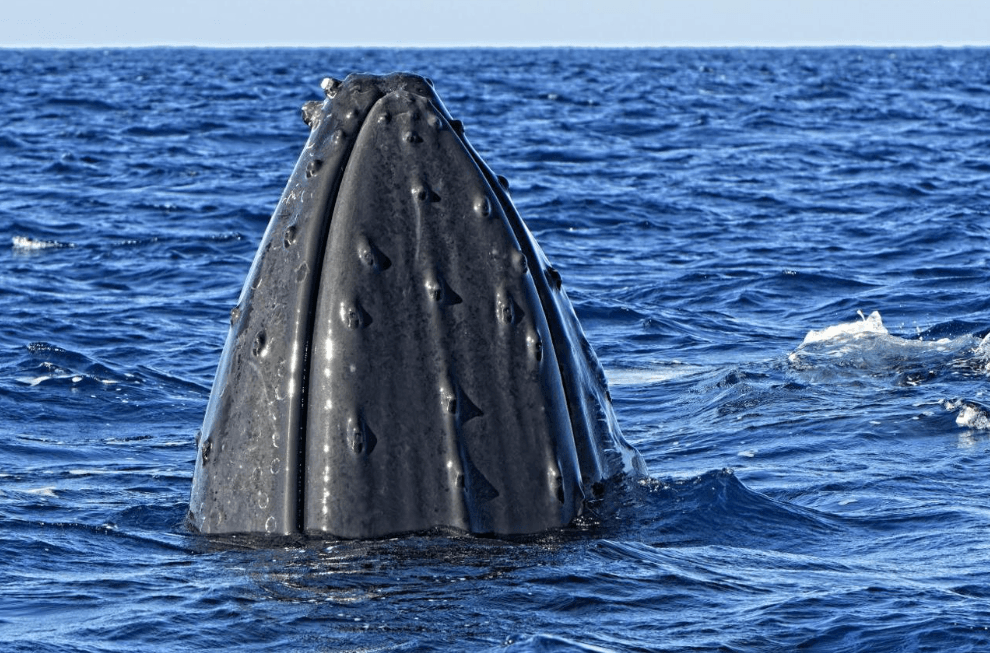
Seeing a humpback whale open its mouth can be a surprising moment during a whale-watching trip. Its enormous lower jaw may become visible above the water, revealing a glimpse of the animal's impressive size and anatomy. For visitors watching whales in Samaná Bay, the sight naturally raises a question: why would a humpback whale open its mouth at the surface?
The answer depends on the context. Humpback whales use their mouths for feeding, and their jaws may also become visible during certain movements or interactions. However, an open mouth alone does not prove that a whale is eating, communicating, or displaying a particular emotion.
Understanding the difference between an observable movement and its possible explanation can make a whale-watching experience more informative.
How Is a Humpback Whale's Mouth Designed?
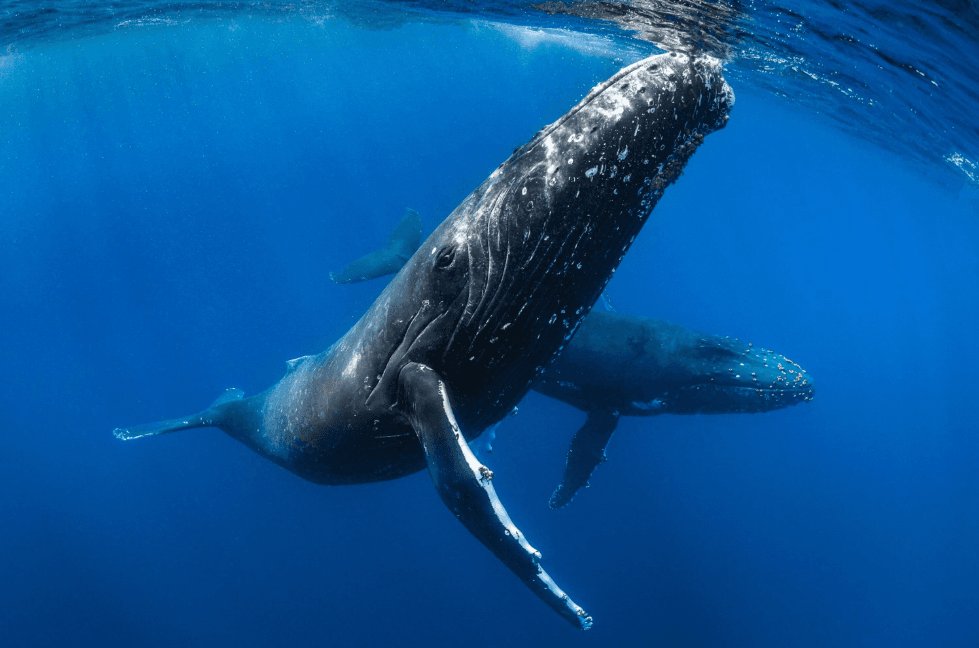
Humpback whales are baleen whales. Unlike toothed whales, they do not have rows of teeth for catching and chewing prey. Instead, they have flexible plates of baleen hanging from the upper jaw.
These plates help the whale filter small prey, including krill and small schooling fish, from water.
The lower jaw is large and flexible, allowing the mouth to expand during feeding. Humpbacks also have expandable throat grooves that allow the front part of the body to stretch as large quantities of water and prey enter the mouth during a feeding lunge.
This anatomy is specialized for filter feeding. It does not mean that every time a humpback opens its mouth, it is preparing to eat.
To understand a sighting, observers need to consider what the whale does before and after the mouth becomes visible.
1. The Whale May Be Feeding
One possible explanation for an open mouth is feeding. Humpback whales use different feeding techniques depending on the prey and circumstances.
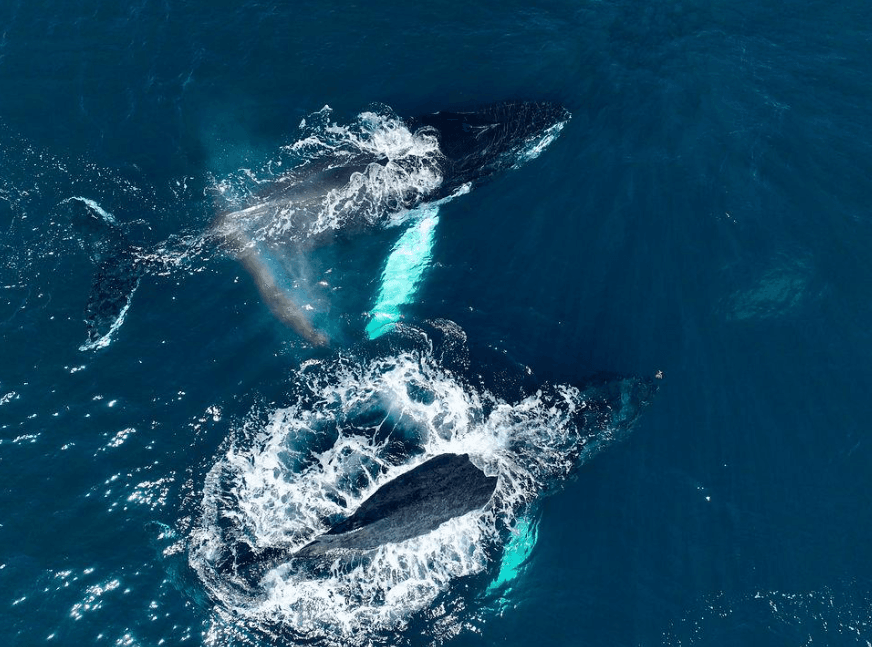
During lunge feeding, a whale accelerates toward a concentrated group of prey and opens its mouth to engulf water and food. Its throat grooves expand, allowing the front of the body to accommodate the large volume taken in.
The whale then pushes water out through its baleen, retaining suitable prey to swallow.
Feeding behavior may involve more than a single open-mouth movement. Depending on the technique, observers might notice a coordinated sequence of swimming, a change in body position, a surface disturbance, or repeated activity in an area where prey is available.
However, an open mouth at the surface is not enough to establish that feeding is taking place. The wider sequence and environmental context matter.
2. An Open Mouth Does Not Always Mean the Whale Is Eating
A whale may appear to open its mouth during a movement that is not clearly associated with feeding. A brief view of the jaw can be difficult to interpret, especially when waves obscure the lower part of the animal.
The whale might be changing its position, moving through the water, or engaging in another behavior that an observer cannot identify from a short glimpse.
It is also possible for a photograph to capture an unusual-looking moment without showing what happened immediately before or afterward.
For this reason, it is better to describe the visible event accurately: for example, “the humpback whale surfaced with its mouth open.” Claiming that the whale was feeding requires additional evidence.
This distinction is useful for visitors and photographers who want to share wildlife observations without accidentally presenting a guess as a scientific fact.
3. Why Does the Lower Jaw Look So Large?
A humpback whale's lower jaw is a prominent part of its anatomy. When the mouth opens, the jaw can become especially noticeable because of its size and the contrast between the animal and the surrounding water.
The jaw must accommodate the whale's feeding strategy, which can involve engulfing substantial quantities of water and prey.
During feeding, the throat grooves beneath the jaw can expand considerably. These grooves are an important part of the whale's feeding system, helping the front of its body accommodate water taken in during a lunge.
From a whale-watching boat, the size of the jaw can make an open-mouth sighting look dramatic. But its appearance alone does not reveal whether the whale is feeding or why it has adopted that position.
4. Could an Open Mouth Be Related to Social Behavior?
Humpback whales engage in a variety of social interactions, particularly during their breeding-season movements. They may travel near one another, change direction, approach other whales, or display different types of surface activity.
An open mouth observed during an encounter could occur alongside other movements. Nevertheless, the sight alone does not prove that the whale is threatening another animal, competing for a mate, or communicating a specific message.
Interpreting social behavior requires attention to the full situation. Researchers may consider the distance between animals, their movements, repeated actions, and what happens before and after the event.
For visitors, the most reliable approach is to record the visible details and avoid assigning an emotional meaning without supporting evidence.
5. How Does an Open Mouth Differ From a Feeding Lunge?
An open mouth is a body position. A feeding lunge is a broader movement pattern that involves the whale accelerating toward prey and engulfing water and food.
The distinction is important because the same visible feature can appear in different circumstances.
During a feeding lunge, the mouth opening is part of a coordinated action. An isolated glimpse of an open mouth may not reveal whether prey was present or whether the whale was using a feeding technique.
If you see a whale open its mouth near the surface, watch the surrounding activity when it is safe and practical to do so. Does the whale make a strong forward movement Is there repeated activity in the same area Are other signs of feeding visible?
Even with these clues, avoid making a definite claim unless the evidence supports it.
6. What Is Baleen, and Why Does It Matter?
Baleen is one of the most distinctive features of humpback whale anatomy. It consists of plates made of keratin, the same broad category of structural protein found in human hair and fingernails.
The plates hang from the upper jaw and form a filtering system. When a whale takes water and prey into its mouth, water can flow out through the baleen while suitable prey is retained.
This allows humpback whales to feed on small organisms despite their enormous body size.
The baleen is not a set of teeth, and it is not used to chew prey in the same way a toothed animal would. Instead, the whale processes prey using its specialized feeding system before swallowing.
An open-mouth sighting rarely provides a complete view of the baleen. Still, knowing about this anatomy helps explain why the whale's mouth is so important to its biology.
7. Can Visitors See Humpback Whales Feeding in Samaná Bay?
Samaná Bay is best known as a seasonal destination for humpback whales associated with migration and reproduction. What visitors observe during an excursion depends on the whales' natural activities and the conditions on the day.
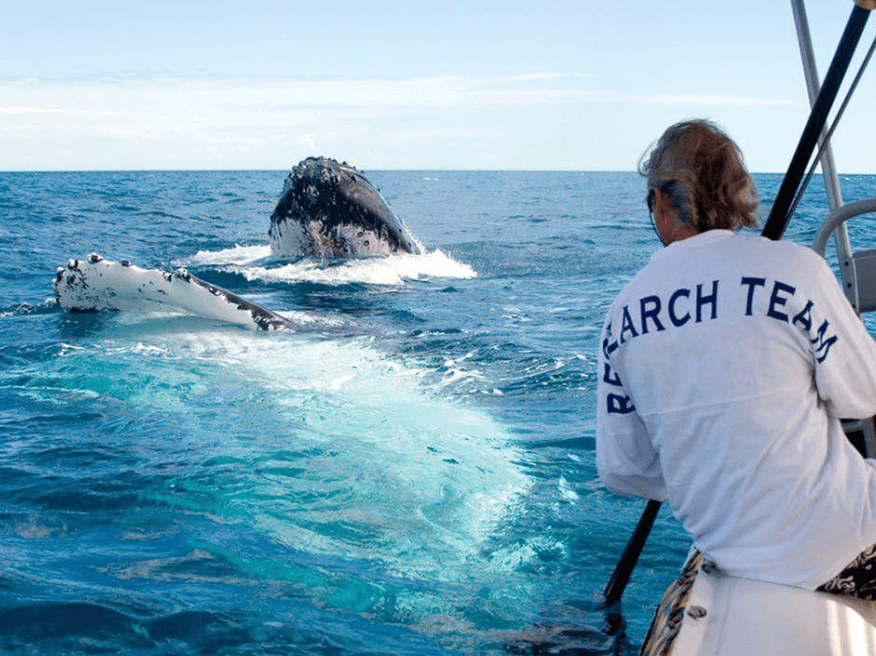
A whale may surface to breathe, change direction, move near another whale, or display a part of its body above the water. A particular feeding event or open-mouth behavior is not guaranteed.
Visitors should also avoid assuming that every whale observed in a breeding-season area is actively feeding. Humpback whales use different habitats for different activities throughout their annual cycle.
If you are interested in whale behavior, ask your guide to explain what can be confidently identified from the sighting. A responsible guide should distinguish observed behavior from possible interpretations.
8. What Should Whale Watchers Look for During an Open-Mouth Sighting?
The most useful information often comes from the complete sequence of movements rather than the mouth opening alone.
During a sighting, you can pay attention to several details:
- Body movement: Was the whale moving forward, turning, or remaining near the surface?
- Mouth position: Was the mouth open briefly or visible for longer?
- Surface disturbance: Did the movement produce splashing or a noticeable change in the water?
- Nearby whales: Were other animals visible in the same area?
- Sequence: What happened immediately before and after the mouth opened?
- Viewing conditions: Were waves or glare blocking part of the whale?
These details can help you describe the event accurately and make the experience more educational.
You do not need to determine the whale's exact intention to appreciate the sight. Sometimes, a careful observation raises interesting questions that cannot be answered from a brief encounter alone.
9. How Can You Photograph a Humpback Whale With Its Mouth Open?
Open-mouth sightings may last only a short time, making them challenging to photograph. If a whale is already active at the surface, it helps to keep your camera ready and watch the animal's whole body rather than concentrating only on its head.
Consider these practical tips:
Use a flexible composition. Leave enough space around the whale to capture its head and body movement.
Pay attention to light. The contrast between the whale and the water can change as the boat and animal move.
Capture a sequence when practical. Several images may provide more context than a single frame.
Keep the animal in context. A photograph showing the surrounding water may help explain whether the whale was moving or remaining near the surface.
Follow safety instructions. Remain in a safe position and do not encourage the boat to approach too closely for a photograph.
When sharing your image, describe what is visible rather than labeling the behavior as feeding unless the broader evidence supports that conclusion.
10. When Is the Best Time to Watch Humpback Whales in Samaná?
Samaná Bay in the Dominican Republic is a well-known seasonal whale-watching destination. Humpback whales visit the wider region during the winter and early-spring period, although the timing and conditions of individual sightings can vary.
A visitor may observe a whale surfacing, exposing its jaw, raising its tail, or moving near other animals. There is no guarantee that a whale will open its mouth during a particular trip.
When planning an excursion, check current seasonal information and review the details of the tour before booking. Choose an operator that prioritizes responsible wildlife observation and follows applicable rules.
The best wildlife experiences leave room for uncertainty. Watching a whale move naturally through its habitat can be rewarding even when a specific behavior does not occur.
Responsible Whale Watching
If a humpback whale opens its mouth near the surface, observe without trying to provoke a repeat performance. Avoid encouraging a captain to pursue the whale or approach more closely than permitted.
Responsible whale watching means following the crew's instructions, respecting wildlife regulations, and allowing animals to move freely.
Keep these principles in mind:
- Observe from a safe and permitted distance.
- Do not touch, feed, or attempt to attract whales.
- Avoid loud or sudden actions intended to change the animal's behavior.
- Do not assume that an open mouth means the whale is feeding or behaving aggressively.
- Take photographs only from a safe position.
- Allow the whale to leave the area without pursuit.
These practices help protect the animals and support a better experience for everyone on the water.
Frequently Asked Questions
Why do humpback whales open their mouths?
An open mouth can be associated with feeding or other movements, but its meaning depends on the context. The position alone does not establish the whale's purpose.
Do humpback whales have teeth?
No. Humpback whales are baleen whales. They use baleen plates in their upper jaws to filter prey from water rather than chewing food with teeth.
Does an open mouth always mean a humpback whale is feeding?
No. A feeding lunge involves a coordinated movement toward prey. A brief view of an open mouth does not, by itself, prove that feeding is occurring.
Can humpback whales open their mouths above the water?
A whale's mouth or lower jaw may become visible at the surface during certain movements. What the behavior means depends on the full observation.
Can an open-mouth sighting tell you whether a whale is angry?
No. A single body position cannot reliably establish a whale's emotional state. Avoid interpreting the movement as anger or aggression without supporting evidence.
Will I see humpback whales opening their mouths in Samaná Bay?
It is possible to observe different surface behaviors during whale-watching season, but no particular movement is guaranteed. Every encounter depends on the whales and conditions at the time.
Plan Your Samaná Whale-Watching Experience
A humpback whale opening its mouth offers a fascinating glimpse of the anatomy behind one of the ocean's most specialized feeding systems. Yet the most accurate interpretation depends on more than a single moment at the surface.
If you are planning a trip to the Dominican Republic, explore available Samaná whale-watching excursions and verify current tour details before booking. Look for operators that prioritize responsible observation and provide clear information about the experience.
Suggested call to action: Explore Samaná whale-watching tours and discover the seasonal presence of humpback whales in the Dominican Republic.
Final Takeaway
Humpback whales may open their mouths during feeding or other movements, but an open mouth alone does not establish what the animal is doing. By observing the whale's movement sequence, surroundings, and other visible clues, visitors can better appreciate the behavior without drawing unsupported conclusions.

Local explorer & expert guide in Saona Island Beach.