Saona Island Stargazing: Caribbean Night Sky & Astronomy Guide
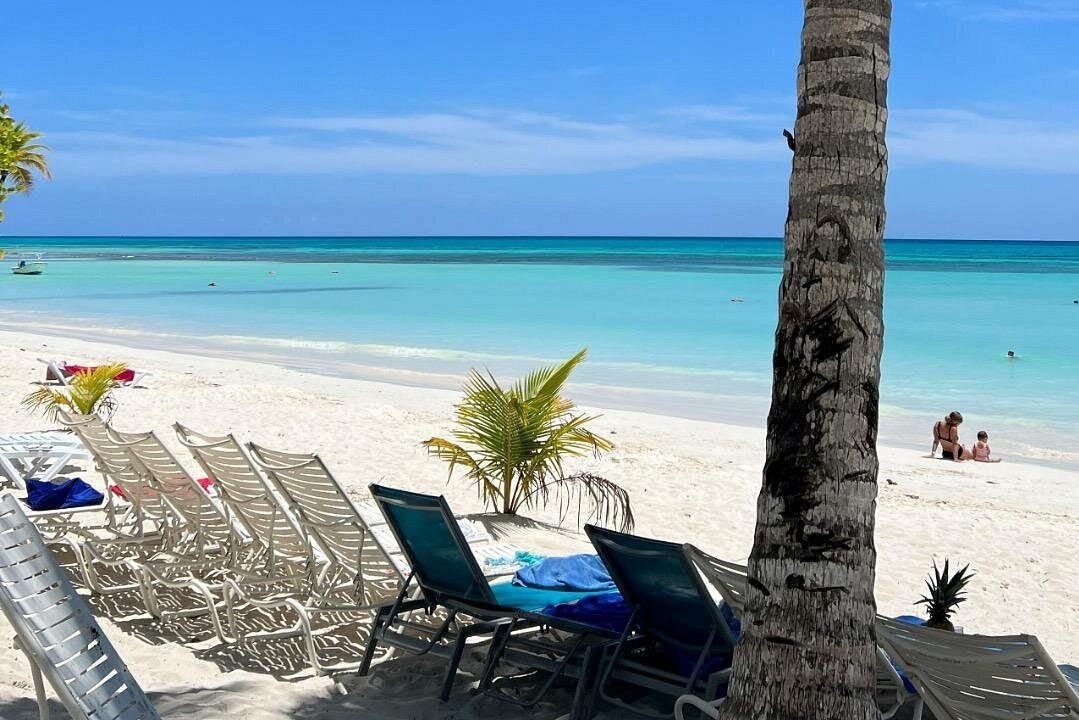
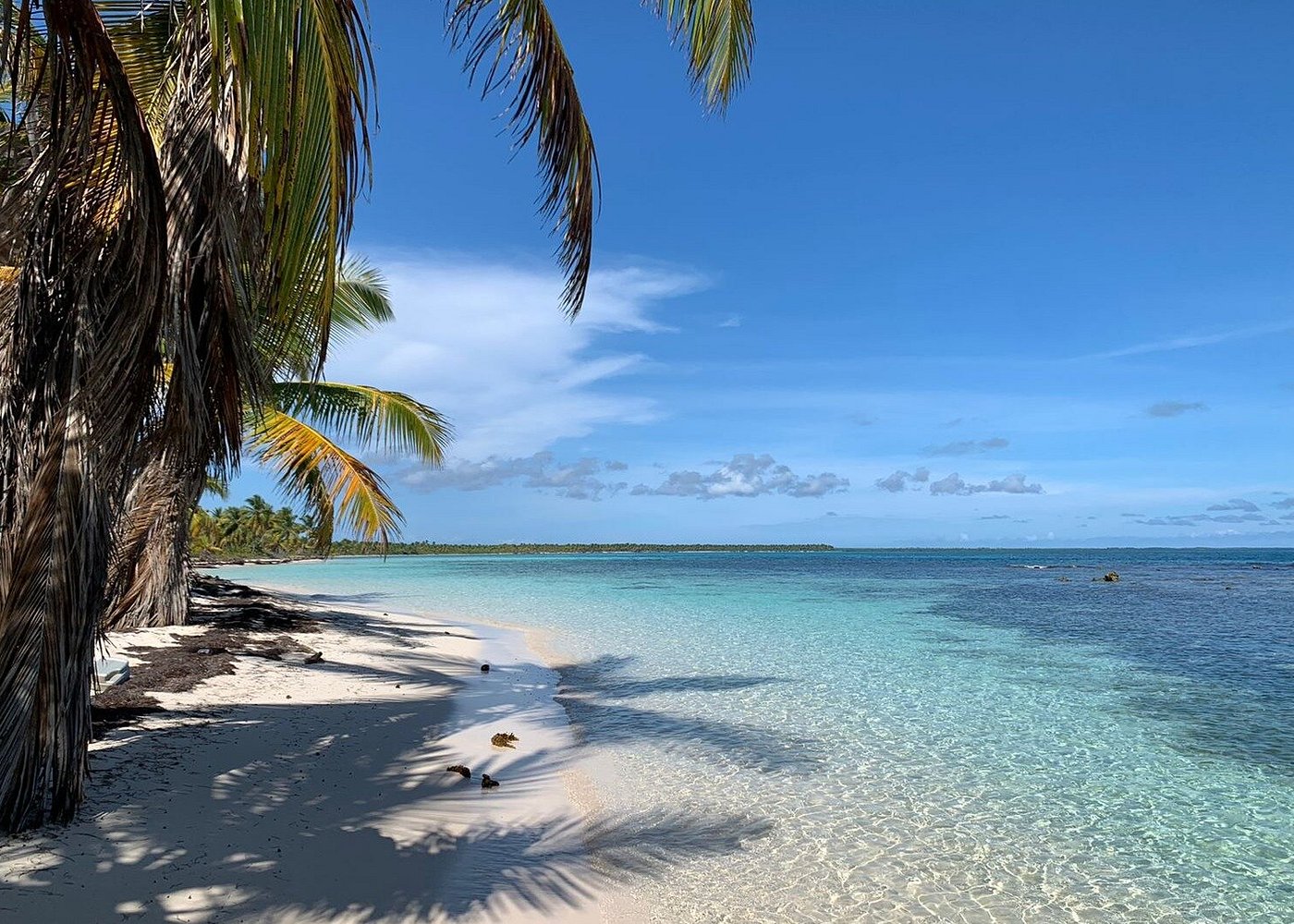
Saona Island is famous for its turquoise Caribbean waters, white-sand beaches, tropical palm trees, and beautiful daytime scenery. However, the natural environment offers another experience that many visitors rarely consider: observing the night sky.
Away from the bright atmosphere of major urban centers, island environments can offer interesting opportunities to look at stars, recognize constellations, and photograph the sky.
For travelers interested in astronomy, nature, and peaceful outdoor experiences, Saona Island stargazing is an appealing subject to explore.
However, enjoying the stars requires more than simply arriving at a beach after sunset. Weather, cloud cover, moonlight, artificial lighting, access restrictions, and personal safety all influence the experience.
This guide explains how to plan a stargazing experience around Saona Island, what to look for in the Caribbean sky, and how to photograph the stars responsibly.
Why Is Saona Island Interesting for Stargazing?
Saona Island is part of the southeastern Dominican Republic's coastal landscape. Its island setting provides an interesting contrast between daytime tropical scenery and the changing night sky.
Several factors can influence the quality of a stargazing experience.
1. The Island Environment
Island locations can provide open views of the horizon, particularly along suitable beaches and coastal areas.
An unobstructed view may help observers watch bright stars, planets, and celestial objects as they rise or set.
The actual viewing conditions depend on the selected location and surrounding vegetation.
2. The Caribbean Latitude
The Dominican Republic is located in the Caribbean region of the Northern Hemisphere, relatively close to the equator.
This geographic position allows observers to see many familiar northern-sky constellations as well as some stars and constellations associated with more southerly parts of the sky.
The exact objects visible depend on the date, time, and direction of observation.
3. Natural Coastal Scenery
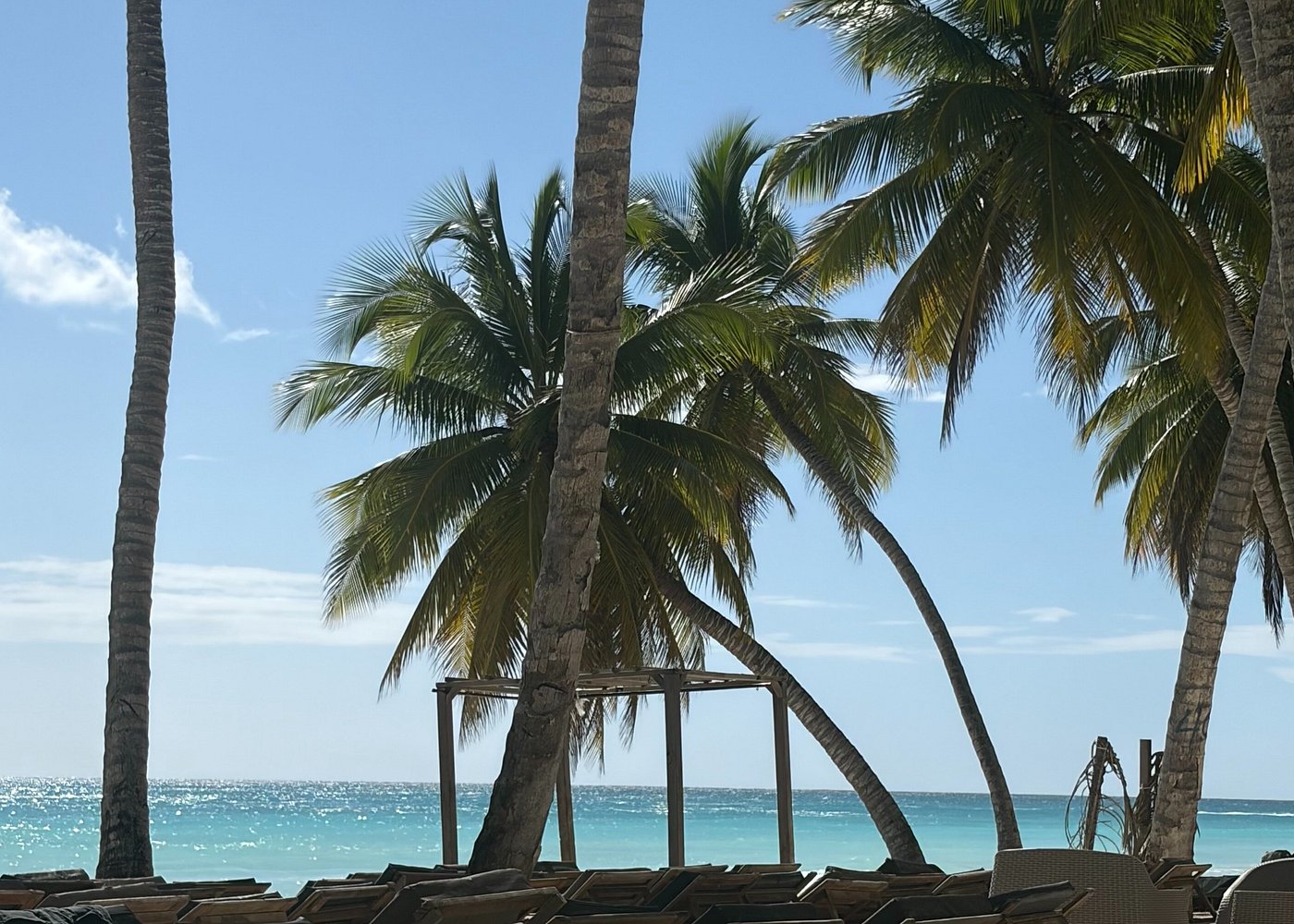
The combination of a dark sky, sea horizon, palm silhouettes, and coastal scenery can create attractive compositions for night photography.
Even when the sky is not perfectly dark, moonlight and cloud formations may produce interesting visual effects.
4. An Opportunity to Learn Astronomy
Stargazing does not require expensive equipment or advanced scientific knowledge.
A basic understanding of the Moon, planets, stars, and constellations can make a night-sky experience more enjoyable.
What Can You See in the Night Sky?
The objects visible above Saona Island change throughout the year.
The following celestial features are useful starting points for anyone interested in Caribbean astronomy.
1. The Moon
The Moon is usually the easiest celestial object to observe.
Its appearance changes throughout the lunar cycle, from a thin crescent to a full illuminated disk.
Different lunar phases create different viewing conditions.
A bright full Moon can make the landscape look beautiful, but it also brightens the sky and makes faint stars harder to see.
For observing faint stars, a period around the new Moon may provide darker conditions, provided clouds and artificial lighting are limited.
2. Bright Planets
Several planets can appear as bright points of light in the night sky.
Depending on their positions and visibility during a particular period, observers may be able to see planets such as Venus, Jupiter, Mars, or Saturn.
Planets do not remain visible in the same part of the sky throughout the year.
Use a current astronomy application or sky chart to check which planets are visible on your intended observation date.
3. Orion
Orion is one of the most recognizable constellations in the night sky.
Its distinctive three-star belt makes it relatively easy to identify.
Orion's visibility changes with the seasons, so it is not equally prominent during every month.
It can be a useful constellation for beginners learning to recognize patterns among the stars.
4. Scorpius
Scorpius is a recognizable constellation associated with the shape of a scorpion.
Its bright reddish star Antares is an important identifying feature.
Scorpius is particularly interesting for observers exploring the southern portion of the visible sky from Caribbean latitudes.
5. Crux and the Southern Cross
The Southern Cross, or Crux, is an important constellation in the southern sky.
From locations in the Caribbean, parts of the southern celestial region can be observed under suitable conditions.
Its visibility depends on latitude, horizon obstructions, and the time of year.
6. The Milky Way
The Milky Way is the apparent band of light formed by the combined glow of countless distant stars in our galaxy.
Under sufficiently dark skies, parts of the Milky Way may be visible without optical equipment.
Its appearance depends on the season, time of night, moonlight, cloud cover, and light pollution.
Do not assume that the Milky Way will be visible on every visit to Saona Island.
Best Conditions for Stargazing on Saona Island
There is no single guaranteed time for perfect night-sky viewing.
Instead, consider several environmental and astronomical factors before planning.
Choose a Clear Night
Cloud cover is one of the most important factors affecting stargazing.
Even a location with very little artificial lighting may provide poor visibility if clouds cover most of the sky.
Check a reliable local weather forecast before planning nighttime observation.
Consider the Moon Phase
Moonlight changes the appearance of the night sky.
For faint stars and the Milky Way, darker periods around the new Moon are often preferable.
For moonlit beach photography, a brighter Moon may be more useful.
The ideal lunar phase therefore depends on your photography or observation goals.
Check Artificial Lighting
Artificial lighting can reduce the visibility of faint celestial objects.
Streetlights, buildings, boats, and illuminated visitor facilities may affect the darkness of a location.
Look for suitable areas with fewer direct lights, but only use locations where nighttime access is permitted and safe.
Consider the Observation Time
Different celestial objects appear at different times.
A constellation that is visible early in the evening may be lower or no longer visible later at night.
Astronomy applications can help identify suitable observation windows.
How to Photograph the Night Sky
Night-sky photography can be a rewarding way to capture Saona Island's coastal environment.
You can create useful photographs with a smartphone or a dedicated camera, although the results will vary depending on equipment and conditions.
1. Use a Stable Camera
Long exposures require a stable camera.
A tripod is useful for preventing movement during exposure.
If you are using a smartphone, use a stable surface or a suitable tripod attachment.
2. Try Manual Camera Settings
If your camera provides manual controls, experiment with:
- Exposure time.
- ISO sensitivity.
- Focus.
- Aperture.
- White balance.
Start with shorter exposures and adjust according to the results.
Very long exposures can cause stars to appear as trails because of Earth's rotation.
3. Use a Wide-Angle Lens
A wide-angle lens can capture more of the sky and surrounding landscape.
It is useful when including palm trees, the sea horizon, or other foreground elements.
4. Focus Carefully
Autofocus can struggle in very dark conditions.
Use manual focus when available and check the image by zooming in on a bright star.
A slightly out-of-focus night photograph can lose much of its detail.
5. Keep the Lens Clean
Humidity, sea spray, and condensation can affect image quality.
Use a clean microfiber cloth and protect your equipment when moving between air-conditioned spaces and humid outdoor conditions.
6. Experiment With Night Mode
Many smartphones offer night photography modes.
These modes may combine multiple exposures to improve brightness and reduce noise.
Keep the phone steady while the camera captures the image.
Equipment for a Saona Island Stargazing Experience
You do not need a professional observatory to enjoy the stars.
The following equipment can make an observation session more comfortable.
Smartphone
A smartphone can help identify constellations, planets, and the Moon through astronomy applications.
It can also be used for basic night photography.
Reduce screen brightness and avoid keeping the screen illuminated continuously, because bright screens can affect night vision.
Binoculars
Binoculars can reveal more detail than the naked eye.
They are useful for observing the Moon, star clusters, and some brighter astronomical objects.
Choose a comfortable pair that is easy to hold steadily.
Telescope
A telescope can provide a more detailed view of selected celestial objects.
However, it requires careful handling, a stable mounting arrangement, and suitable observation conditions.
It is not essential for a casual stargazing experience.
Red-Light Flashlight
A red-light flashlight can help you see your surroundings while reducing the impact on night vision compared with a bright white flashlight.
Use only enough light to move safely.
Tripod
A tripod is particularly useful for night photography.
Choose a compact model that can be transported safely and does not obstruct other visitors.
Planning a Stargazing Experience
Stargazing on Saona Island requires additional planning because the island is a protected natural destination and ordinary excursions may not include nighttime access.
Before arranging anything, confirm whether the selected location can legally and safely be accessed after sunset.
Step 1: Confirm Access
Ask your accommodation provider or an authorized tour operator whether an appropriate nighttime experience is available.
Do not assume that a daytime excursion ticket includes permission to remain on the island after the scheduled return.
Step 2: Check Transportation
If an approved nighttime visit is possible, confirm the return arrangements.
Boat transportation after dark requires appropriate operational planning and safety procedures.
Never arrange an informal boat journey without confirming the operator's authorization and safety arrangements.
Step 3: Choose Your Astronomy Goal
Decide whether you want to:
- Observe the Moon.
- Identify constellations.
- Photograph stars.
- Look for visible planets.
- Capture the Milky Way.
- Enjoy a moonlit coastal landscape.
Your goal will determine the best time and equipment.
Step 4: Check the Weather and Sky
Review cloud cover, rainfall, wind conditions, and the Moon's position.
A clear-weather forecast does not guarantee excellent astronomical visibility, but it can help with planning.
Step 5: Prepare for a Tropical Night
Bring comfortable clothing, drinking water, insect protection, and suitable equipment.
Follow any local instructions about lighting, access, and environmental protection.
Responsible Stargazing in a Protected Natural Environment
Enjoying a dark sky should not create problems for wildlife or the surrounding environment.
Saona Island is part of a protected natural landscape, so nighttime activities should be planned with care.
Follow these practices:
- Use only authorized access routes and locations.
- Avoid entering sensitive vegetation or restricted habitats.
- Keep lighting directed toward the ground.
- Avoid powerful spotlights.
- Do not disturb nesting or resting wildlife.
- Keep noise to a minimum.
- Carry all waste away according to applicable instructions.
- Do not leave equipment unattended.
- Follow the guidance of authorized staff or operators.
Artificial lighting can affect wildlife behavior in some coastal environments. Minimizing unnecessary illumination is therefore a sensible precaution.
Stargazing Versus Night-Sky Photography
Stargazing and night-sky photography are related but different activities.
Stargazing focuses on observing celestial objects directly.
Night-sky photography focuses on recording those objects with a camera.
A person interested in astronomy may prefer binoculars or a telescope, while a photographer may spend more time adjusting exposure and composition.
You can combine both activities, but it is helpful to decide which one is your priority.
If your main goal is to enjoy the stars, avoid spending the entire evening looking at a camera screen.
Is Saona Island Suitable for Astrotourism?
Astrotourism refers to travel experiences centered on astronomy and observing the night sky.
An island environment may offer interesting possibilities for this type of tourism, particularly when there are suitable dark locations and safe access arrangements.
However, an attractive night sky alone does not establish that a destination has organized astronomy services.
Before planning an astrotourism experience on Saona Island, verify:
- Whether nighttime access is permitted.
- Whether an authorized provider offers the experience.
- Whether suitable viewing areas are available.
- Whether transportation is arranged safely.
- Whether astronomy equipment or guidance is provided.
- Whether environmental restrictions apply.
If no suitable organized service is available, travelers can still learn about the night sky through astronomy applications and observation from locations where nighttime access is permitted.
Frequently Asked Questions
1. Can you see stars on Saona Island?
Stars can be observed when the sky is sufficiently clear and artificial lighting is limited. Actual visibility depends on weather, moonlight, location, and atmospheric conditions.
2. Is Saona Island good for stargazing?
Its island setting and Caribbean location make it an interesting destination to consider for stargazing. However, actual suitability depends on nighttime access, local lighting, weather, and safety arrangements.
3. Can you see the Milky Way from Saona Island?
Parts of the Milky Way may be visible under suitable dark-sky conditions. Visibility depends on the season, time, Moon phase, cloud cover, and light pollution.
4. What is the best Moon phase for stargazing?
The new Moon period generally offers darker skies and better conditions for observing faint stars. A brighter Moon can be useful for moonlit landscape photography.
5. Can beginners enjoy astronomy on Saona Island?
Yes. Beginners can start by identifying the Moon, bright planets, and familiar constellations using a smartphone astronomy application.
6. Are there organized Saona Island stargazing tours?
Do not assume that dedicated astronomy tours operate regularly. Contact local providers and confirm current availability, nighttime access, transportation, and included services.
7. Can I bring a telescope to Saona Island?
You may be able to transport personal equipment, but bringing a telescope does not automatically authorize nighttime access or observation in restricted locations. Confirm transport and access arrangements first.
8. Is night photography allowed everywhere on Saona Island?
No. Ordinary personal photography does not override access restrictions or protected-area rules. Follow applicable regulations and any instructions from authorized staff.
Conclusion: Discover the Caribbean Sky Above Saona Island
Saona Island is widely appreciated for its tropical beaches and beautiful coastal scenery, but the night sky offers another way to appreciate its natural setting.
From the Moon and bright planets to recognizable constellations and the Milky Way, astronomy can add a different dimension to a Caribbean travel experience.
Successful stargazing depends on clear weather, suitable darkness, the right observation time, and safe access arrangements.
Before planning a nighttime visit, confirm whether your chosen location can be accessed legally and safely after sunset. Respect the protected environment and avoid disturbing wildlife.
With thoughtful preparation, even a simple session identifying stars can become a memorable part of learning about the natural world around Saona Island.

Local explorer & expert guide in Saona Island Beach.