Why Do Humpback Whales Show Their Bellies in Samaná Bay?
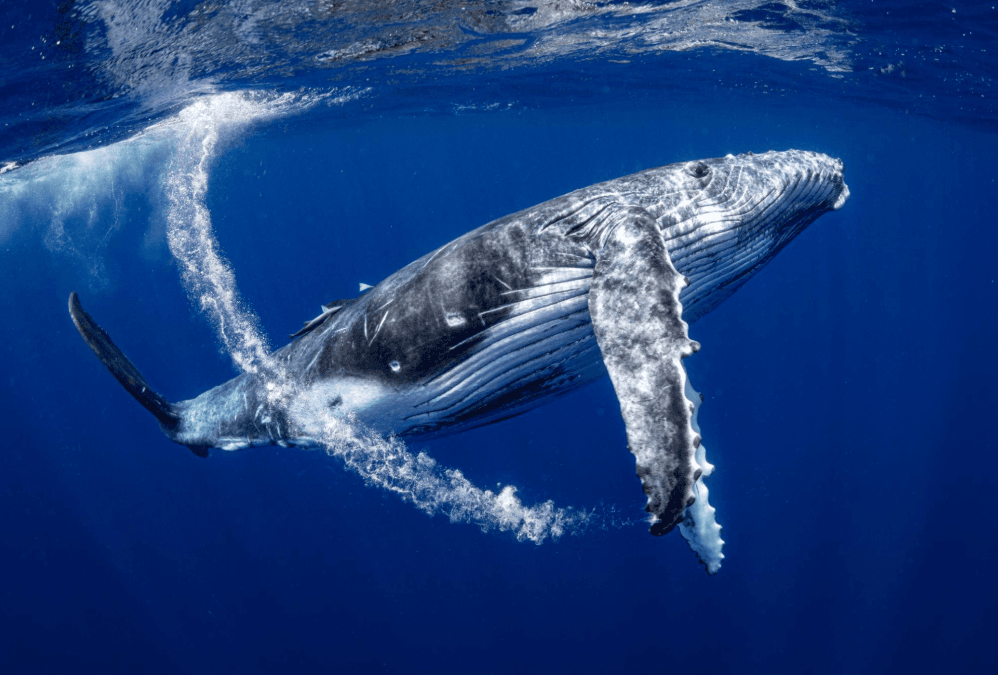
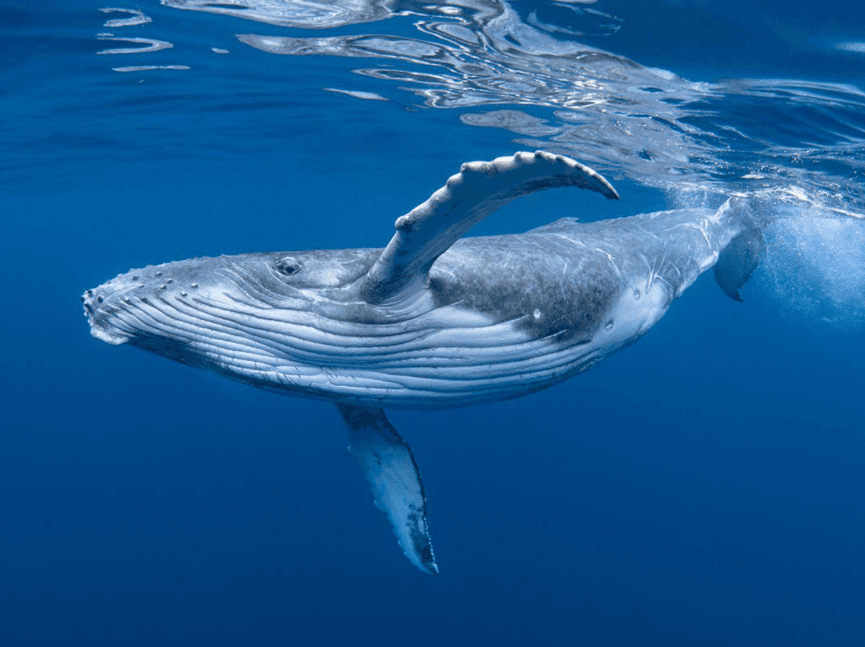
Seeing a humpback whale at the surface is an unforgettable experience, especially when the animal turns its body and reveals the lighter underside of its belly. During whale-watching season in Samaná Bay, visitors may notice whales changing their orientation, lifting part of their bodies, or briefly exposing their undersides while moving through the water.
But why does this happen Is the whale playing, communicating, resting, or simply adjusting its position?
The answer depends on the whale's movements and the surrounding circumstances. Belly exposure is a visible body position, not a behavior with one universal explanation. Understanding that distinction can help visitors appreciate humpback whales without drawing conclusions from a brief sighting.
Why Is a Humpback Whale's Belly Sometimes Visible?
Humpback whales have large, streamlined bodies, and their undersides can become visible when they rotate, tilt, arch, or change direction near the surface. The amount of belly a whale exposes depends on its orientation, how much of its body is above the water, and the angle from which an observer sees it.
A whale does not need to turn completely upside down to reveal part of its underside. Even a partial rotation can make the belly visible for a few seconds.
The appearance can also be affected by sunlight, waves, and reflections. From a boat, a brief glimpse of a pale underside may look more dramatic than it would from another viewing angle.
The important point is that seeing a whale's belly tells you something about its position, but it does not automatically reveal why the animal moved that way.
1. The Whale May Be Adjusting Its Body Position
Humpback whales continually adjust their orientation as they swim. A whale may tilt or rotate slightly while changing course, maneuvering around another whale, or moving through changing water conditions.
During these movements, its underside can become visible before the animal returns to a more upright position.
This is not necessarily a special display. It may simply be part of an ordinary change in body position.
For whale watchers, the most useful clue is what happens immediately afterward. Does the whale continue along its previous path Does it turn away Does it surface to breathe Or does it remain in the same general area?
Watching the sequence of movements provides more context than interpreting the belly exposure alone.
2. It May Happen During Social Interactions
Humpback whales sometimes gather in groups, and their movements can become more complex when several animals are close together. A whale may change orientation while approaching, moving away from, or swimming alongside another individual.
In these circumstances, a partial view of the belly could occur as part of a larger movement sequence.
However, belly exposure by itself does not prove that a whale is communicating, competing, courting, or displaying a particular emotion. Researchers interpret behavior by considering several clues, including the animals' spacing, repeated movements, vocalizations when available, and what happens before and after the observation.
If you see multiple whales changing position near one another in Samaná Bay, notice the overall pattern rather than assigning a definite meaning to one movement.
3. The Whale May Be Moving Its Pectoral Fins
Humpback whales have exceptionally long pectoral fins on either side of their bodies. These fins help them maneuver, turn, and control their movement in the water.
When a whale changes its orientation or moves a pectoral fin, part of its underside may become visible. From the surface, this can create the impression that the whale is deliberately showing its belly.
The visible underside may therefore be associated with a broader movement rather than being the main purpose of the action.
Look for the relationship between the body and the fins. Does one fin appear as the whale turns Does the body angle change at the same time These observations can help you describe what happened without assuming a motive that cannot be confirmed from the surface.
4. Surface Movements Can Be Part of Active Behavior
Humpback whales sometimes perform conspicuous surface behaviors, including breaching, rolling, and striking the water with their fins or tails. Depending on the movement, a whale's underside may become visible briefly.
A whale that rises, rotates, or lands at an angle can expose part of its belly as part of that action.
Yet not every instance of belly exposure is a surface display. Some movements are subtle and brief, while others form part of a much more noticeable sequence.
If the whale repeatedly changes position or produces splashes, describe the visible actions separately. For example, you might observe that the whale rolled partly onto its side and exposed its underside. That is more accurate than claiming it was definitely playing or trying to attract attention.
5. Could Belly Exposure Be Related to Resting?
Humpback whales must return to the surface to breathe air, and their activity patterns can vary. Their bodies may appear relatively still at times, while at other times they move continuously or change direction.
A whale that exposes part of its belly during a slow movement is not necessarily resting. The body position alone cannot establish the whale's activity level.
To understand whether an animal may be resting, observers would need to consider additional information, such as how long it remains in an area, its breathing pattern, its movements, and the surrounding conditions. Even then, a brief view from a whale-watching boat may not provide enough evidence for a confident conclusion.
It is best to treat belly exposure as an observation rather than a diagnosis of the whale's behavior.
6. Does Belly Exposure Help Scientists Identify Individual Whales?
Humpback whales are often identified using photographs of their tail flukes, particularly the patterns and markings on the underside. These markings can help researchers distinguish one whale from another when suitable photographs are available.
However, seeing a whale's belly is not the same as obtaining a reliable identification image. The visible area may be small, underwater, blurred by movement, or difficult to photograph from a safe distance.
Researchers may use several identification features and supporting records to study whale movements over time. Visitors should not assume that a quick glimpse of the belly is sufficient to identify an individual.
If you take photographs during a tour, focus on observing the animal respectfully. A clear, well-timed photograph of a naturally visible feature is more useful than trying to force a particular viewing angle.
7. Why Can the Belly Look Different From the Rest of the Body?
Lighting and viewing conditions can change how a whale's underside appears. The water's surface reflects sunlight, and waves can distort the shape of an animal moving just below the water.
The whale's natural pigmentation and markings also contribute to its appearance. Humpback whales can show variation in coloration, including lighter and darker areas. The amount of contrast visible to an observer depends on the individual whale and the viewing conditions.
A belly that appears almost white in one photograph may look darker in another because of shadows, reflections, water clarity, or camera exposure.
For this reason, photographs should be interpreted carefully. A visual difference does not necessarily indicate a change in the whale's condition or behavior.
8. What Should Whale Watchers Look for During a Sighting?
If a humpback whale exposes its belly in Samaná Bay, pay attention to the complete sequence rather than focusing only on the moment when the underside appears.
Useful observations include:
- Body orientation: Was the whale upright, tilted, or partly rotated?
- Movement: Was it swimming steadily, turning, rolling, or rising toward the surface?
- Other whales: Were any other animals nearby, and did their positions change?
- Breathing: Did the whale surface to breathe before or after the movement?
- Duration: Was the underside visible for an instant or for a longer period?
- Water conditions: Were waves, glare, or reflections affecting visibility?
These details make the experience more informative and can help you distinguish what you actually saw from what you think it might mean.
You do not need specialist equipment to make useful observations. Patience, attention, and a willingness to leave some questions unanswered are often enough.
9. When Is the Best Time to See Humpback Whales in Samaná Bay?
Samaná Bay in the Dominican Republic is known for seasonal visits by migrating humpback whales. The broader winter and early-spring period is widely associated with whale watching in the region, although the timing and conditions of individual sightings vary.
A whale may remain below the surface for a period before returning to breathe, and its next appearance may reveal a completely different part of its body. There is no guarantee that a particular whale will expose its belly during a tour.
When planning your visit, choose a responsible operator, check current seasonal information, and allow time for wildlife observation. A worthwhile trip does not depend on seeing one specific behavior. Watching whales surface, breathe, turn, or move through the bay can be rewarding even when the animals do not perform conspicuous displays.
10. How Can You Observe This Behavior Responsibly?
Humpback whales are large wild animals, and their behavior should be observed without interference. If you notice a whale exposing its belly, allow the animal to continue moving naturally.
Responsible whale watching means following the captain's and guide's instructions, respecting applicable wildlife regulations, and avoiding actions intended to provoke a response. Do not ask a boat operator to approach dangerously close or pursue a whale just to obtain a photograph of its underside.
If you are photographing the sighting, use the camera's zoom where appropriate and avoid treating a specific body position as something the animal owes visitors. Wildlife encounters are unpredictable, and keeping a respectful distance helps preserve the experience for both the animals and the people watching them.
Frequently Asked Questions
Why do humpback whales show their bellies?
A whale's belly may become visible when it tilts, rotates, turns, moves its pectoral fins, or performs a broader surface behavior. The exact reason depends on the context, and belly exposure alone does not establish a specific intention.
Does a humpback whale show its belly when it is playing?
It is not possible to conclude that a whale is playing from belly exposure alone. Observers need to consider the animal's full sequence of movements and the surrounding circumstances.
Can you identify a humpback whale by its belly?
A glimpse of the underside is not necessarily enough to identify an individual. Researchers commonly use photographs of the underside of the tail flukes, along with other records and identification features, to distinguish whales.
Do humpback whales expose their bellies during whale-watching tours in Samaná?
It is possible to observe a whale's underside if its movements bring that part of its body into view. However, this behavior is unpredictable and is not guaranteed on any tour.
Is belly exposure a sign that a whale is sick or injured?
Not by itself. A visible body position is insufficient to determine a whale's health. Any concern would require more evidence and assessment by qualified experts.
What should I photograph if a whale exposes its belly?
Photograph only from a responsible viewing position and follow your guide's instructions. If the underside becomes visible naturally, capture the moment without pressuring the boat to move closer or attempting to provoke another display.
Experience Humpback Whale Watching in Samaná
A humpback whale revealing its underside can be a fascinating moment, but the most meaningful observations often come from watching the animal's movements before and after the event. A brief glimpse may raise questions about anatomy, swimming, or social behavior—and that uncertainty is part of what makes wildlife watching interesting.
Planning a trip to the Dominican Republic Explore available Samaná whale-watching excursions and review the tour details, meeting arrangements, seasonal information, and wildlife-viewing guidelines before booking. Choose an operator that prioritizes responsible observation and remember that every encounter with wild whales is different.
Suggested call to action: Explore Samaná whale-watching tours and plan a responsible wildlife experience in the Dominican Republic.
Final takeaway
Humpback whales may expose their bellies when their bodies tilt, rotate, or move through a variety of surface behaviors. The sight can be striking, but it does not have one confirmed meaning in every situation. By observing the whale's full movement sequence and respecting its space, visitors to Samaná Bay can enjoy a richer and more responsible whale-watching experience.

Local explorer & expert guide in Saona Island Beach.