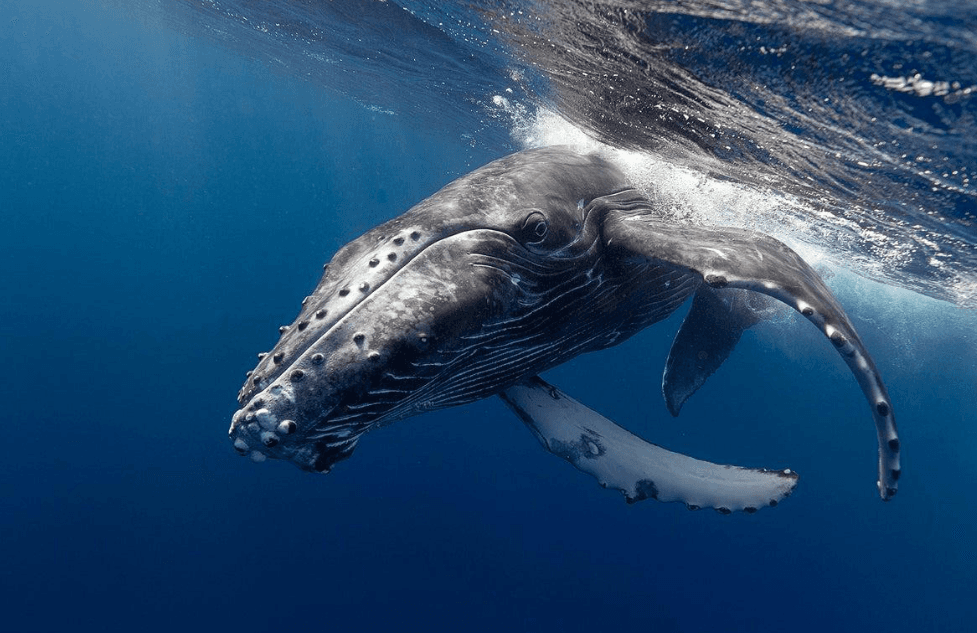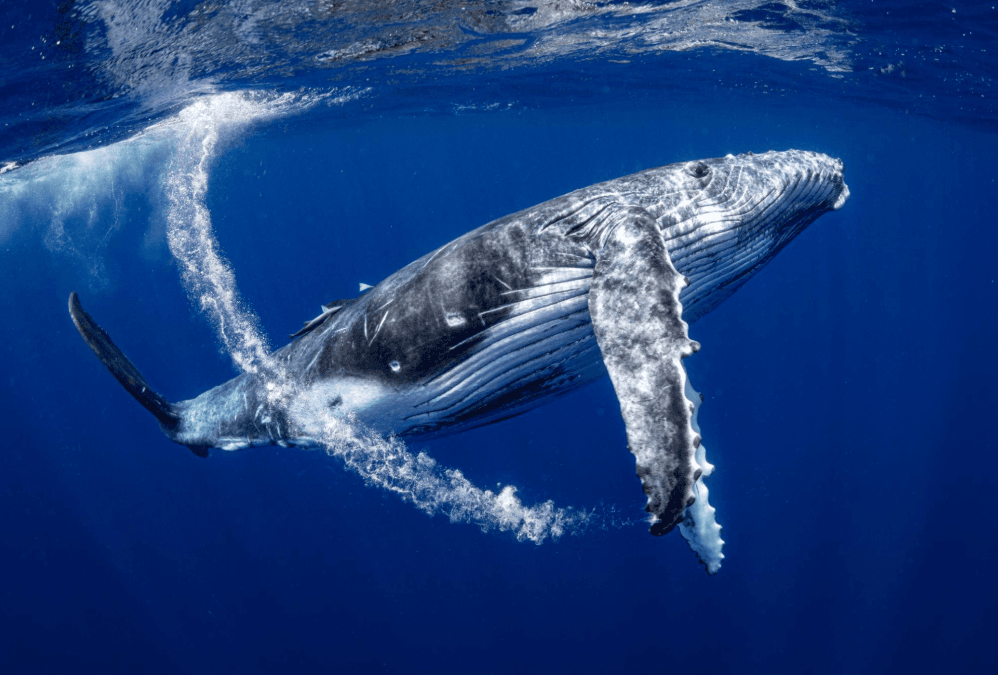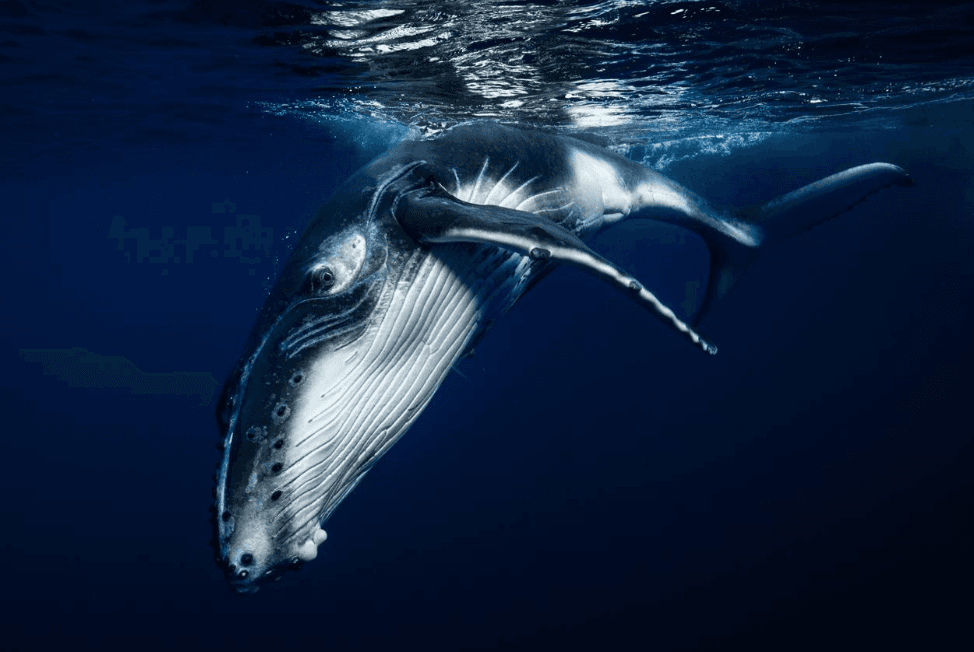
Why Do Humpback Whales Create Bubbles Underwater in Samaná Bay?
When watching humpback whales in Samaná Bay, visitors often look for familiar sights such as a whale rising to the surface or disappearing beneath the waves. However, some interesting whale behaviors happen underwater, where they are much harder to observe. One example is the creation of bubbles.
Why do humpback whales sometimes produce bubbles underwater The answer depends on the whale's activity and the circumstances in which the bubbles appear. Bubbles may be associated with feeding behavior, movements near the surface, or air released during underwater activity. Their presence can offer clues, but it does not always reveal exactly what the whale is doing.
Understanding this behavior adds another dimension to whale watching in Samaná, one of the Dominican Republic's best-known destinations for observing seasonal humpback whales.
Why Do Humpback Whales Create Bubbles Underwater?
Humpback whales interact with their underwater environment in several ways, and bubbles can appear during different activities. There is no single explanation for every bubble trail or cluster.
One important example is bubble-net feeding, a specialized feeding technique documented in some humpback whale populations. During this behavior, whales produce bubbles that can help concentrate schooling fish before the whales move upward through the group to feed. However, not every humpback whale population uses this technique regularly, and the presence of bubbles alone does not prove that bubble-net feeding is taking place in Samaná Bay.
Bubbles can also appear when air escapes from around a whale during underwater movements or near the surface. Without seeing the complete sequence of behavior, observers may not be able to identify the cause confidently.
The most useful approach is to treat bubbles as one part of a larger behavioral picture rather than a definitive sign of a particular activity.
What Is Bubble-Net Feeding?
Bubble-net feeding is one of the best-known examples of humpback whales using bubbles during feeding.
In this technique, a whale or group of whales produces a curtain or ring of bubbles around a concentration of prey, such as small fish. The bubbles may help influence the movement of the prey and create a more concentrated feeding opportunity. The whales can then move upward with their mouths open to capture prey.
This behavior requires coordination and is not used in the same way by every humpback whale population. Feeding strategies vary with location, prey availability, and other ecological conditions.
Samaná Bay is especially associated with seasonal humpback whale breeding and reproduction. Visitors should not automatically expect to see bubble-net feeding during a whale-watching excursion. A whale producing bubbles may be engaged in another activity entirely, and feeding behavior should only be identified when the visible evidence supports that interpretation.
What Do Underwater Bubble Trails Look Like?
Bubble trails can appear in different forms. Some may look like a short line of bubbles rising toward the surface, while others may appear as a larger patch or a more organized pattern.
Their appearance can change as the bubbles rise, spread, and disappear. Water movement, visibility, and viewing angle can also affect what people see from a boat.
A brief cluster of bubbles is not necessarily evidence of a feeding strategy. Similarly, a circular pattern may look like a deliberate bubble net, but observers need more context before reaching that conclusion.
If you see bubbles during a whale-watching trip, pay attention to what happens immediately before and afterward. Does the whale remain underwater Does it surface nearby Are other whales present Is there evidence of repeated, coordinated movement?
These observations can help describe the event more accurately, even when its exact purpose remains uncertain.
Can Bubbles Tell You What a Humpback Whale Is Doing?
Bubbles may provide useful clues, but they rarely tell the whole story on their own.
For example, a coordinated sequence involving several whales, a distinct bubble pattern, and a subsequent feeding movement may be consistent with bubble-net feeding. A small group of bubbles without any other visible behavior offers much less information.
Other factors can complicate interpretation. Waves may obscure the location where bubbles first appeared, and a whale may travel a considerable distance underwater before surfacing again.
For whale watchers, this is a reminder that observing wildlife requires patience. A single moment can be interesting, but watching a sequence of behaviors often provides a better understanding of what may be happening.
Responsible wildlife guides may help explain what is visible while distinguishing between confirmed observations and possible interpretations.
Why Is It Difficult to Observe Bubble Behavior in Samaná Bay?
Most whale-watching boats observe humpback whales from above the water. Unless the water is unusually clear and the animal is close enough to see safely, much of its underwater activity remains hidden.
Even when bubbles reach the surface, the whale responsible may be difficult to locate. It might surface somewhere else, remain submerged, or move beyond the observer's field of view.
Sea conditions can also affect visibility. Sunlight, reflections, waves, and suspended material in the water may make bubbles easier or harder to notice.
This means that visitors should not judge the quality of a whale-watching experience solely by whether they see bubbles. Surface observations, changes in direction, group interactions, and other natural behaviors can all make a trip memorable.
The uncertainty is part of wildlife observation: the ocean offers opportunities to learn, but it does not provide a predictable performance.
When Is the Best Time to Observe Humpback Whales in Samaná?
Humpback whales visit the waters around Samaná during the winter and early spring breeding season. The broader Dominican Republic whale-watching season is commonly associated with approximately January through March, although seasonal dates and local conditions vary.
During this period, whales may be observed traveling, surfacing, interacting, or spending time with calves. The specific behaviors visible on any excursion depend on the animals present, sea conditions, and other natural factors.
Bubbles are not a guaranteed seasonal sight, and there is no reliable reason to book a trip solely to see underwater bubble behavior.
If you are planning a visit, consider the overall whale-watching experience instead. Choose an excursion with clear information about its departure arrangements, duration, safety practices, and wildlife-observation approach. Confirm current details directly with the operator before booking.
How Can You Observe Whale Behavior Responsibly?
The goal of whale watching is to observe wild animals without unnecessarily disturbing them.
Choose an operator that follows applicable whale-watching rules and maintains appropriate distances. Avoid pressuring a captain or guide to approach a whale simply to obtain a closer photograph or a better view of a bubble trail.
Keep your attention on the whale's behavior rather than assuming that every movement has an obvious meaning. If bubbles appear, observe whether there is a larger sequence of activity and listen to the guide's explanation.
For photography, capture the surrounding water and the broader context when possible. A photograph of bubbles alone may be visually interesting, but it may not establish which whale produced them or why.
Most importantly, remember that wild animals do not behave on demand. A respectful excursion allows visitors to learn while giving whales space to continue their natural activities.
Plan Your Samaná Whale-Watching Experience
Seeing humpback whales in their natural environment can be a memorable part of a trip to the Dominican Republic. Learning about underwater bubbles and feeding strategies can make the experience even more rewarding because it encourages visitors to look beyond the most familiar surface behaviors.
Although bubble-net feeding is a fascinating example of whale behavior, bubbles can have different causes, and the activity may not be visible during a particular excursion. Keeping that distinction in mind helps visitors appreciate what they actually observe without making unsupported assumptions.
If you are planning a visit during whale season, explore available Samaná whale-watching excursions and confirm the current schedule, meeting point, tour duration, and safety arrangements with your chosen operator.
Ready to discover humpback whales in Samaná Bay? Explore whale-watching tour options, plan your visit during the seasonal migration, and enjoy observing these remarkable marine mammals responsibly.
Frequently Asked Questions
Do humpback whales make bubbles underwater?
Yes. Bubbles can occur during different underwater activities. In some populations, humpback whales use bubbles as part of specialized feeding behavior, including bubble-net feeding.
Do bubbles always mean humpback whales are feeding?
No. Bubbles alone do not confirm feeding. Observers need additional behavioral evidence to determine whether a whale may be feeding or engaged in another activity.
What is bubble-net feeding?
Bubble-net feeding is a technique in which humpback whales release bubbles around prey, potentially helping concentrate schooling fish before feeding. It is not used by all humpback whale populations in the same way.
Can visitors see bubble-net feeding in Samaná Bay?
It is not something visitors should expect on every trip. Samaná is well known for seasonal humpback whale sightings, but particular behaviors depend on the whales and conditions present.
When can I go whale watching in Samaná?
The main whale-watching period is generally during the winter and early spring, commonly January through March. Confirm seasonal arrangements and excursion details with a local operator before traveling.
What should I do if I see bubbles during a whale-watching trip?
Observe the surrounding activity, note whether the whale surfaces or other whales are nearby, and ask your guide what the evidence may indicate. Avoid assuming that the bubbles have one definite explanation.
Editorial note: This article distinguishes general humpback whale behavior from behaviors that visitors are likely to observe in Samaná. It does not promise bubble-net feeding or any specific wildlife encounter.

Local explorer & expert guide in Saona Island Beach.