How Do Scientists Identify Humpback Whale Song Dialects Across Different Regions?
Humpback whales are known for producing elaborate underwater songs made up of repeated sounds, phrases, and larger sequences. These songs provide scientists with a fascinating way to investigate whale communication and compare the acoustic behavior of animals living in different parts of the ocean.
One question researchers explore is whether humpback whales from separate regions produce songs with recognizable differences. Some recordings may contain similar sound patterns, while others may differ in their sequence, structure, or acoustic characteristics. When these differences show consistent regional patterns, researchers can investigate whether the songs have features that resemble dialects.
But how do scientists identify humpback whale song dialects The process involves collecting recordings, identifying individual sound units, comparing song structures, examining variation over time, and interpreting the results carefully.
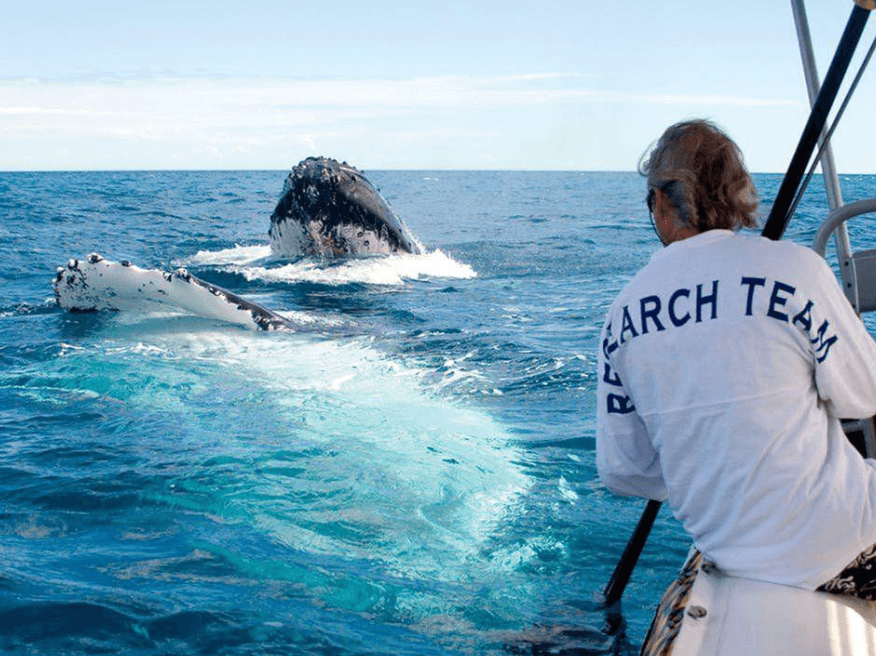
For travelers interested in Samaná whale watching in the Dominican Republic, this research offers another way to appreciate humpback whales. Watching a whale surface is one experience; understanding how scientists investigate its underwater acoustic world adds another dimension to the encounter.
What Is a Humpback Whale Song Dialect?
A song dialect is a useful informal description for recognizable differences in vocal patterns associated with different groups or regions. In humpback whale research, scientists may compare the acoustic characteristics and organization of songs recorded in separate locations to determine whether particular patterns are more common in one area than another.
However, the word “dialect” should be used carefully. Human language dialects involve complex social and linguistic conventions, while whale songs are animal communication systems that scientists are still working to understand.
Researchers may therefore describe regional song differences without claiming that whales have dialects in precisely the same sense as humans.
Differences can occur in several ways:
- Sound units: Individual sounds may differ in duration, pitch, or frequency structure.
- Phrases: Groups of sounds may be organized into different patterns.
- Sequence: Similar phrases may occur in a different order.
- Repetition: Some elements may be repeated more often than others.
- Song structure: Larger sections may vary in their arrangement or duration.
These characteristics help scientists describe what they hear rather than relying on subjective impressions that one song sounds unfamiliar.
Why Compare Whale Songs From Different Regions?
Comparing songs from different locations can help researchers investigate how humpback whale vocal behavior varies geographically.
Humpback whales use songs in particular social and breeding contexts, although the full functions of their songs remain an active subject of scientific investigation. Studying regional differences may help researchers understand how acoustic behavior varies among populations and how shared patterns change over time.
Regional comparisons can address several questions.
First, do whales recorded in different locations produce similar sound units Second, do they arrange those sounds in comparable sequences Third, are certain song features consistently associated with one region during a particular period Finally, do those similarities or differences remain stable when researchers collect additional recordings?
These questions matter because a single recording rarely provides enough evidence to establish a regional pattern.
A song recorded once in one location might be unusual, incomplete, or affected by background noise. Repeated recordings collected under comparable conditions provide a stronger foundation for scientific comparisons.
Step 1: Collecting Recordings From Different Locations
The first step is gathering usable acoustic recordings.
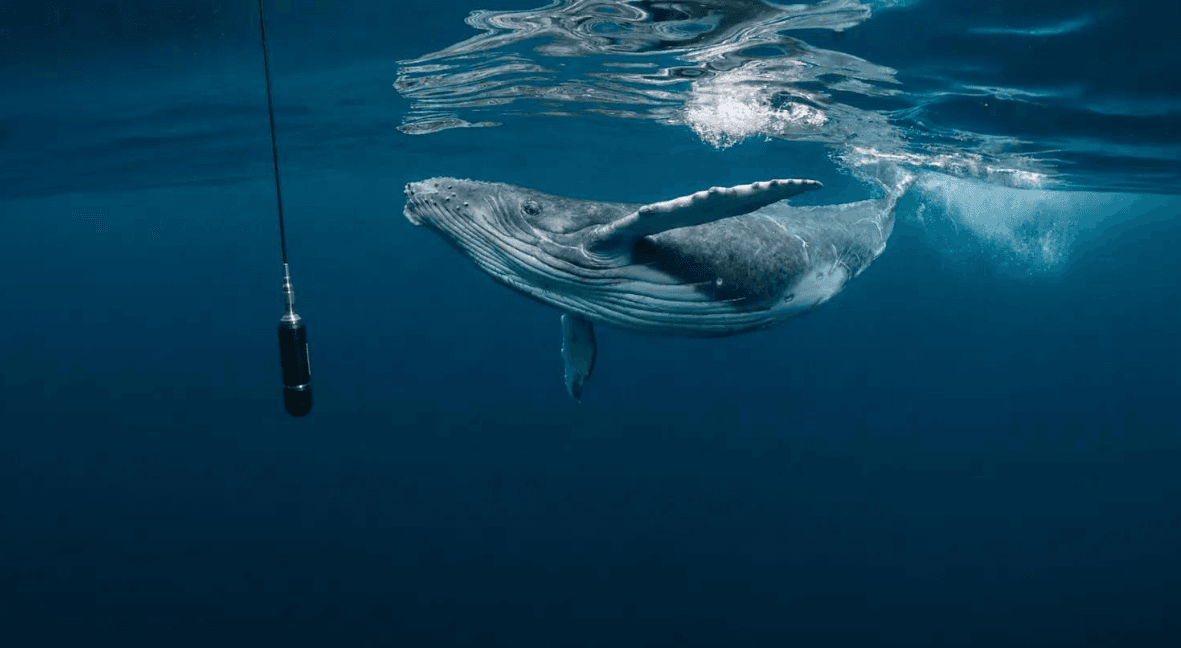
Researchers can use underwater microphones, known as hydrophones, to record whale sounds. Hydrophones may be deployed from research vessels, attached to appropriate recording systems, or installed at fixed underwater monitoring locations.
The recording method depends on the research question, the environment, available equipment, and practical conditions at each site.
To investigate regional song differences, scientists ideally collect recordings from multiple locations and across suitable periods. For example, a study might compare recordings from different humpback whale breeding areas or examine how song characteristics vary between locations where whales are observed at different times of the year.
Researchers must also record information about when and where the sounds were collected, the equipment used, and the conditions affecting recording quality.
This information helps them distinguish genuine acoustic variation from differences caused by microphones, recording settings, water conditions, or background noise.
For Samaná Bay, a regional comparison could be an interesting research question: how do songs recorded in local waters compare with suitable recordings from other documented humpback whale habitats Answering that question would require actual recordings and a clearly defined comparison. The existence of a regional difference should not be assumed before the evidence is examined.
Step 2: Identifying Individual Sound Units
Humpback whale songs are not simply continuous, undifferentiated noises. Researchers can often identify recurring sound units that vary in pitch, duration, tonal quality, and frequency structure.
Some sounds may be relatively short, while others develop into longer, more complex patterns. Researchers examine these units to determine which features can be identified consistently across recordings.
This process may involve listening to recordings, visualizing them, and using acoustic analysis software.
A spectrogram is especially useful. It displays sound frequency over time, allowing researchers to examine the shape and structure of individual sounds.
For example, one sound might show a rising frequency pattern, while another remains relatively stable or falls in pitch. Scientists can measure such characteristics and use them to describe differences more precisely.
They must still exercise caution. Sounds that appear similar may not be identical, and a single sound unit does not necessarily establish that two complete songs belong to the same pattern.
Reliable comparisons depend on consistent definitions and methods for classifying the sounds.
Step 3: Comparing Phrases and Song Sequences
Individual sound units are only part of the picture. Researchers also investigate how sounds are organized into phrases and larger song sequences.
Two recordings may contain similar individual sounds but arrange them differently. Conversely, songs may share a recognizable sequence while containing small differences in individual units.
To study these relationships, researchers may compare:
- The order of recognizable sound units.
- The number of units in a phrase.
- The duration of phrases and pauses.
- The repetition of particular patterns.
- The organization of phrases into larger sections.
- The similarities and differences between complete song sequences.
These comparisons help scientists move beyond isolated sounds and evaluate broader acoustic structure.
For example, suppose researchers record songs in two regions. Both sets contain a similar rising sound, but one region's recordings regularly place it after a particular phrase while the other recordings place it elsewhere. If this difference occurs consistently across many suitable recordings, it may become a useful feature for investigating regional variation.
One difference alone is not enough to prove the existence of a distinct dialect. Researchers need to consider the complete evidence, the amount of variation within each region, and the possibility that the recordings represent different moments in a changing song pattern.
Step 4: Using Acoustic Measurements
Listening carefully is important, but scientific comparisons benefit from measurable evidence.
Researchers can extract acoustic features such as:
- Frequency: The number of sound-wave cycles per second, measured in hertz.
- Duration: How long a sound or phrase lasts.
- Bandwidth: The range between the lower and upper frequencies of a sound.
- Pitch contour: How perceived pitch changes over time.
- Repetition rate: How frequently a particular element occurs.
- Sequence similarity: How closely two sound patterns resemble one another in their organization.
Not every study uses every measurement. The appropriate features depend on the sounds being analyzed and the questions being asked.
Scientists may combine measurements with statistical methods or computer-assisted comparisons to evaluate similarities among recordings. These approaches can help reveal patterns that are difficult to recognize consistently by listening alone.
However, software cannot automatically determine that two groups have different dialects simply because their recordings produce different measurements. The results depend on the quality of the recordings, the features selected, the analytical method, and the biological interpretation.
A strong study uses methods that can be explained, tested, and applied consistently.
Step 5: Separating Regional Differences From Individual Variation
One of the most important challenges is distinguishing a regional pattern from differences between individual whales.
Not every whale necessarily produces exactly the same song at every moment. Recordings may also capture only part of a song, different stages of a vocal sequence, or sounds produced under different conditions.
If scientists compare one recording from Region A with one recording from Region B, they cannot confidently conclude that the regions have distinct song dialects.
Instead, they need enough recordings to assess variation within each region as well as variation between regions.
Imagine that the recordings from Region A contain several different phrase patterns. Region B may contain some of those same patterns, even if a few features occur more frequently in Region A. The relevant question is whether the observed differences are consistent and meaningful compared with the variation found within each location.
Researchers should also consider whether they have sampled similar periods, comparable recording conditions, and sufficiently representative groups of whales.
This approach reduces the risk of treating normal individual variation as a geographic distinction.
Step 6: Checking Whether the Differences Persist Over Time
Whale songs can change over time. As a result, regional comparisons should consider when the recordings were collected.
A difference between two recordings might reflect geography, but it could also reflect a change in song structure between seasons or years.
To investigate this issue, researchers may compare recordings collected at multiple times. They can examine whether certain features remain associated with a region or whether the observed differences change as the songs develop.
For example, a pattern found in recordings from one location during a particular month might become less common in later recordings. That change could have several explanations, including natural variation, changes in which whales were recorded, or changes in the song patterns being produced.
Scientists need additional evidence to determine which explanation is most plausible.
This is why a regional song comparison becomes more informative when it includes both geographic and temporal information.
It also explains why scientists should avoid describing a particular acoustic pattern as a permanent regional characteristic without adequate evidence.
Step 7: Determining Whether a Regional Pattern Is Distinctive
After analyzing the recordings, scientists assess whether the differences are sufficiently consistent to describe a recognizable regional pattern.
A useful comparison should consider at least three questions.
Are the differences repeatable? Researchers should be able to identify the pattern in more than one recording rather than relying on a single unusual example.
Are the differences more pronounced between regions than within them? If songs vary just as much within each region as they do between regions, a strong geographic distinction may be difficult to support.
Could another factor explain the result? Differences in recording equipment, sampling periods, background noise, or the stages of songs captured may influence the comparison.
Scientists may use statistical analyses to quantify the strength of the observed patterns. They can also test whether the findings remain consistent when the data are divided into different subsets or analyzed using alternative reasonable methods.
The goal is not to force every region into a separate category. Sometimes the evidence may support a clear distinction; in other cases, it may reveal gradual variation or substantial overlap.
Both outcomes can contribute to a better understanding of humpback whale communication.
Do Different Song Dialects Mean Different Whale Populations?
Not necessarily.
Acoustic differences alone cannot establish that two groups of whales are separate biological populations. Animals in different locations may produce similar songs, while whales within the same broader population may show meaningful variation in their vocal behavior.
Scientists need additional information to investigate population relationships. Depending on the study, this may include photo-identification, movement observations, genetic evidence, tagging data, or other documented information about the animals.
Likewise, similar songs do not prove that whales have met, belong to the same social group, or learned their songs directly from one another.
A regional song pattern is evidence about acoustic behavior. Interpreting what it means for whale movements, social relationships, or population structure requires a broader body of evidence.
This distinction is particularly important when explaining whale research to visitors. A sound recording can reveal fascinating similarities, but it cannot independently answer every question about the whale that produced it.
What Could Regional Song Comparisons Reveal About Samaná Bay?
Samaná Bay is widely known as a destination for observing humpback whales during the seasonal migration period. The area's whale-watching activity also provides an opportunity to explain why researchers are interested in whale behavior, vocalizations, and marine conservation.
A carefully designed acoustic study involving recordings from Samaná could investigate several questions:
- Which sound units can be identified reliably in recordings collected in the area?
- How much variation occurs among recordings collected at different times?
- How do suitable local recordings compare with recordings from other documented locations?
- Are particular song features repeatedly observed across multiple recordings?
- How much of the apparent difference can be explained by recording conditions or sampling periods?
These are potential research questions, not claims that a specific regional dialect has already been established in Samaná Bay.
Answering them would require appropriate acoustic data, consistent analytical methods, and comparisons with suitable reference recordings. Researchers would also need to interpret their findings within the broader context of humpback whale behavior and migration.
For visitors, this possibility highlights an important point: whale watching is not only about seeing dramatic surface behavior. It can also inspire curiosity about the underwater sounds that people cannot normally hear from a boat.
How Whale-Watching Visitors Can Appreciate Whale Songs
Most ordinary whale-watching trips are designed for observation rather than scientific acoustic research. Passengers should not expect to hear underwater songs directly, and a visible whale does not necessarily indicate that it is singing.
Nevertheless, visitors can learn about acoustic research by asking knowledgeable guides or educational organizations how scientists study whale communication.
Useful questions include:
- How do researchers record sounds underwater?
- What does a whale song spectrogram show?
- Why can recordings from different locations be difficult to compare?
- How do scientists distinguish a recurring pattern from an unusual sound?
- What evidence is needed before researchers describe a regional acoustic difference?
These questions encourage a deeper understanding of the animals without assuming that every whale sighting reveals its vocal behavior.
Visitors should also follow the boat operator's wildlife-watching guidance and respect applicable rules designed to reduce disturbance to marine mammals.
The most meaningful encounter is one that combines curiosity with respect for the animals and their environment.
Why Careful Interpretation Matters
Humpback whale songs are complex, and the scientific methods used to compare them continue to develop. New recordings, improved analytical tools, and broader comparisons may help researchers investigate acoustic patterns with greater precision.
Even so, several distinctions remain important.
A sound that differs from another sound is not automatically a dialect. A regional pattern is not automatically a separate population. And similar songs do not independently prove direct communication between particular whales.
Scientists build stronger conclusions by combining repeated observations, measurable acoustic features, suitable comparisons, and transparent analytical methods.
This careful approach makes the research more useful because it separates what the recordings demonstrate from what researchers still need to investigate.
Final Thoughts
Identifying humpback whale song dialects across different regions requires much more than listening to two recordings and deciding that they sound different. Scientists examine individual sound units, compare phrases and sequences, measure acoustic features, account for variation within regions, and test whether patterns persist across recordings and time.
The resulting evidence can help researchers describe geographic variation in whale songs while avoiding unsupported conclusions about individual identity, population boundaries, or how particular sounds spread.
For anyone interested in Samaná whale watching, this subject offers a compelling reminder that humpback whales have an acoustic world beyond what visitors see at the surface. By understanding how scientists study that world, travelers can appreciate not only the spectacle of whale watching but also the careful research that helps us learn about marine life.
Planning a Samaná whale-watching experience? Explore responsible whale-watching options, learn about the seasonal migration, and prepare to observe these remarkable marine mammals with respect for their natural behavior.

Local explorer & expert guide in Saona Island Beach.