Why Do Humpback Whales Sometimes Surface at Different Angles on Consecutive Breaths?
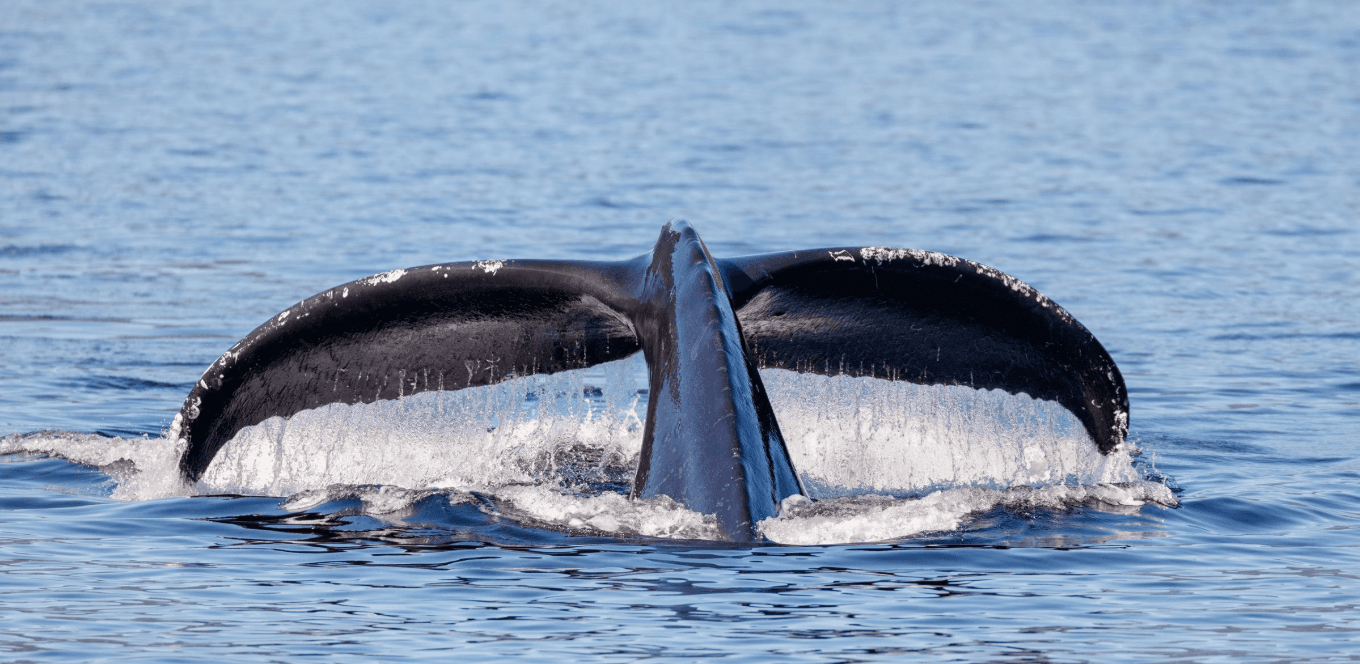
During a whale-watching trip in Samaná Bay, Dominican Republic, visitors may notice something interesting when a humpback whale surfaces more than once. The whale’s back may appear nearly horizontal during one surfacing, while the next appearance seems more tilted or angled.
These differences can make observers wonder whether the whale has changed direction, altered its swimming pattern, or begun a different activity.
Humpback whales do not necessarily approach the surface in exactly the same position every time. Their body orientation can change as they move underwater, approach the waterline, and continue swimming. At the same time, waves, viewing angles, and partial visibility can make consecutive surfacings appear more different than they really are.
Understanding these possibilities helps visitors interpret what they see without assuming that every change in body angle has a special meaning.
What Does It Mean When a Whale Surfaces at Different Angles?
A surfacing angle describes the apparent orientation of a whale’s body as it approaches or becomes visible at the surface.
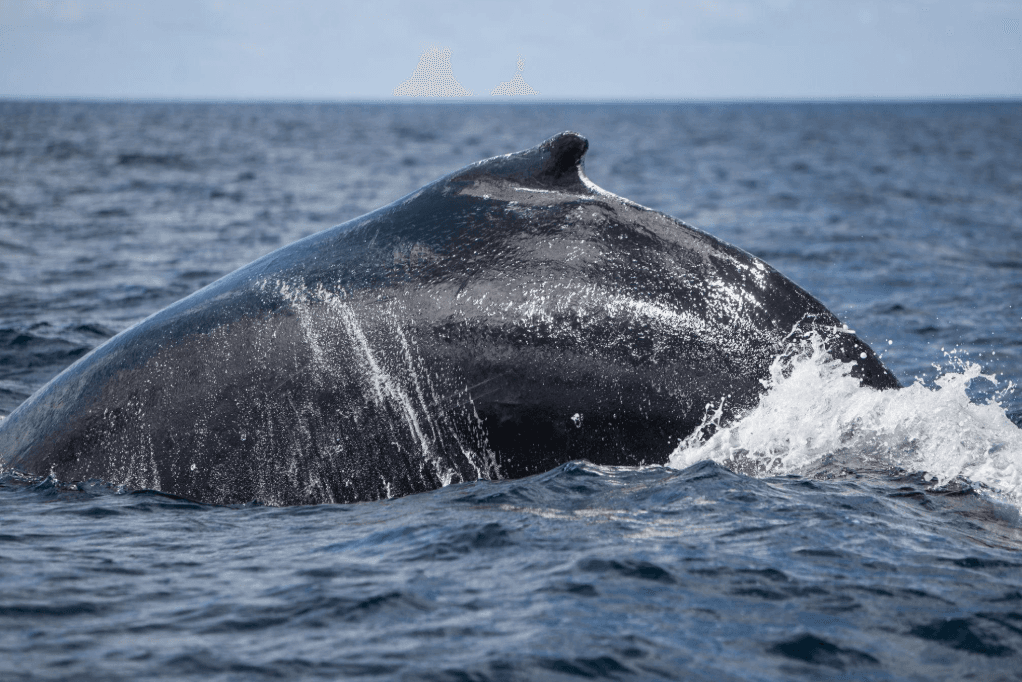
During one appearance, the whale may seem to move almost horizontally. During another, its head or front portion may appear to rise at a more pronounced angle, or its curved back may emerge differently from the water.
These differences can occur within the same general period of observation. They do not necessarily mean that the whale is performing two distinct behaviors.
It is also important to distinguish the whale’s actual body orientation from its appearance to an observer. A whale viewed from the side may look different from one approaching at an angle, even if its underlying movement is similar.
For this reason, comparing successive surfacings requires attention to both the whale and the conditions from which it is being observed.
Why Can a Whale’s Angle Change Between Surfacings?
Several factors may help explain differences between consecutive surface appearances. The precise explanation depends on the movement sequence and the information available to the observer.
1. The Whale May Follow a Different Underwater Path
A humpback whale does not have to follow the same route between every surfacing. It may continue forward, turn gradually, or change its direction beneath the water.
If its underwater path changes, the angle at which it approaches the surface may change as well.
For example, the whale might appear relatively level during one surfacing and then emerge at a more noticeable angle after changing direction. The difference may reflect the route it followed rather than a change in its overall behavior.
However, observers usually cannot see the entire underwater path. Without that information, the route remains a possible explanation rather than a confirmed cause.
2. Its Body Orientation May Change Naturally
A whale’s body position can vary as it moves through the water. Small changes in orientation may affect which part of its body becomes visible first.
One surfacing might reveal a broad section of the back, while another might show more of the front portion. From a boat, these appearances can seem like noticeably different movements.
The whale may be adjusting its position as part of ordinary swimming. The visible difference alone does not prove that it is intentionally displaying a particular posture or responding to an event.
3. The Whale May Be Turning Relative to the Observer
A whale’s direction relative to the boat can affect its apparent surfacing angle.
When the animal moves across the observer’s field of view, its body shape may be relatively easy to interpret. If it turns toward or away from the boat, the visible outline can change substantially.
This means that two surfacings may look different even when the whale’s movement has not changed as dramatically as it appears.
Watching the whale’s direction, rather than focusing only on the angle of its back, can help explain some of these differences.
4. Waves May Hide Part of the Body
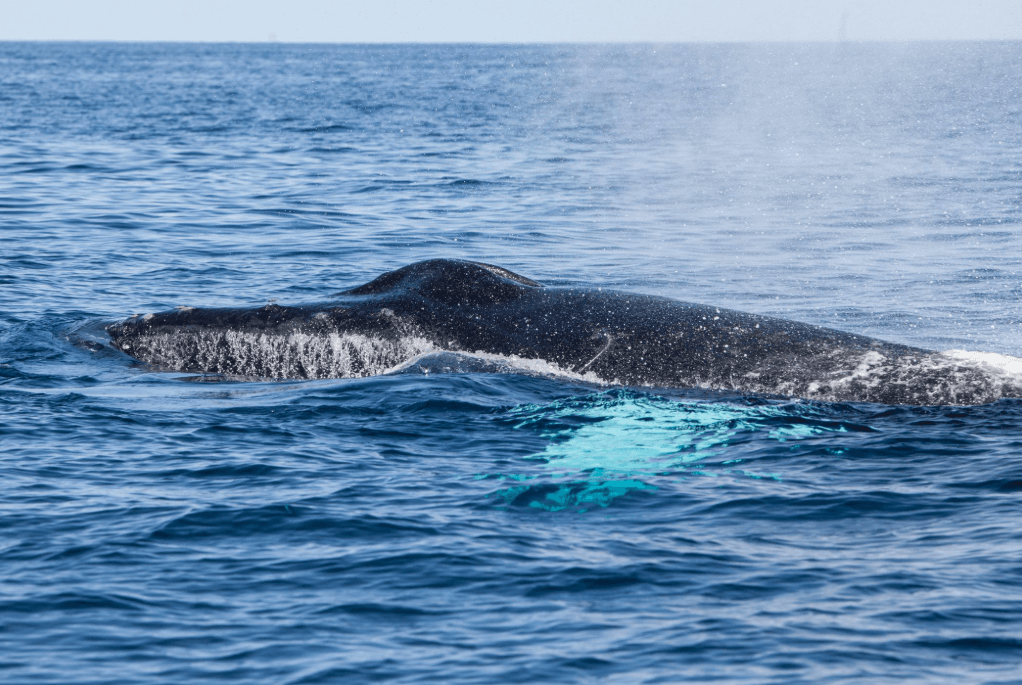
The ocean surface is constantly changing. Waves can conceal the lower portion of a whale’s body, leaving only a small part of its back or head visible.
During one surfacing, the observer might see enough of the whale to understand its approximate orientation. During the next, a wave may obscure part of the animal and make its position appear steeper or more unusual.
This is especially relevant when the whale is some distance away.
A change in apparent angle should therefore be considered alongside the sea conditions. The observer may be seeing a different portion of the animal rather than a completely different movement.
5. The Boat’s Position May Change
The whale-watching boat may drift or move as the crew maintains an appropriate viewing position. Even a modest change in the observer’s location can affect perspective.
A whale that looked nearly horizontal from one position might appear more angled from another. The distance between the boat and the animal can also change how clearly its body orientation can be judged.
This is one reason why photographs taken seconds apart may show different apparent angles without providing enough information to establish exactly what changed underwater.
6. The Whale May Be Transitioning Between Movements
A whale may move through several stages as it approaches the surface, becomes visible, and continues swimming.
The angle seen during one surfacing may capture one part of that sequence, while the next appearance captures another. Differences can reflect the changing stage of movement rather than a deliberate change in behavior.
Still, it is important not to assume that every pair of surfacings forms a predictable sequence. The whale’s actual path and activity may remain partly hidden.
Does a Different Surfacing Angle Mean the Whale Is Breathing Differently?
Not necessarily.
Humpback whales must surface to breathe air, but the visible angle of the body is not a direct measurement of breathing effort or respiratory condition.
A whale may appear at different angles during successive surface visits because its direction, orientation, or viewing conditions have changed. The angle alone cannot establish that the animal is breathing more quickly, working harder, or experiencing a problem.
Observers should distinguish between seeing a whale surface and drawing conclusions about its physiology.
For visitors, the most useful observation is the visible sequence: when the whale appeared, what part of its body could be seen, and how its position changed before it submerged or moved away.
Is a Steeper Second Surfacing a Sign That the Whale Is Preparing to Dive?
No reliable conclusion can be drawn from the angle alone.
A whale might surface at a steeper angle and then continue swimming. It might also submerge after appearing nearly horizontal. The relationship between surfacing angle and the next movement is not simple enough to make the angle a dependable prediction by itself.
This distinction is important because visitors sometimes interpret a particular body position as a signal that a dramatic movement is about to happen.
Instead of predicting what the whale will do, watch for the actual movement that follows. The sequence may provide useful context, but it still may not reveal the whale’s precise intention.
How to Compare Consecutive Surfacings During Whale Watching
If a humpback whale surfaces several times during your Samaná whale-watching trip, comparing those appearances can be an engaging way to observe its movement.
Observe the direction of travel
Notice whether the whale appears to maintain the same general course or change direction between surfacings. Direction can help explain why its body looks different from one appearance to the next.
Look at the visible outline
Pay attention to which part of the body is above the water. Is more of the back visible Does the front portion appear first Does the outline change as the whale moves?
These details provide a more useful description than simply labeling one surfacing normal and another unusual.
Consider the waves and light
If the surface is rough or glare is strong, recognize that your view may be incomplete. Apparent changes in body angle can partly result from limited visibility.
Watch more than one appearance
A single surfacing provides limited information. If the whale remains visible over several surfacings, a longer sequence may reveal whether the changes in appearance coincide with a change in direction or position.
Avoid assigning a definite intention
A change in angle does not automatically mean the whale is playing, communicating, reacting to a boat, or preparing for a specific behavior. Describe what you can see and leave the explanation open when the evidence is insufficient.
Tips for Photographing Different Surfacing Angles
Photographs can help document how a whale’s visible position changes over time. They are especially useful when a photographer captures several surfacings from a similar viewpoint.
Take a sequence of images. A series may show changes in the whale’s outline more clearly than a single photograph.
Include the surrounding water. A wider composition can provide context about waves and the whale’s position.
Keep captions descriptive. For example, “The whale appeared at a different angle during its next surfacing” describes the observation without claiming to know the cause.
Be cautious when comparing images. If the boat has moved or the camera angle has changed, the photographs may not provide a direct comparison of the whale’s actual body orientation.
Prioritize responsible viewing. Do not encourage an operator to pursue a whale or change position unsafely just to capture successive surfacings.
Photography can preserve visible details, but it cannot reveal the entire underwater path or prove the whale’s intention.
What Can Researchers Learn From Repeated Surfacings?
Researchers can document repeated surface appearances to study patterns in whale movement and behavior. Depending on the research question, observations may include body orientation, surfacing intervals, direction of travel, and changes in the surrounding conditions.
Video can help researchers compare consecutive appearances and examine details that may be difficult to recognize in real time. Reliable interpretation depends on consistent observation methods and an understanding of the limitations of the recordings.
A photograph showing a different angle is evidence of a different appearance from that viewpoint. It is not, by itself, proof that the whale changed its behavior or breathing pattern.
Distinguishing observations from explanations is essential to careful wildlife research. The same principle applies to visitors watching whales from a boat.
Why This Behavior Matters to Samaná Whale Watchers
Samaná Bay is known as a seasonal destination for observing humpback whales. During an encounter, visitors may focus on dramatic events such as breaches, but quieter details can also be worth noticing.
Comparing successive surfacings encourages people to watch the whale’s movement over time rather than treating each appearance as an isolated event.
It can also help visitors understand why two photographs of the same whale may look different. The whale’s position, the observer’s perspective, and the changing ocean surface all influence what is visible.
The goal is not to assign a special meaning to every change in angle. It is to develop a more accurate understanding of what can be observed during a wildlife encounter.
Frequently Asked Questions
Why do humpback whales surface at different angles?
Their underwater path, body orientation, and direction relative to the observer may change between surfacings. Waves and viewing perspective can also affect the apparent angle.
Does a different angle mean the whale has changed direction?
It may, but the angle alone cannot confirm a change in direction. Observers need to consider the whale’s movement before and after surfacing.
Can the angle show whether a humpback whale is breathing normally?
No. The visible angle is not a reliable measurement of breathing effort or respiratory condition.
Why can the same whale look different in two photographs?
The whale may have changed position, but the camera angle, boat location, lighting, and waves can also change its appearance.
Does a steep second surfacing mean the whale is about to dive?
No. A steep angle does not reliably predict the next movement. Observe what actually happens rather than assuming a dive is certain.
Can visitors see this behavior in Samaná Bay?
Visitors may observe different body angles during successive surfacings, but specific movements cannot be guaranteed on a whale-watching trip.
What is the best way to record differences between surfacings?
Describe the visible body position, direction, surrounding conditions, and the order of events. Avoid assigning a cause unless there is sufficient evidence.
Conclusion: Compare the Sequence, Not Just the Angle
When a humpback whale surfaces at different angles during successive breaths, the changing appearance may reflect its underwater path, body orientation, direction relative to the boat, or the conditions at the surface.
It does not automatically mean the whale has changed its intention or is experiencing a particular physical condition. Perspective and waves can also make consecutive appearances look more different than they really are.
For visitors enjoying Samaná whale watching, the best approach is to watch the full sequence, notice the details, and describe what is

Local explorer & expert guide in Saona Island Beach.